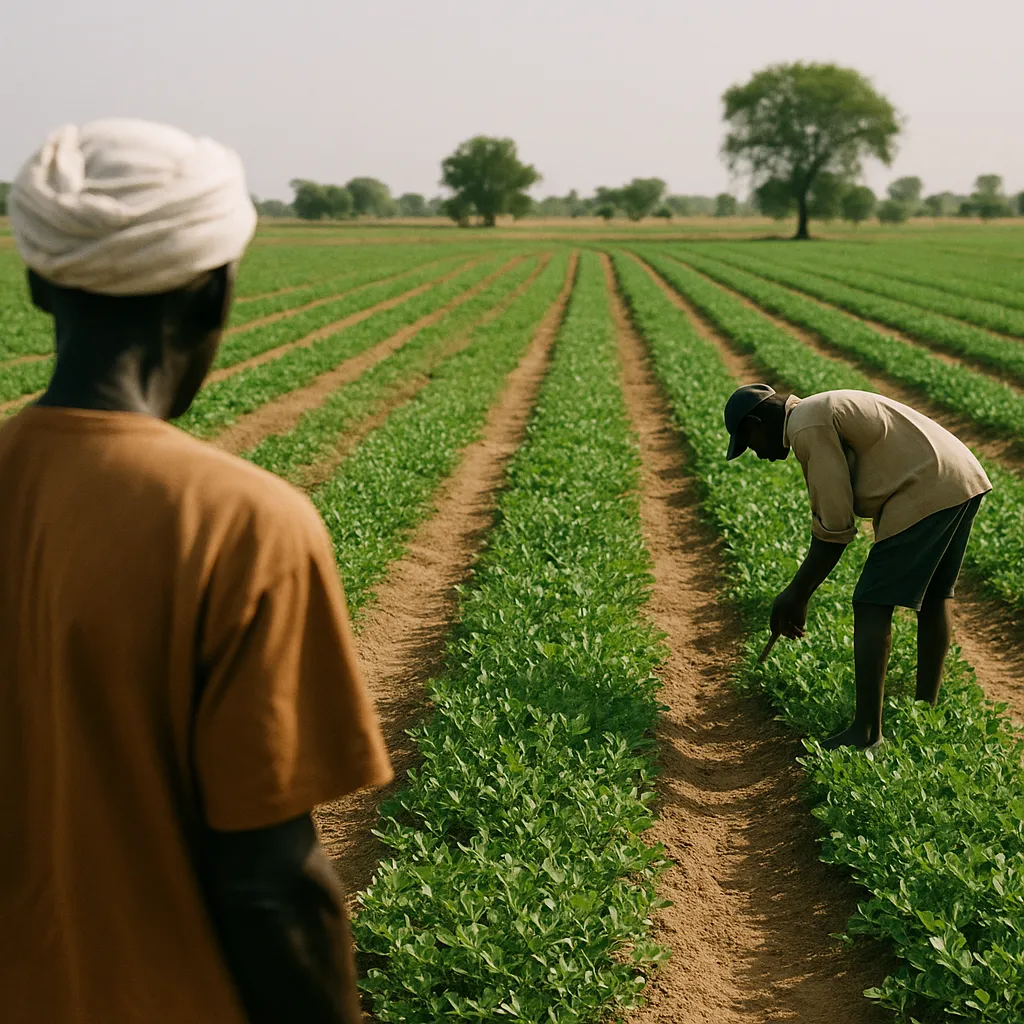
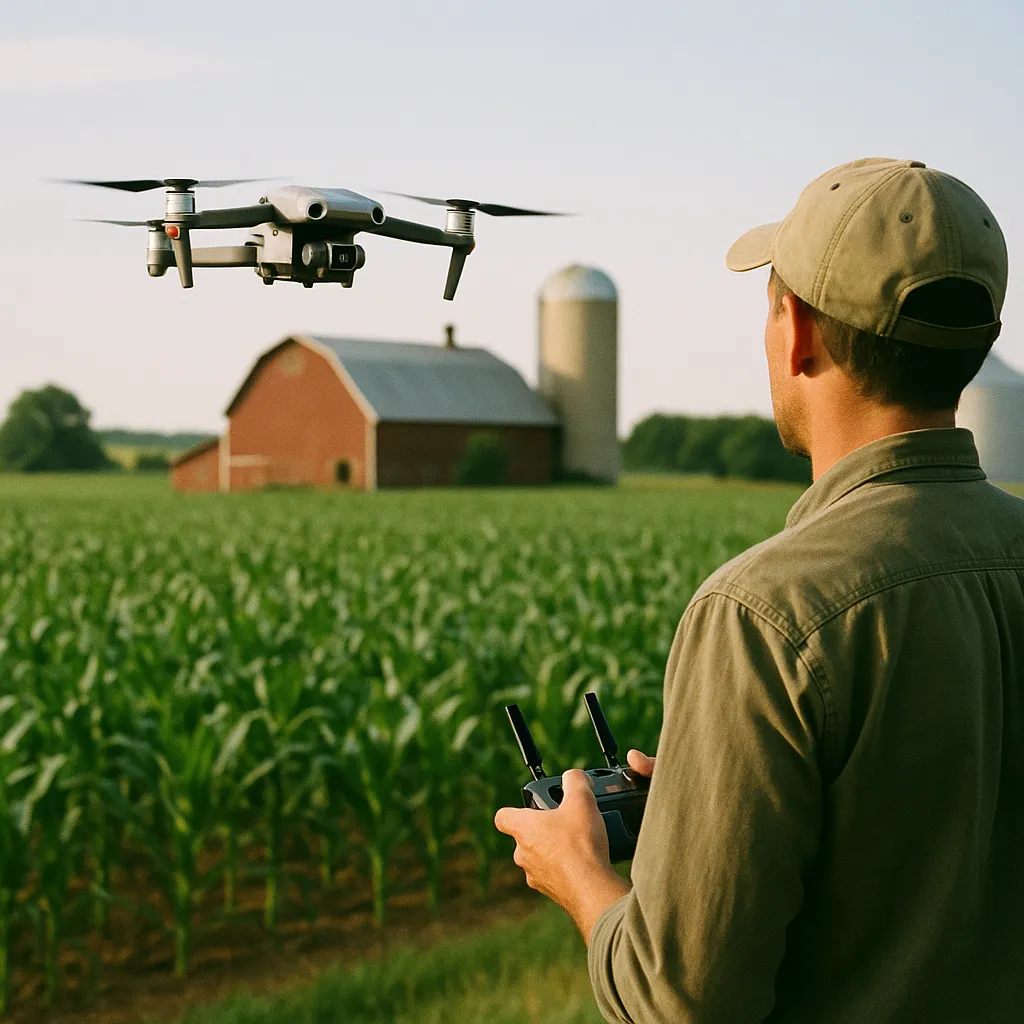
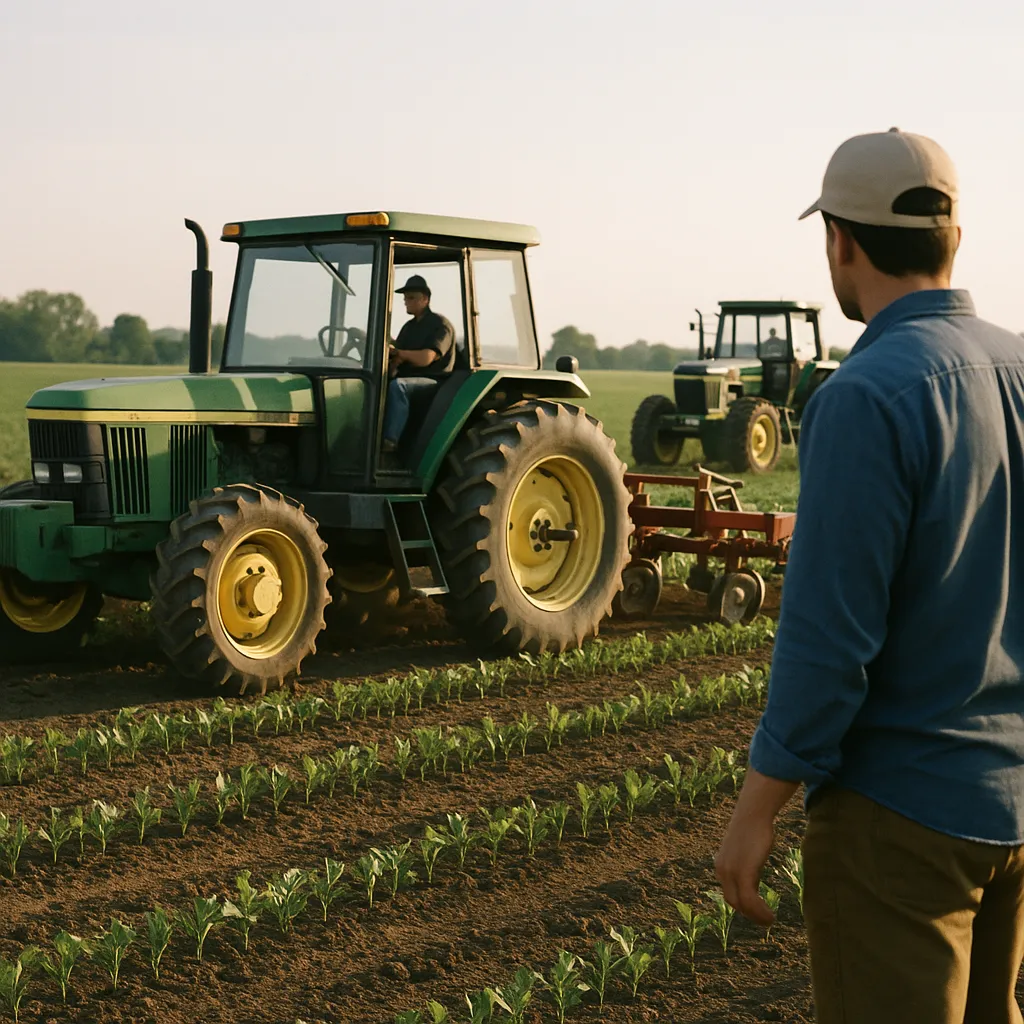
Farmers Business Network and Google have partnered to build an AI system that grounds agricultural advice in farm-specific data — soil, crop history, local weather, input prices — rather than generic internet-trained knowledge.
FBN and Google Build an AI That Knows Your Farm, Not Just Farming
Farmers Business Network and Google have partnered to build an AI system that grounds agricultural advice in the specific conditions of a real farm — the soil type, crop history, local weather, and input prices that matter to the actual decision being made — rather than in generic knowledge scraped from the internet. The project, reported by AgFunder News, addresses the central failure of general-purpose AI in agriculture: it gives advice that sounds plausible but ignores the situation on the ground.
Farmers who have tried ChatGPT or similar tools for crop management advice have run into this problem consistently. An AI that does not know you are growing dryland winter wheat in western Kansas at 4,200 feet elevation with a two-week rain deficit will give you textbook-coherent advice that is operationally useless — or worse, harmful if acted on.
What the Context Engine Does
FBN and Google are building what the companies call a context engine — a system that retrieves location-specific data and injects it into the AI's context window before any advice is generated. The inputs include:
- Soil type and composition — drawn from FBN's agronomic database and soil mapping services
- Historical crop performance — what this field has grown, at what yield, under what inputs, over multiple seasons
- Local weather and forecast data — current conditions and seasonal outlooks specific to the farm's GPS coordinates
- Input price data — what seed, fertilizer, and crop protection chemicals actually cost in this region right now
- Peer benchmarks — anonymized data from neighboring farms in FBN's network growing similar crops under similar conditions
The architecture is retrieval-augmented generation (RAG) — a technique where a system pulls relevant data from external sources and injects it into the AI model's context before generating a response. This is the same approach used in enterprise AI deployments to make models accurate about proprietary internal data, applied here to proprietary agronomic data.
Neither company has disclosed which specific Google foundation model underlies the system.
The Problem Being Solved
The gap between general-purpose AI and precision agriculture is not a new complaint, but it has been remarkably persistent.
Get this in your inbox.
Daily AI intelligence. Free. No spam.
Agriculture is hyperlocal in ways that general AI training data cannot capture. Pest and disease pressure varies by county. Variety performance varies by soil type within a county. Input costs vary by proximity to distribution. A management recommendation that is optimal for a corn farmer in central Iowa may be incorrect for a corn farmer in eastern Nebraska 200 miles away, growing in different soils under different precipitation patterns.
The agronomist joke is that AI trained on the internet has read every farming textbook ever written but has never walked a field. That gap between text-based knowledge and on-farm observational data is exactly what FBN's dataset is designed to close.
FBN has built one of the largest proprietary agronomic datasets in the world, covering millions of acres of farmer-reported performance data across the United States and expanding internationally. The data was contributed by FBN's farmer-member network, which shares anonymized field performance data in exchange for access to pricing transparency and benchmarking tools. That data architecture — farmer-owned, grower-generated, hyperlocal — is what makes the context engine possible. Other AI agriculture projects are building similar systems, but few have this depth of on-farm observational data across diverse growing regions.
Initial Use Cases
According to AgFunder News, the initial applications focus on in-season crop management decisions where timing matters most:
- Pest and disease identification — with local pressure data informing risk level
- Irrigation timing recommendations — grounded in current soil moisture and forecast
- Fertilizer application adjustments — responsive to crop stage and real-time soil readings
- Harvest timing guidance — accounting for weather windows and crop maturity indicators
The system is designed to explain its reasoning — a requirement that farmers and agronomists pushed for, given the stakes of acting on AI recommendations. A model that says "apply fungicide now" without citing the specific conditions driving that recommendation is harder to trust than one that shows its work.
Competitive Landscape
FBN and Google are entering a field with serious competition. John Deere has built its own agronomic AI platform integrated with its equipment telemetry. Corteva and Bayer — two of the largest seed and crop protection companies — have significant proprietary agronomic datasets and are building AI advisory tools on top of them. Climate Corporation (owned by Bayer) has been doing data-driven field recommendations for nearly a decade.
FBN's structural advantage is its independence: it is a farmer-owned cooperative, not a seed company with an interest in recommending its own products. That independence matters for trust in a sector where farmers have reason to be skeptical of advice from companies that sell them what they're being advised to buy.
What to Watch
Watch for the commercial rollout timeline and pricing model. FBN has historically operated as a cooperative prioritizing farmer economics — which creates tension with the infrastructure costs of running AI inference at scale across millions of fields. How they structure pricing will signal whether the context engine remains a member benefit or becomes a premium service that effectively charges farmers for access to their own data.
Sources: AgFunder News
Did this help you understand AI better?
Your feedback helps us write more useful content.
Get tomorrow's AI briefing
Join readers who start their day with NexChron. Free, daily, no spam.