AI is accelerating office vacancy while driving the largest data center construction boom in 30 years — a violent reallocation of capital within commercial real estate that CBRE CEO Bob Sulentic compares to the 1990s outsourcing wave.
AI Is Gutting Office Demand and Triggering a Construction Boom at the Same Time
By Hector Herrera | June 11, 2026 | Vertical: Real Estate | Type: Vertical Article
The AI boom is simultaneously destroying demand for one category of commercial real estate and generating the largest construction surge in another in 30 years — all in the same industry. CBRE CEO Bob Sulentic told The Real Deal that the AI-driven shift is "at least as profound as our move into outsourcing in the 1990s, much faster," and CBRE's own critical infrastructure unit is projected to grow 60% in 2026. The result is not a decline in commercial real estate. It is a violent reallocation of capital and activity within it.
The Two-Speed Market
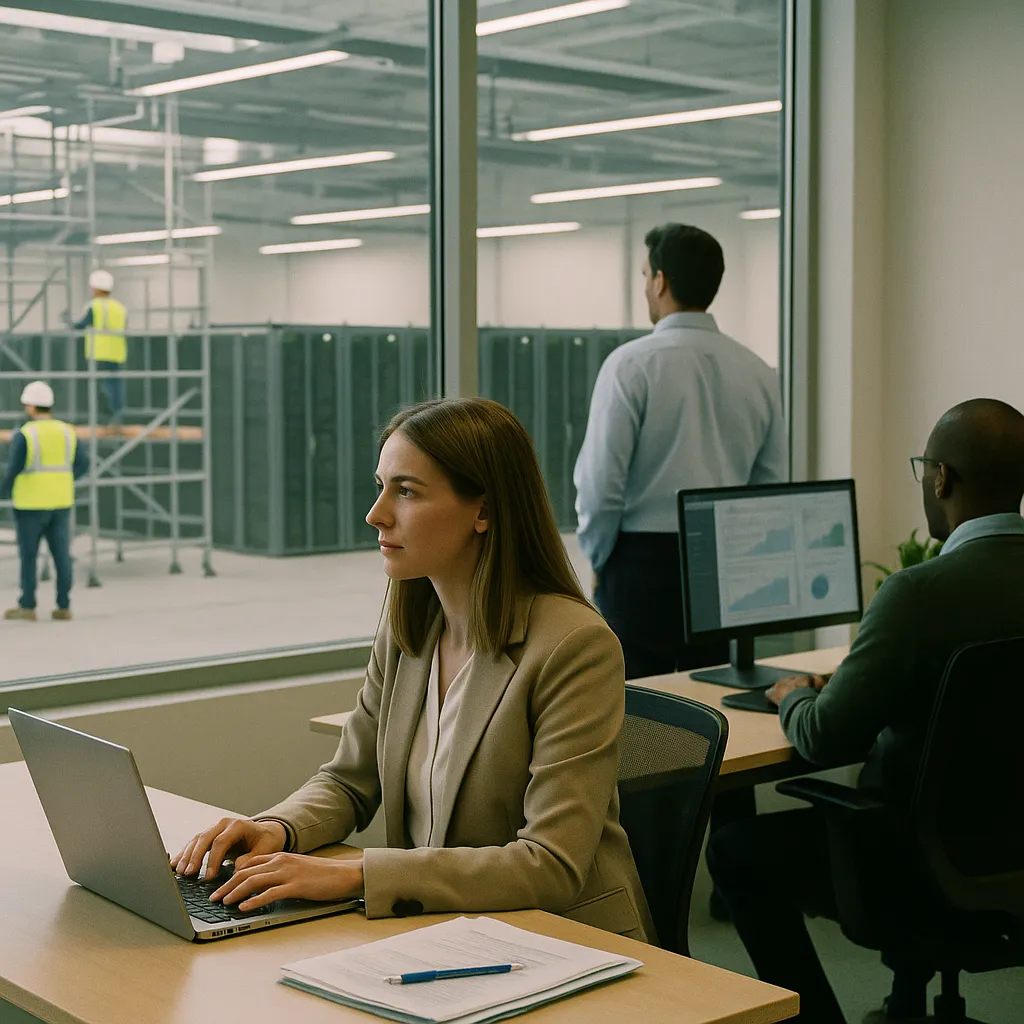
Office: AI-driven workforce reductions, sustained remote work, and the automation of knowledge work tasks are accelerating the structural decline in office demand that began during the pandemic. Companies that once needed floor space for analyst pools and support staff now need less of both. The collapse is uneven — premium Class A space in dense urban cores is holding, while suburban and Class B office stock faces vacancy rates that make repositioning the only viable path.
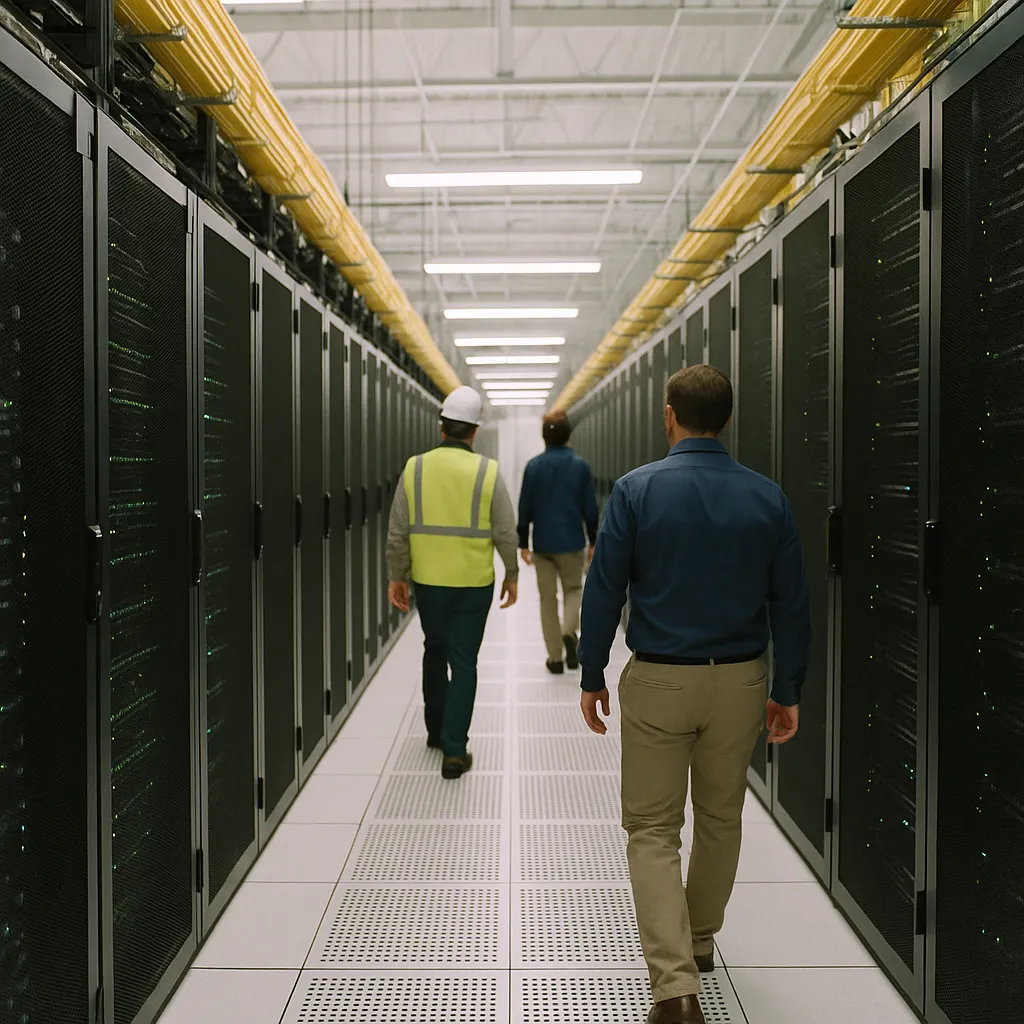
Data centers: The same AI wave that is shrinking office demand is producing the largest data center construction boom since the dot-com era. Every major AI model, every inference workload, every enterprise AI integration requires physical infrastructure: server racks, power, cooling, fiber. That infrastructure lives in data centers, and demand for new capacity is running well ahead of what the current development pipeline can deliver.
CBRE's data shows data centers are leading AI adoption across all commercial real estate asset classes by 18 months, with industrial real estate — warehouses and logistics facilities supporting autonomous supply chains — as the fast follower.
The Numbers
- CBRE critical infrastructure growth: Projected 60% expansion in 2026
- CBRE CEO's framing: AI shift is "at least as profound as outsourcing in the 1990s, much faster"
- Data center leadership: 18 months ahead of industrial in AI-driven demand, according to Build.inc data cited by The Real Deal
- Construction category: Largest data center construction wave since the dot-com era
The Real Deal's June 2026 cover story frames this as a structural bifurcation that will define commercial real estate for the next decade: capital will flow to power-dense assets — data centers, electrical substations, fiber corridors, and the industrial properties proximate to them — and continue flowing away from traditional office product.
Get this in your inbox.
Daily AI intelligence. Free. No spam.
What This Means for Property Owners and Investors
Office landlords face a multi-year repositioning challenge. The most realistic paths for stranded office stock are residential conversion (constrained by structural engineering requirements and zoning), life sciences (limited addressable market), and data center retrofit (power capacity is the binding constraint — most office buildings cannot draw the electrical load a modern data center requires).
Data center developers and REITs are experiencing demand conditions not seen since the late 1990s. The difference from the dot-com era: this demand is real. Enterprise AI workloads are not speculative traffic projections — they are production systems with committed compute budgets. Hyperscalers are signing 10–20 year lease commitments because the infrastructure they are building will be in service for decades.
Industrial real estate is the second-order beneficiary. Autonomous logistics, AI-managed supply chains, and the physical goods movement that serves e-commerce require distribution facilities — and those facilities increasingly require their own AI and connectivity infrastructure. Industrial vacancy in AI-adjacent markets is tightening as demand compounds.
Debt markets are recalibrating accordingly. Lenders that were comfortable with office collateral two years ago are repricing that risk significantly. Data center and industrial assets are attracting aggressive lending at favorable terms. The capital markets are pricing the reallocation before the physical market fully reflects it.
The Power Constraint
The binding limit on how fast the data center boom can materialize is not capital or land — it is electrical power. New data centers require grid connections that take years to permit, approve, and construct. Transmission upgrades, substation buildouts, and in some cases new generation capacity are prerequisites for large-scale data center campuses.
This constraint is reshaping where data centers get built. Markets with available power capacity — parts of Texas, the Southeast, and areas near underutilized industrial grid infrastructure — are gaining data center investment at the expense of established markets like Northern Virginia, where power queues stretch years into the future.
What to Watch
Whether office-to-data-center conversions become economically viable as power grid constraints ease and conversion technology improves. A handful of pilot projects are underway; if they pencil out financially, the conversion pipeline could accelerate. Also watch CBRE's Q3 earnings for whether the 60% infrastructure growth projection is tracking — that number will be the clearest near-term indicator of how fast capital is reallocating within commercial real estate.
Sources: The Real Deal
Did this help you understand AI better?
Your feedback helps us write more useful content.
Get tomorrow's AI briefing
Join readers who start their day with NexChron. Free, daily, no spam.