U.S. data center construction hit $50 billion in April 2026 — 28% above last year and the first time on record that AI infrastructure spending outpaced transportation. AI has crossed from sector trend to macroeconomic force.
U.S. Data Center Construction Spending Hits $50 Billion — Surpasses Transportation for First Time
By Hector Herrera | June 7, 2026 | Vertical: Real Estate | Type: Data Research
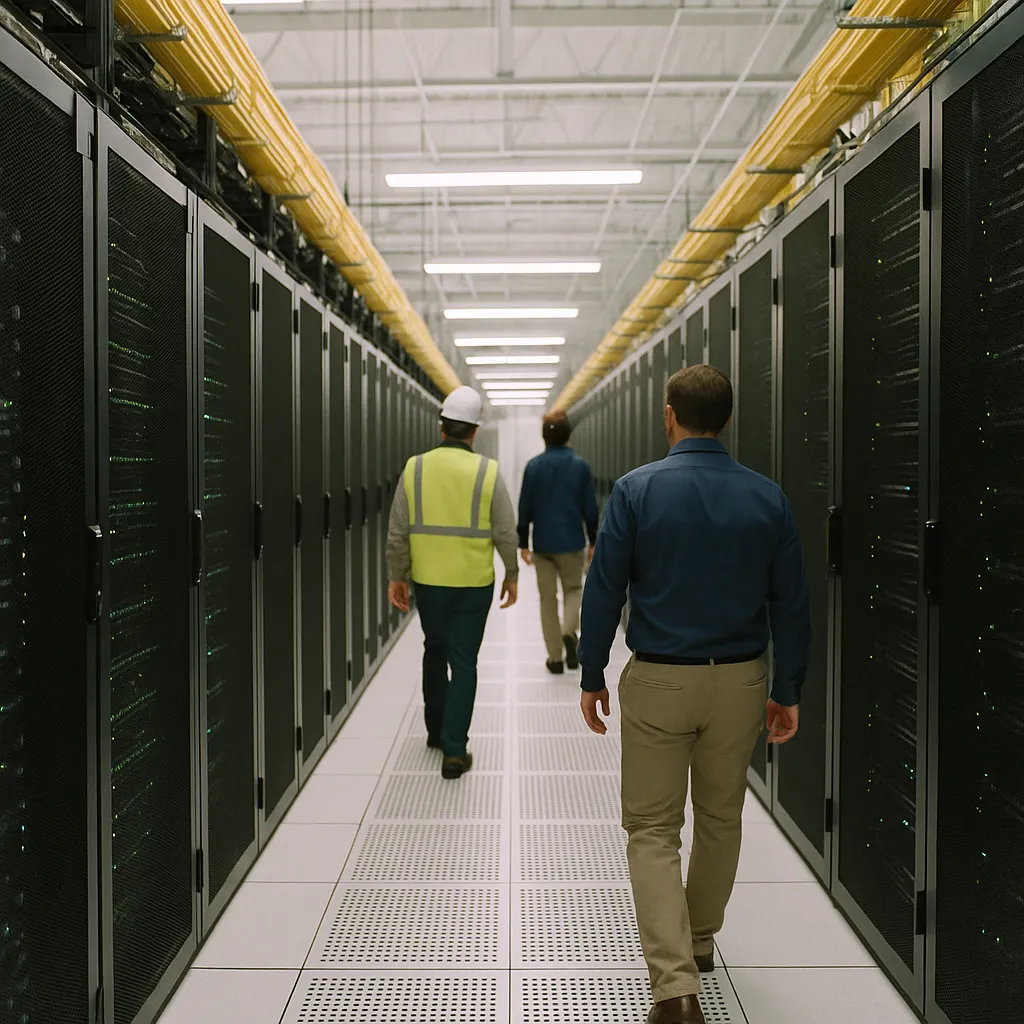
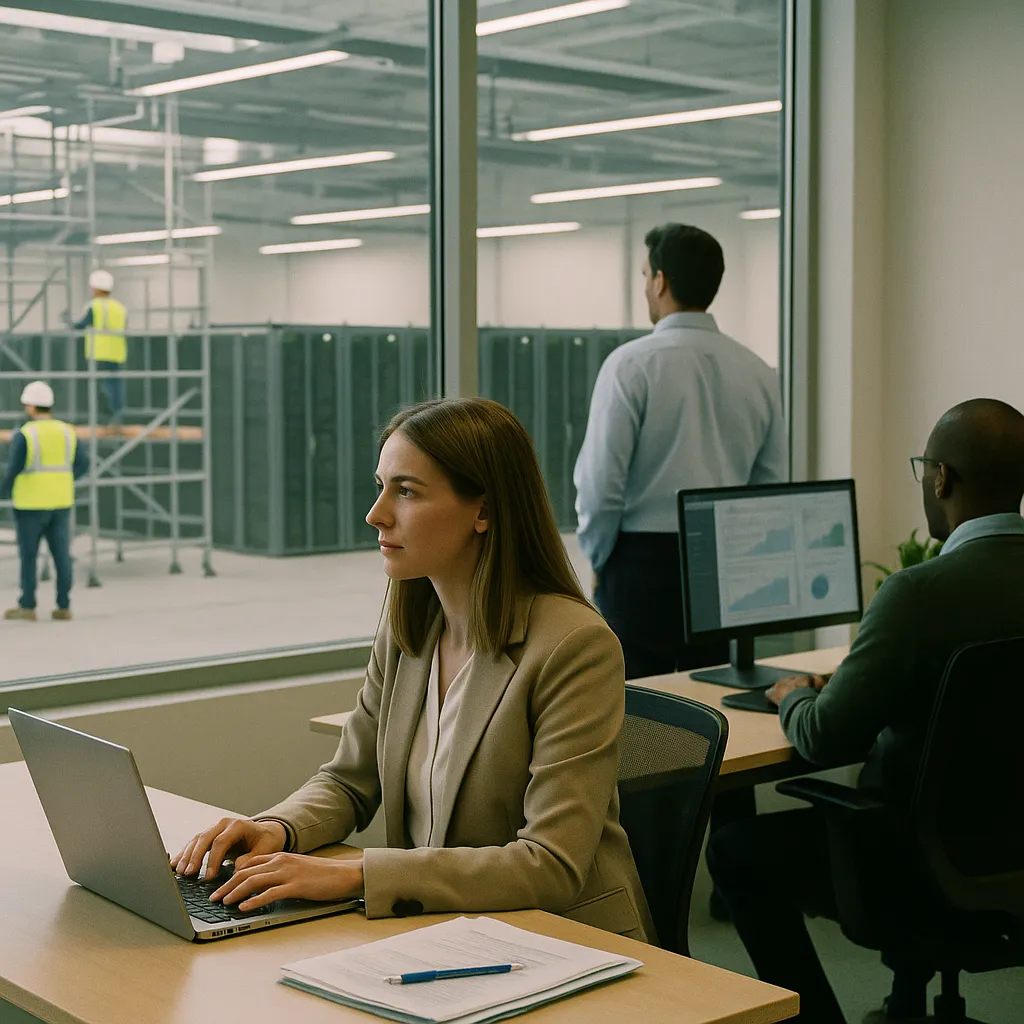
U.S. spending on data center construction hit $50 billion in April 2026 — a 28% surge from the same month a year ago and the first time in recorded Census Bureau history that private AI infrastructure investment has outpaced public transportation spending. Data centers now account for 2.3% of all U.S. construction spending. That number is not a sector trend anymore. It is a macroeconomic reshaping of where and how the country builds.
Background
The data center construction boom is not new, but it has entered a phase where its scale has crossed from notable to structurally significant. AI model training and inference require compute that can only be built at scale inside purpose-designed facilities: high-density power distribution, liquid cooling infrastructure, fiber connectivity, and physical security. As AI demand has surged — with hyperscalers like Microsoft, Google, Amazon, and Meta committing to multi-hundred-billion-dollar capital expenditure plans — the facilities to house that compute have had to be built first.
The April Census Bureau data is the clearest single-month signal yet that AI infrastructure has become a primary driver of U.S. physical capital formation, not just an addendum to technology sector growth.
The Numbers
According to Bloomberg's analysis of Census Bureau data:
- $50 billion in data center construction spending in April 2026 alone
- 28% year-over-year increase from April 2025
- 2.3% of all U.S. construction spending — across every category including residential, commercial, healthcare, schools, and roads
- First time on record that data center construction has outpaced public transportation infrastructure investment
The transportation comparison is the most contextually significant figure. Transportation spending — highways, bridges, transit, ports — is the historical anchor of large-scale public capital investment. When private AI infrastructure spending eclipses it in a single month, it is not a technology story. It is an infrastructure story about where the U.S. economy is placing its bets.
Where the Money Is Going
Data center construction is not distributed evenly across the country. It concentrates where four factors align: cheap and reliable power, fiber connectivity, land availability, and favorable permitting environments.
Get this in your inbox.
Daily AI intelligence. Free. No spam.
Northern Virginia remains the largest single data center market in the world. Fairfax and Loudoun counties have accommodated so much capacity that power constraints are now a binding limit on further growth — utilities cannot bring new capacity online fast enough to match approved construction.
Texas, Georgia, and Arizona have absorbed significant overflow from the Northern Virginia constraint, with Phoenix, Dallas, and Atlanta emerging as major secondary markets. Each offers large land parcels, competitive power rates, and aggressive state-level incentives.
International expansion is also accelerating, with hyperscalers building in Europe, Southeast Asia, and the Middle East — but that spending does not appear in U.S. Census figures.
The $50 billion figure represents only domestic construction, which means the total global AI infrastructure buildout is substantially larger.
What This Does to Local Real Estate Markets
The impact on real estate markets in data center corridors is well-documented and intensifying:
- Land prices near substations and fiber routes have increased dramatically in Northern Virginia, Phoenix, and suburban Atlanta. Data center developers are now the highest-value use for industrial land in many of those corridors.
- Competing uses are being priced out. Housing developers, logistics operators, and light manufacturers are losing land competitions to data center developers who can pay more and secure longer-term leases.
- Grid congestion is creating new geography. As traditional data center markets hit power limits, developers are scouting markets closer to nuclear plants, hydropower corridors, and new solar/wind development — pulling investment into regions that were not previously in the data center conversation.
The Oakland, California case — where data center expansion plans have raised housing displacement concerns — is an example of the land-use conflicts now playing out in multiple markets simultaneously.
The Grid Constraint Is the Real Bottleneck
The $50 billion in construction spending is impressive, but the actual constraint on AI infrastructure expansion is not construction capacity — it is power. Data centers are the fastest-growing electricity demand category in the U.S. According to grid operators and utilities, approved data center projects have requested more new grid interconnection capacity than exists in some regional systems.
The practical consequences:
- Construction is outrunning power delivery. Some built-out data centers are operating below capacity because power interconnections have not been completed.
- Diesel backup is growing. Facilities running on backup generators while waiting for grid connections are adding emissions complexity to the AI sustainability debate.
- Utilities are repricing power for high-density users. New data center contracts increasingly feature demand charges, time-of-use rates, and power-factor requirements designed to manage grid impact — raising the effective cost of AI compute.
What to Watch
Two signals will determine whether the $50 billion monthly run rate is a plateau or a floor. The first is whether hyperscaler capital expenditure commitments — Microsoft's $80 billion fiscal year 2026 pledge, Google's $75 billion, Meta's $60–65 billion — translate into actual construction at the pace announced. The second is whether power infrastructure investment, which has lagged the construction buildout, catches up fast enough to keep data centers from sitting idle.
The macro story here is that the AI capital cycle is now large enough to move macroeconomic indicators that have historically been dominated by housing starts, transportation, and manufacturing. That is a different category of impact than anything the technology sector has produced in the past two decades.
Hector Herrera covers AI infrastructure and real estate for NexChron.
Did this help you understand AI better?
Your feedback helps us write more useful content.
Get tomorrow's AI briefing
Join readers who start their day with NexChron. Free, daily, no spam.