Siemens and Salesforce are integrating Teamcenter PLM with the Agentforce AI platform, letting digital twin data flow directly into sales and service workflows — eliminating the manual engineering handoff that slows industrial quotes and service calls.
Siemens and Salesforce Connect Digital Twins to AI Sales Agents — Cutting Out the Engineering Middleman
By Hector Herrera | September 18, 2026 | Manufacturing
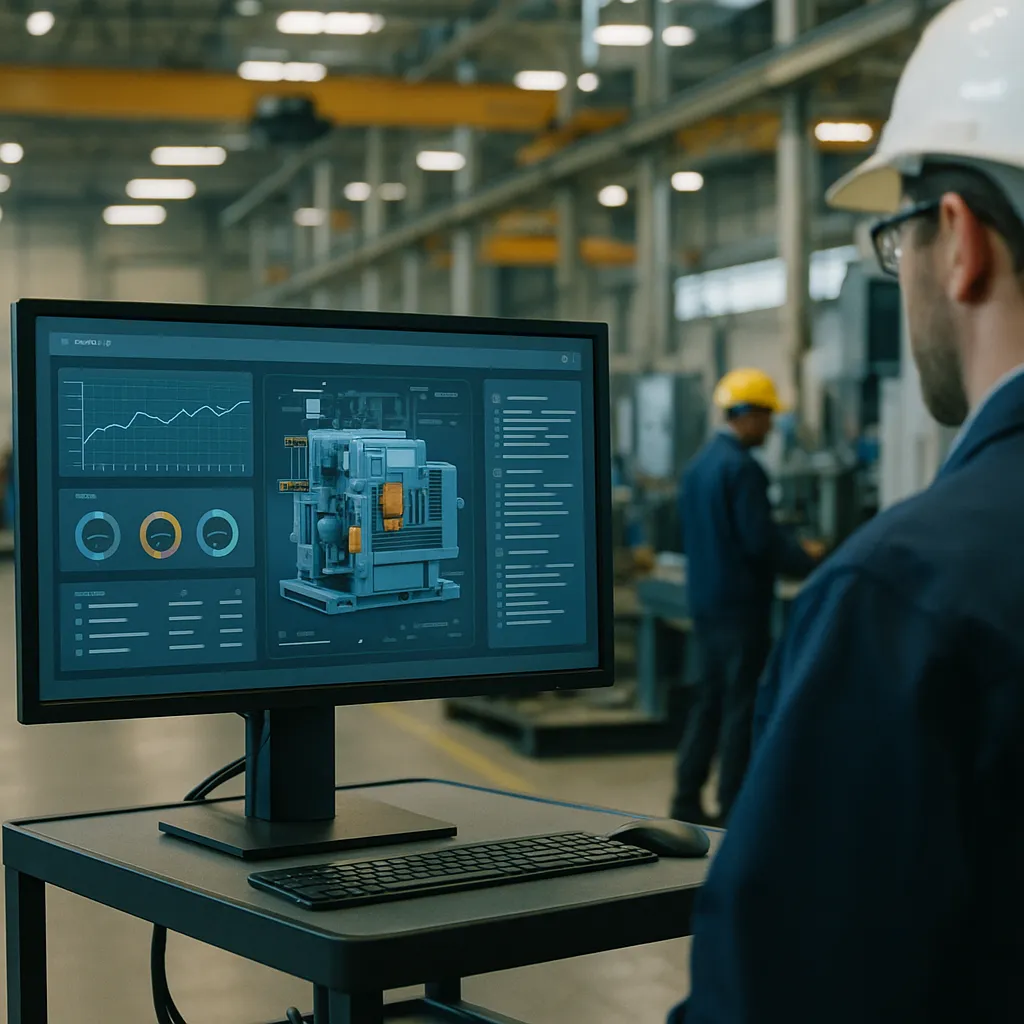
Siemens and Salesforce are expanding their AI partnership to integrate Siemens' Teamcenter product lifecycle management (PLM) system with Salesforce's Agentforce platform, allowing digital twin data to flow directly into sales and service workflows — without requiring engineers to manually answer configuration questions. The collaboration targets one of manufacturing's most persistent operational bottlenecks: the gap between engineering knowledge and the customer-facing teams who need it.
For discrete manufacturers — machine builders, industrial equipment suppliers, automotive component producers — this gap costs real money. A service technician arriving at a site without the correct spare part, or a sales rep unable to confirm whether a custom configuration is technically feasible, represents wasted time that currently gets resolved by pulling engineers away from engineering work.
What the Integration Does
Siemens' Teamcenter is the PLM platform at the center of this integration. PLM systems store the engineering source of truth: product designs, part configurations, assembly specifications, bill-of-materials data, and manufacturing tolerances. Most companies running Teamcenter have years of product knowledge locked inside it, accessible mainly to engineers who know how to navigate the system.
Salesforce's Agentforce is an AI agent platform that sits on top of CRM data — customer records, service histories, sales opportunities — and can take actions autonomously within defined parameters.
The integration connects these two systems so that:
Get this in your inbox.
Daily AI intelligence. Free. No spam.
- Service technicians can identify the correct spare part for a specific machine configuration before arriving on site, by querying digital twin data through a Salesforce interface
- Sales representatives can determine whether a custom product configuration is technically feasible without escalating to an engineering team
- Agentforce AI agents can surface the right product knowledge in context, pulling from live PLM data rather than static documentation
The Manufacturing Problem This Solves
In a typical industrial manufacturer today, the flow of technical knowledge looks like this: a customer asks about a configuration, a salesperson emails an applications engineer, the engineer checks Teamcenter, responds two days later, the salesperson relays the answer. For service issues, a technician discovers on site that they have the wrong part, orders it, and schedules a second visit.
Automating the lookup step with AI agents that have direct PLM access compresses that loop. The announced integration does not eliminate the need for engineers — someone still has to build and maintain the product data in Teamcenter. But it stops routing routine lookups through engineering bandwidth.
For companies running both Teamcenter and Salesforce — a common combination in industrial manufacturing — this reduces cycle time on quotes and service calls without requiring new software investments.
What It Means for Salesforce's Industrial Play
Salesforce has been positioning Agentforce as an enterprise AI operating layer that works across CRM, ERP, and now PLM data. The Siemens partnership is a signal that Salesforce intends to be the AI orchestration layer for industrial workflows, not just sales and customer service workflows.
Connecting Agentforce to Teamcenter also means Salesforce gains a foothold in manufacturing-specific data that competitors lack. An AI agent with access to both CRM (what the customer bought, what service history exists) and PLM (what the product is configured to do, what parts are compatible) can surface more precise recommendations than either system alone.
What to Watch
The success of this integration depends on data quality and liability boundaries. Teamcenter configurations are authoritative when engineers maintain them diligently; they become unreliable when legacy product data is incomplete or stale. An AI agent surfacing an incorrect part number for a critical industrial machine can cause costly failures — which means the integration needs clear confidence thresholds and fallback workflows when the PLM data is ambiguous.
Pilot results from early manufacturing customers — specifically whether first-time fix rates for service improve and whether quote cycle times measurably shorten — will determine whether this becomes a standard deployment pattern across Siemens and Salesforce's shared customer base.
Source: StockTitan / Salesforce PR, September 2026
Did this help you understand AI better?
Your feedback helps us write more useful content.
Get tomorrow's AI briefing
Join readers who start their day with NexChron. Free, daily, no spam.