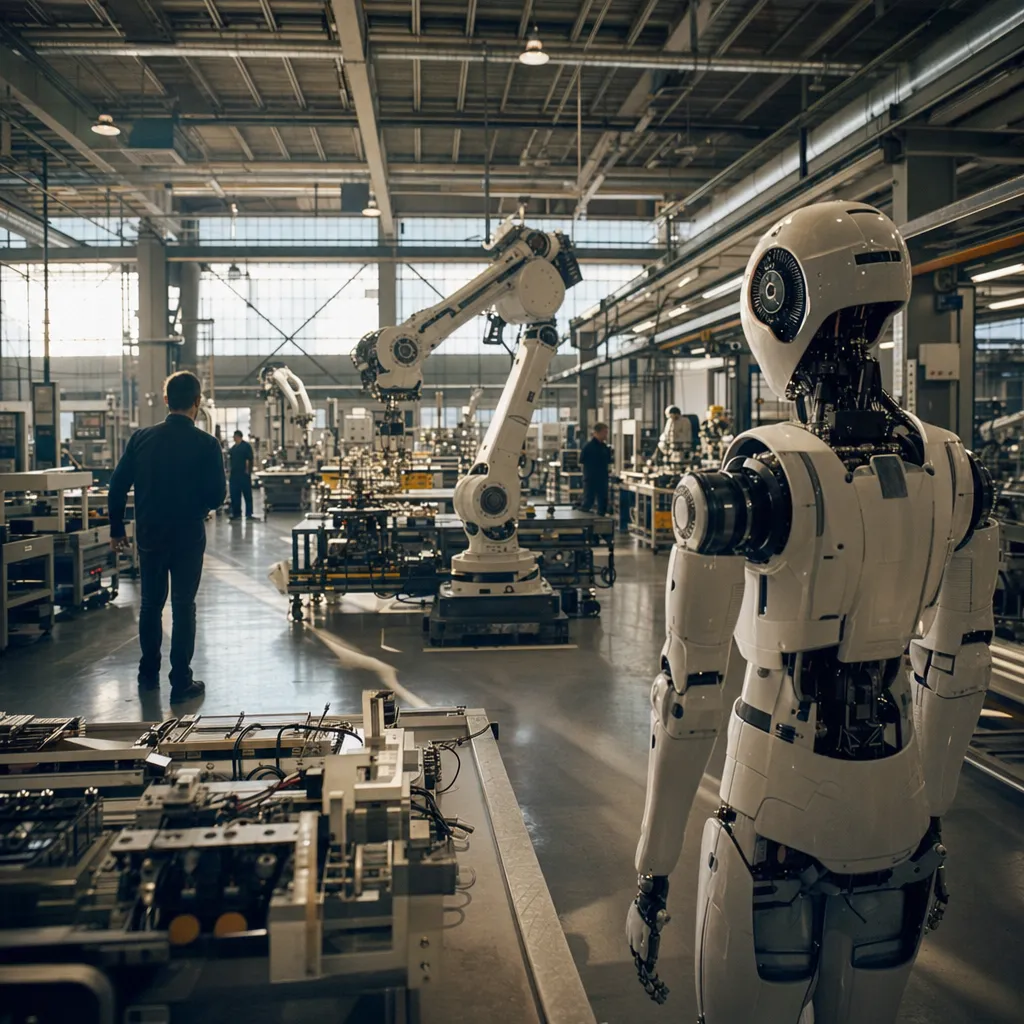
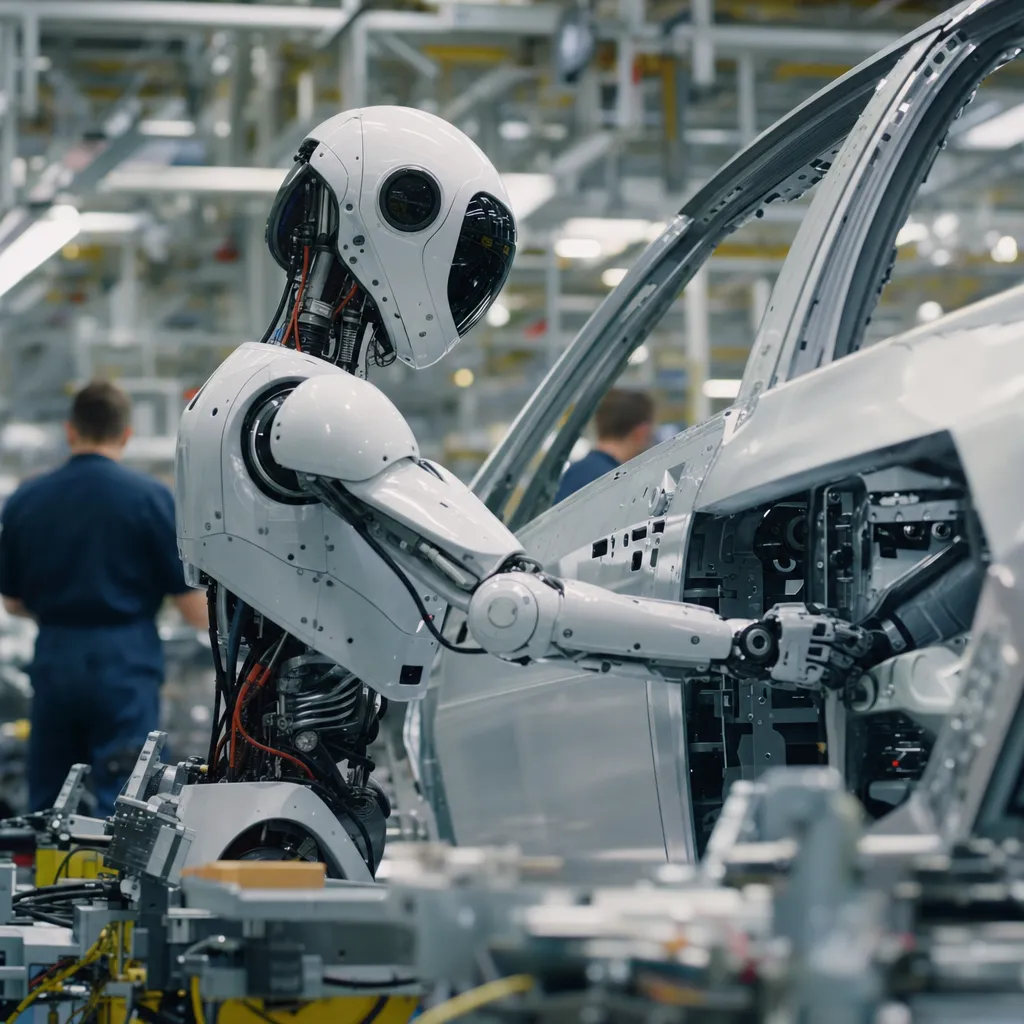
Physical AI and robotics companies raised more than $1 billion in a single week in November 2026, marking the moment the sector crossed from speculative investment to commercial buildout.
Physical AI and robotics companies raised more than $1 billion in funding during the first week of November 2026 — a single-week total that marks a structural shift in the sector. For the first time at measurable scale, factory robot deployments are moving from proof-of-concept pilots to limited commercial production runs in automotive, semiconductor, and life sciences manufacturing. The money is no longer flowing into research; it is flowing into deployment.
Physical AI — AI systems that operate in the physical world, including robot arms, autonomous construction equipment, and precision manufacturing systems — has lagged behind software AI on the deployment curve for a straightforward reason: physical systems must handle uncertainty that software does not. An LLM encountering an edge case generates a strange output; a factory robot encountering an edge case can damage a $200,000 machine or injure a worker. The engineering bar is categorically higher. The funding surge in the first week of November signals that investors believe that bar has now been cleared at commercial scale.
The numbers
According to Manufacturing Dive's analysis, the week's activity included:
- $600 million raised specifically for construction robotics — a segment targeting autonomous bricklaying, site survey, earthmoving, and structural assembly
- $50 million raised by Formic, a factory automation deployment company, in a round led by Mercato Partners
- Formic simultaneously announced a partnership with Physical Intelligence (Pi), bringing Pi's robotic foundation models into Formic's factory deployment infrastructure
- Automotive component orders are nearly doubling on AI-driven automation demand across semiconductor, electronics, and life sciences manufacturing
- Total week: over $1 billion in physical AI and robotics raises
The Formic–Physical Intelligence model
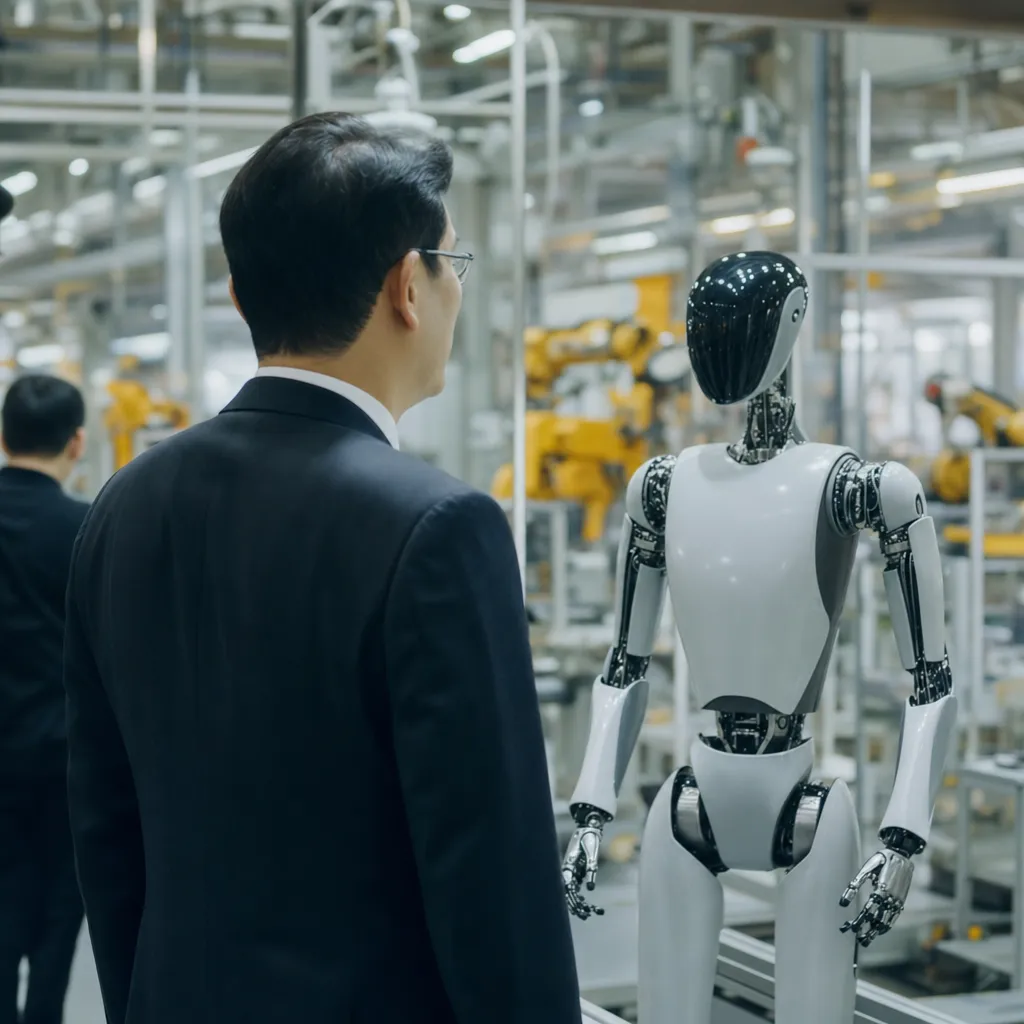
The Formic raise is the most structurally significant deal of the week because of how it is structured. Physical Intelligence builds robotic foundation models — general-purpose AI "brains" for robots that can be adapted to many physical tasks, analogous to how a foundation language model can be fine-tuned for specific text tasks. Formic handles deployment and maintenance: it places robots in factories, manages integration with existing production lines, and takes on the operational risk of keeping those robots running.
This unbundled structure — model provider plus deployment specialist — mirrors what happened in software AI: model labs (OpenAI, Anthropic) separated from application developers who build on their APIs. In physical AI, the equivalent split is between companies building the foundational intelligence and companies handling the physical deployment. It is a more commercially defensible structure than trying to build both capabilities in-house, because it lets each company specialize where it has genuine advantage.
Get this in your inbox.
Daily AI intelligence. Free. No spam.
Three sectors driving the surge
Construction automation is absorbing the most capital. Autonomous systems for bricklaying, excavation, site survey, and prefabricated structural assembly are entering commercial pilots with major general contractors. The economics are compelling in markets where skilled construction labor is both expensive and scarce — conditions that currently apply across North America and Western Europe.
Semiconductor and electronics manufacturing is the second major destination. High-precision assembly tasks — placing components at micron tolerances, handling wafers, managing cleanroom operations — have historically been resistant to automation because the physical precision requirements exceeded what general-purpose robots could deliver. AI-native robots trained specifically for these tasks are now demonstrating the required precision in controlled production settings.
Life sciences manufacturing rounds out the three. Pharmaceutical fill-and-finish — the final stage of drug manufacturing where product is measured into vials or packages — is attracting automation investment driven by regulatory pressure to reduce contamination risk from human handling. Lab automation for drug discovery is a separate but parallel investment theme.
What factory managers need to know
The cost-benefit math for deploying physical AI is shifting. Systems that were cost-prohibitive at pilot scale become viable when:
- Foundation model costs drop as models scale and training amortizes over more deployments
- Deployment specialists like Formic absorb integration and maintenance risk
- Automotive component orders signal enough sustained demand to justify capital expenditure
The practical implication for manufacturing operations managers: the "wait and see" posture on physical AI is becoming a competitiveness risk. Competitors who deploy in the next 12-18 months will generate operational data that compounds into a durable advantage — systems get better as they learn factory-specific conditions, and that learning is not transferable to a competitor's later deployment.
What to watch
Whether Formic or Physical Intelligence announce named automotive or semiconductor manufacturing partners from the current wave of orders will be the strongest signal that commercial deployment is real and not just pipeline. Watch for Q1 2027 physical AI funding totals — if the $1 billion week was a peak, expect consolidation; if it was a new floor, expect the sector to attract sovereign wealth and pension fund capital alongside venture. Also watch whether any construction robotics company from the week's raises announces a named general contractor deployment before year-end 2026.
Did this help you understand AI better?
Your feedback helps us write more useful content.
Get tomorrow's AI briefing
Join readers who start their day with NexChron. Free, daily, no spam.