OpenAI has issued a formal RFP to US manufacturers seeking suppliers for robotics components, data center hardware, and consumer electronics — a major signal of its intent to anchor AI production domestically.
OpenAI Issues Formal RFP to US Manufacturers for Robotics, Data Centers, and Consumer Electronics
By Hector Herrera | June 15, 2026 | Manufacturing
OpenAI has issued a formal Request for Proposals asking US-based manufacturers to supply the physical hardware needed to build its AI ecosystem — robotics components, data center inputs, and consumer electronics — with vendor selection slated for March 2027. The move is the clearest signal yet that OpenAI intends to anchor AI hardware production inside the United States rather than rely on the global supply chains that have long dominated the electronics and robotics industries.
This matters because OpenAI isn't buying servers. It's trying to build a domestic industrial base.
What's in the RFP
According to Supply Chain Dive, OpenAI's solicitation targets three distinct categories:
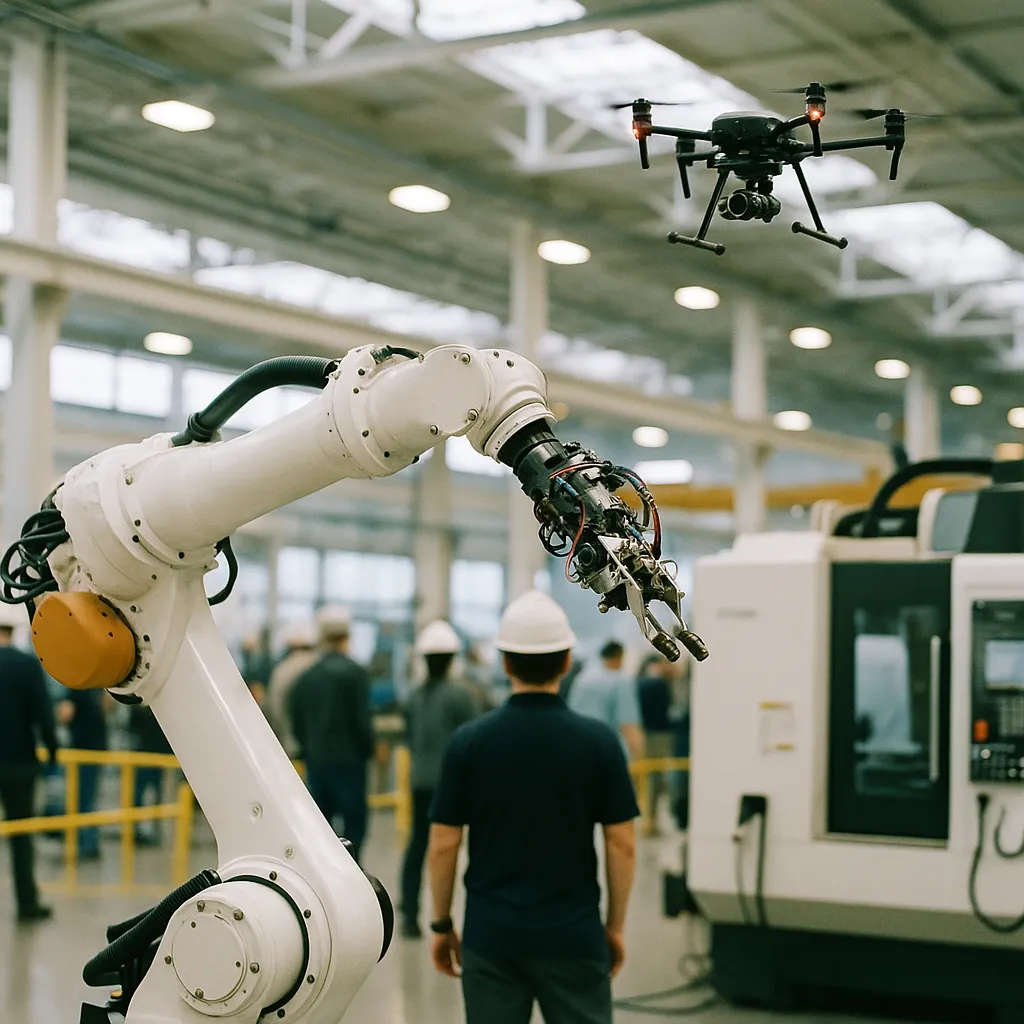
- Robotics components — gearboxes, motors, and power electronics, the physical building blocks of humanoid and industrial robots
- Consumer electronics hardware — components for AI-enabled devices destined for end consumers
- Data center inputs — equipment and materials needed to build and expand AI compute infrastructure
Submissions were due in June 2026. OpenAI expects to complete vendor selection by March 2027, giving selected suppliers roughly nine months to prepare for production-scale relationships.
The RFP does not specify contract values, but the implied demand is substantial. OpenAI operates or has announced partnerships on data centers requiring billions in hardware, and its robotics ambitions — including its investment in Figure AI and ongoing physical AI research — suggest robotics component procurement is not a rounding error.
Why US-Based Supply Matters Now
The push toward domestic sourcing reflects a structural shift in how AI companies think about supply chain risk. For the past decade, electronics manufacturing was optimized around global cost arbitrage — components made in Asia, assembled in Southeast Asia, shipped worldwide. That model worked until it didn't: COVID-era disruptions, rare earth export controls, and the ongoing US-China technology rivalry have exposed the fragility of deep overseas dependencies.
Get this in your inbox.
Daily AI intelligence. Free. No spam.
For AI specifically, the stakes are higher. GPUs, power electronics, and robotic actuators are now dual-use strategic assets. The US government has already restricted exports of high-end AI chips to adversaries. It follows logically that companies building AI infrastructure at national scale — and working alongside the US government — would face pressure to source domestically.
OpenAI has increasingly positioned itself as a US strategic asset. CEO Sam Altman has met repeatedly with US policymakers and described AI as central to national competitiveness. A formal commitment to US manufacturing is consistent with that posture — and with the political climate in Washington, where both parties have backed domestic semiconductor and advanced manufacturing initiatives.
What This Means for US Industrial Manufacturers
For US manufacturers in the robotics and electronics space, OpenAI's RFP is the kind of demand signal that can reshape capital allocation decisions.
Robotics component makers — particularly those producing precision gearboxes, servo motors, and power electronics — face a validated, large-scale customer willing to source domestically at a premium. That changes the ROI calculus for capacity investments that previously looked marginal.
Data center suppliers have a more established playbook, but OpenAI's scale and growth trajectory make it a consequential customer alongside the hyperscalers (Amazon, Microsoft, Google) who already drive much of US data center construction.
Consumer electronics component manufacturers face the hardest path. The US electronics manufacturing base largely hollowed out during the offshoring wave of the 1990s-2000s. Rebuilding capacity for AI-era consumer devices — whether AI-enabled wearables, smart home hardware, or personal AI devices — requires investments that won't materialize from a single RFP. But the RFP creates a visible buyer, which is the precondition for investors to fund capacity.
What to Watch
The March 2027 vendor selection deadline is the next concrete milestone. Watch for which US manufacturers win preferred supplier status — that will reveal which segments of the domestic industrial base are actually capable of meeting OpenAI's specifications at scale. If major categories come up empty, it will accelerate pressure on Congress to fund domestic manufacturing buildout through industrial policy. If US suppliers win across all three categories, it validates years of CHIPS Act-era reshoring investments.
OpenAI is not the only AI company thinking this way. Expect competitors to issue similar solicitations once they see OpenAI formalize the model.
Hector Herrera covers AI's impact on manufacturing and supply chains for NexChron.
Did this help you understand AI better?
Your feedback helps us write more useful content.
Get tomorrow's AI briefing
Join readers who start their day with NexChron. Free, daily, no spam.