The Smart Home Reality Check: Which AI Features Are Actually Sticking in 2026
A new IoT Breakthrough analysis finds AI energy management and predictive appliance maintenance gaining real traction, while voice assistant novelty features remain largely unused in the $95.83B smart home market.
Why this matters
A new IoT Breakthrough analysis finds AI energy management and predictive appliance maintenance gaining real traction, while voice assistant novelty features remain largely unused in the $95.83B smart home market.
The Smart Home Reality Check: What AI Features Are Actually Sticking in 2026
By Hector Herrera | April 12, 2026 | Home
The smart home market is on track to hit $95.83 billion in 2026, but a new analysis from IoT Breakthrough separates the growth story from the adoption reality. Two AI features are genuinely gaining traction: energy management and predictive appliance maintenance. Most of the voice-assistant novelty features that defined the first wave of smart home marketing remain largely unused.
What's Working
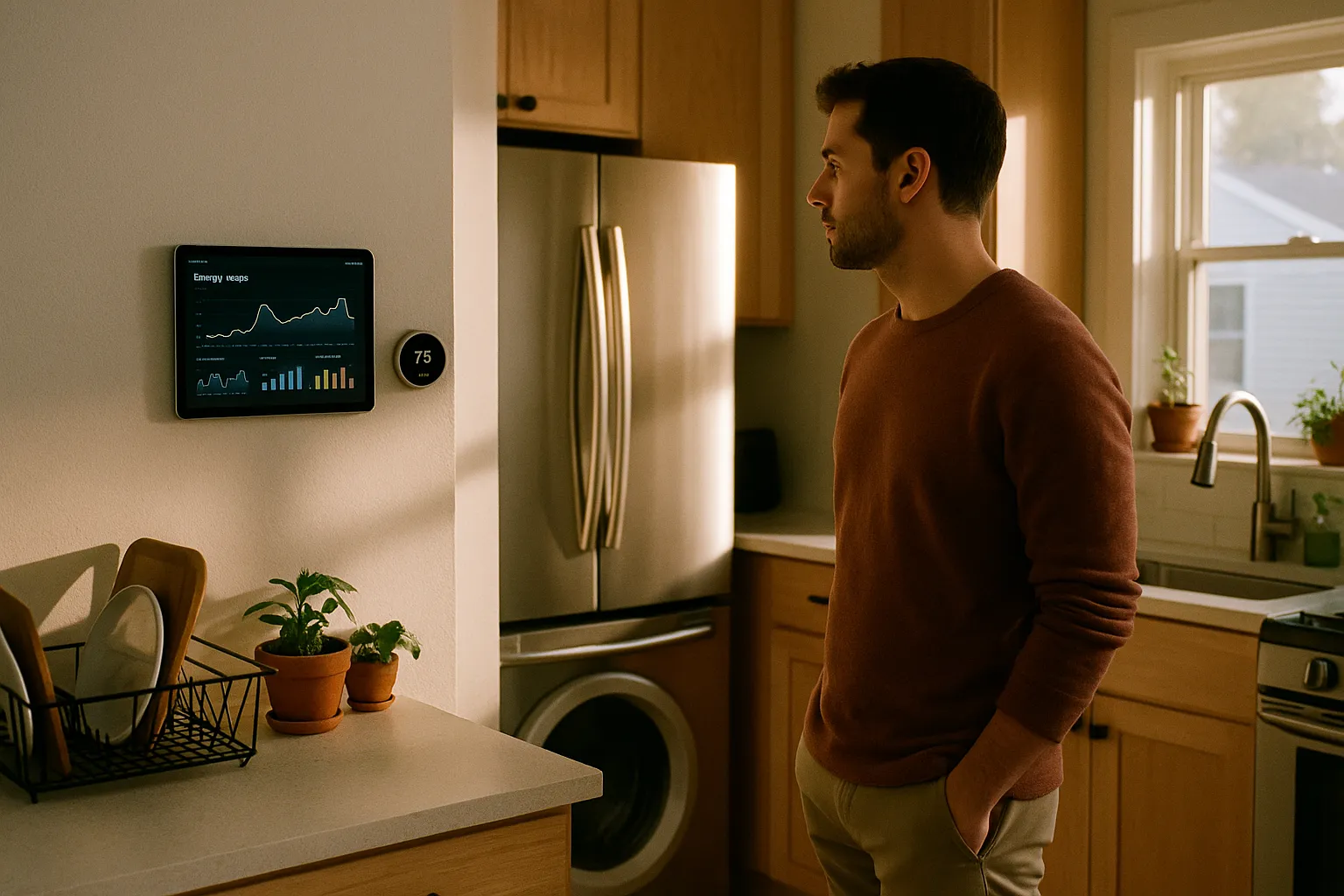
AI-powered energy managementhas crossed from early adopter to mainstream use case. These systems monitor household power consumption in real time, learn usage patterns, and automatically adjust heating, cooling, and appliance operation to minimize energy costs. Where smart thermostats like early Nest models required manual optimization, current AI energy systems do it continuously without user input.
The utility is concrete: measurable reductions in energy bills without requiring behavioral change from residents. That combination—real savings, no friction—is what separates functional AI features from gimmicks.
Predictive appliance maintenance is the other clear winner. AI systems embedded in appliances like washing machines, refrigerators, and HVAC units now monitor operational data—vibration patterns, temperature variances, cycle completion times—and alert homeowners to developing problems before failure occurs. A washing machine that flags a bearing issue three weeks before it seizes is meaningfully different from one that simply breaks. The maintenance cost savings are real, and homeowners can schedule repairs rather than manage emergencies.
What's Not Working
Voice assistant features—the defining consumer interface of the first smart home era—remain dramatically underused relative to installed base. Most households with smart speakers use them for timers and music playback. The vision of an AI that coordinates your entire home through natural language commands is technically more capable than ever, but adoption data shows consumers haven't changed their behavior to match.
The pattern is consistent with what behavioral economists would predict: high-friction habit changes don't stick, even when the technology works. Telling your home to run the dishwasher requires remembering to do so, constructing the right command, and trusting the outcome. Energy management automation requires none of those steps—it runs whether or not you think about it.
Get this in your inbox.
Daily AI intelligence. Free. No spam.
The Market Signal Manufacturers Are Reading
IoT Breakthrough's analysis finds manufacturers are responding to this adoption data by embedding AI deeper into core appliance functionality rather than layering it on as a premium add-on. This is a significant strategic shift.
The first generation of smart home AI was additive: take an existing appliance, add a Wi-Fi chip and an app, charge a premium. The emerging approach builds AI capability into the appliance's core operating logic from the start. Your refrigerator's compressor management is AI-driven not because someone added a smart module, but because the appliance was designed that way.
The market implications are real: the "smart" premium is compressing as AI becomes table stakes for mid-range and higher appliances. Manufacturers who haven't made this shift face margin pressure from competitors who have.
What This Means for You
If you're planning a home renovation or appliance replacement: Prioritize energy management integration over voice assistant capabilities. The energy savings ROI is measurable; the voice assistant convenience is marginal. Look specifically for appliances with predictive maintenance alerts—the data on avoided repair costs favors early adoption.
If you're evaluating smart home platforms: The platforms gaining share are those with robust energy monitoring and appliance integration, not those with the flashiest AI assistant interfaces. Google Home, Apple Home, and Matter-compatible systems are competing hard on this front.
If you're a renter: The energy management systems with the clearest ROI typically require home ownership to install properly. Look for building-level smart energy programs from your utility company—many now offer AI-powered demand response programs with bill credits.
What to Watch
The next two to three years will determine whether AI appliance integration becomes a genuine source of household savings at scale, or remains a premium product feature that most consumers never activate. The $95.83 billion market projection assumes the former. The adoption data shows the latter is still the default.
Watch utility partnerships. As AI energy management becomes more capable, utilities have strong incentives to subsidize or even provide smart home hardware in exchange for demand response participation. Pacific Gas & Electric and several northeastern utilities have already piloted this model. Nationwide rollout would accelerate smart home adoption faster than any consumer marketing campaign.
Also watch the Matter protocol rollout. Matter is the interoperability standard backed by Apple, Google, Amazon, and the Connectivity Standards Alliance. When it works, it enables AI energy management to span across manufacturers' devices—a prerequisite for whole-home optimization. Adoption has been slower than the industry projected, but the installed base is growing.
Hector Herrera covers home technology and AI for NexChron.
Key Takeaways
✓By Hector Herrera | April 12, 2026 | Home
✓AI-powered energy management
✓Predictive appliance maintenance
✓If you're planning a home renovation or appliance replacement:
Hector Herrera is an AI systems architect and the founder of Hex AI Systems. He designs and runs AI systems in production and writes daily about how AI is reshaping business, government and everyday life. 20+ years building for the web. Houston, TX.