The 2026 Smart Factory Outlook finds LLM adoption in manufacturing surged from 16% to 35% in a single year, as lights-out factories operate autonomously across Asia-Pacific.
LLM Adoption in Manufacturing Doubled in a Year. The Age of the Lights-Out Factory Is Here.
By Hector Herrera | April 30, 2026
Manufacturing AI has crossed a threshold that should recalibrate expectations across the industry. The 2026 Smart Factory Outlook, published by IIoT World, finds that LLM adoption in manufacturing facilities surged from 16% to 35% in a single year. That is not incremental growth. That is a doubling — inside an industry that has historically been the last to adopt new enterprise technology.
Large language models — the class of AI that powers ChatGPT, Claude, and similar tools — are now running in more than one in three factories. That figure signals that manufacturing AI has moved decisively past the pilot-program stage into board-mandated operational deployment.
Why This Doubling Matters More Than It Looks
Manufacturing is a useful leading indicator precisely because it is a lagging adopter. The economics of factory technology investment are brutal: installations are expensive, downtime during changeovers is measured in lost production, and the consequences of a failed implementation — in a facility running at 85% capacity utilization — are immediate and quantifiable.
When manufacturers adopt technology this fast, it means the ROI case has become undeniable enough to overcome that institutional conservatism. The question worth asking is: what changed?
The answer is threefold. LLMs have become reliable enough for production environments. The use cases have clarified. And the competitive pressure from AI-enabled competitors — particularly in Asia — has become visible enough that doing nothing is no longer defensible.
What Factories Are Actually Using AI For
The 2026 Smart Factory Outlook identifies three primary use cases driving LLM adoption:
AI-guided quality inspection — language models analyzing production sensor data, camera feeds, and historical defect records to identify anomalies earlier in the manufacturing process. Catching a defect at station three is far cheaper than catching it at final assembly or, worse, in a customer return.
Get this in your inbox.
Daily AI intelligence. Free. No spam.
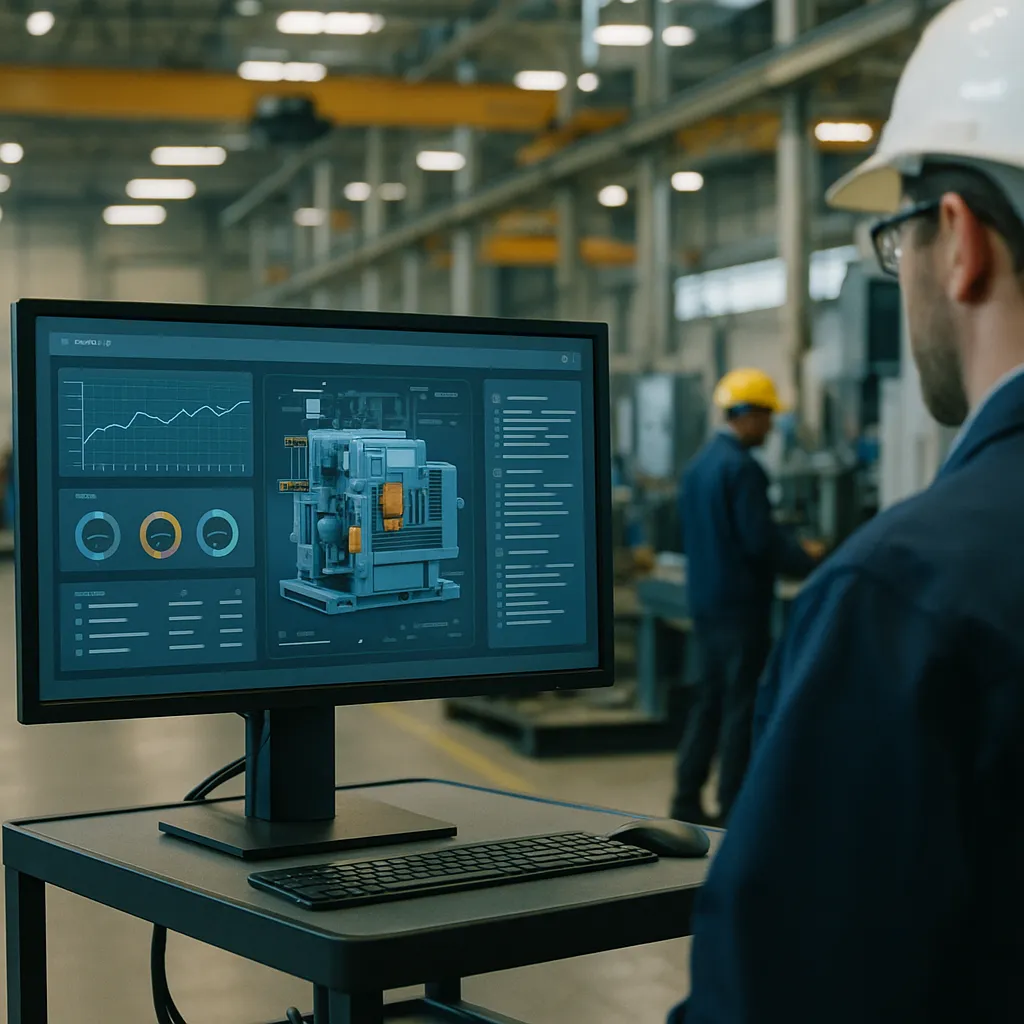
Language-based diagnostics — maintenance engineers querying AI systems about equipment anomalies in plain language rather than manually cross-referencing technical manuals. A question like "this motor is vibrating at 60Hz but temperature is normal — what are the three most likely causes given our maintenance history?" is now answerable in seconds.
Employee training agents — AI systems that onboard new workers to complex equipment with personalized, interactive instruction. In industries with high turnover and decades of institutional knowledge locked in retiring workers, this capability is directly addressing a labor risk that many manufacturers have identified as existential.
These aren't flashy applications. They're operational ones. That is precisely why adoption is accelerating — the ROI is measurable and the business case doesn't require a theoretical leap of faith.
Humanoid Robots: Real Growth from a Small Base
The report also tracks interest in humanoid robots — machines designed to operate in factory environments built for humans, without requiring physical modifications to the facility — growing from 8% to 13% of surveyed manufacturers year-over-year.
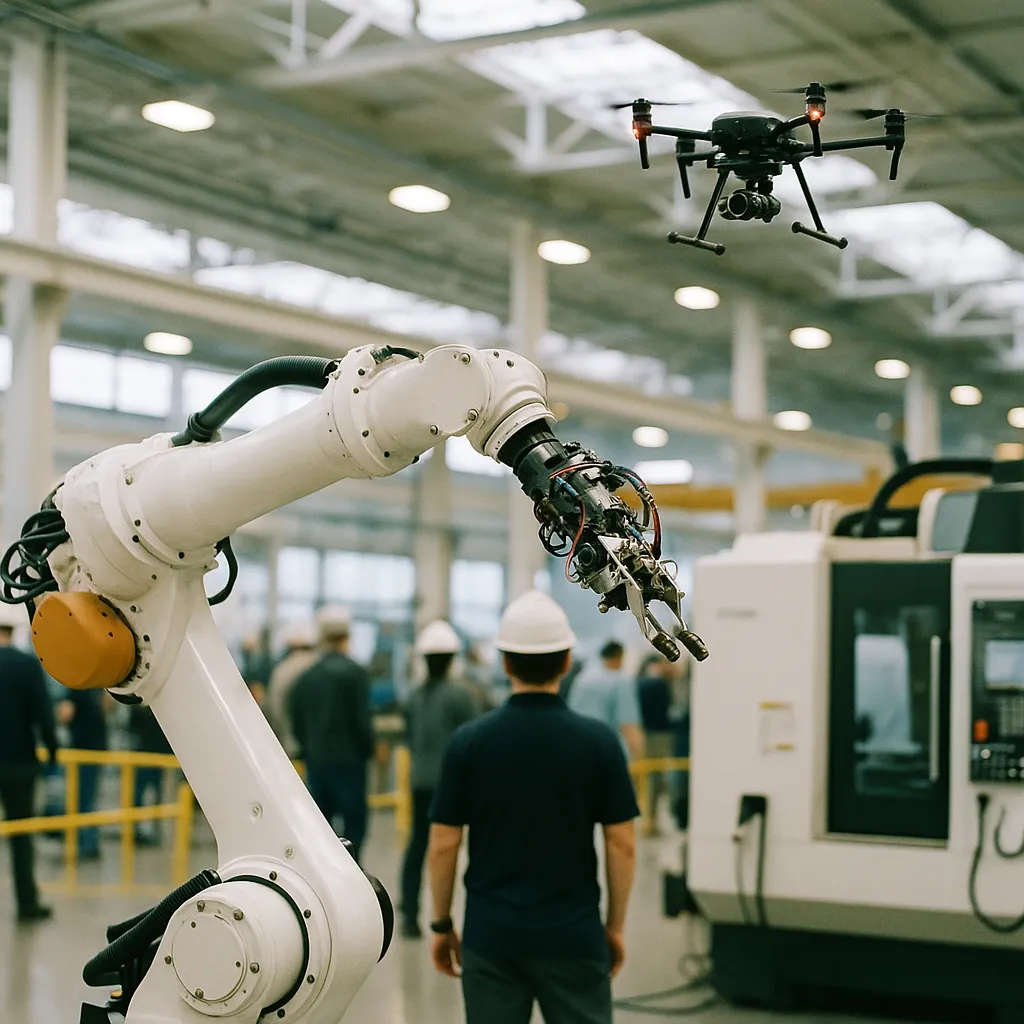
That growth is meaningful even from a small absolute base. It reflects genuine pilot deployments, not just executive curiosity driven by media coverage of Figure, 1X, Apptronik, or Tesla Optimus. The companies in the 13% are testing the economics of humanoid robots against specific task categories: material handling, part transfer, and light assembly tasks that are too varied for fixed automation but too physically demanding to staff reliably at current labor market conditions.
The factors limiting faster adoption are straightforward: per-unit costs remain high (current commercial units run between $50,000 and $250,000 depending on capability), reliability in unstructured environments is still maturing, and integration with existing production management systems requires significant engineering work.
Lights-Out Factories Are Operational — and They're in Asia
The most consequential data point in the outlook for US and European manufacturers: fully autonomous lights-out factories are now in reliable operation across China and Asia-Pacific.
A lights-out factory is a facility that operates without human workers on the production floor — the name refers to the fact that no lighting is required because no humans are present. These are not demonstration sites or carefully controlled showcases. The report indicates they are in sustained, commercially operational use.
This matters because it establishes what is technically achievable now, not in some future scenario. The productivity and labor cost structure of a lights-out facility is fundamentally different from any human-staffed operation. The competitive pressure this creates on US manufacturers — particularly in labor-intensive categories like electronics assembly, textile manufacturing, and component production — will intensify as the technology spreads.
What to Watch
The political and labor response to lights-out manufacturing in the US is just beginning to take shape. The immediate pressure point will be the next round of labor contract negotiations in automotive and heavy manufacturing, where AI capability in factory settings is no longer theoretical. Expect unions to push for explicit contract provisions governing the pace of automation deployment, mandatory advance notice periods for AI-driven workflow changes, and retraining fund requirements tied to productivity gains from AI.
The companies that invested in LLM-based factory AI over the past two years are not just gaining operational efficiency — they are building the organizational capability and workforce familiarity that will allow them to accelerate adoption again when the next generation of automation technology matures. The gap between early movers and laggards is compounding.
Did this help you understand AI better?
Your feedback helps us write more useful content.
Get tomorrow's AI briefing
Join readers who start their day with NexChron. Free, daily, no spam.