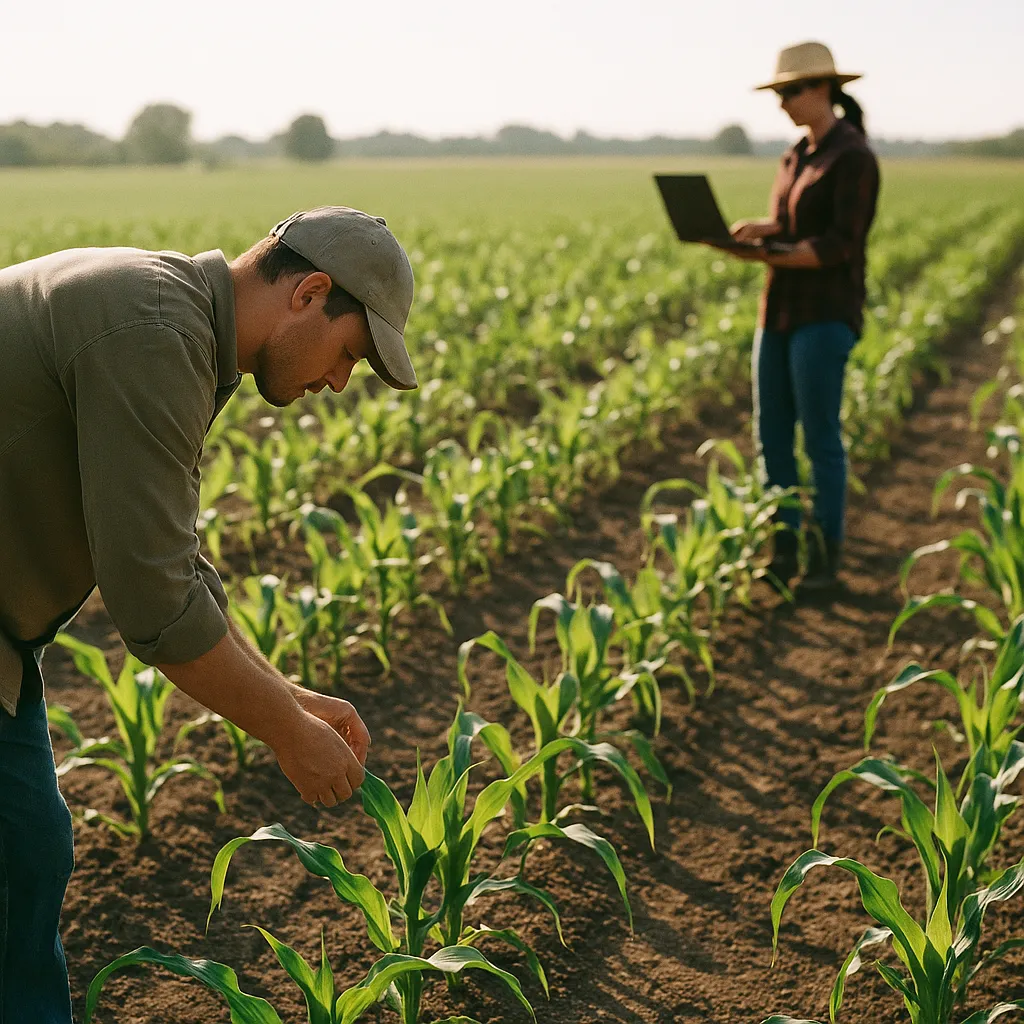
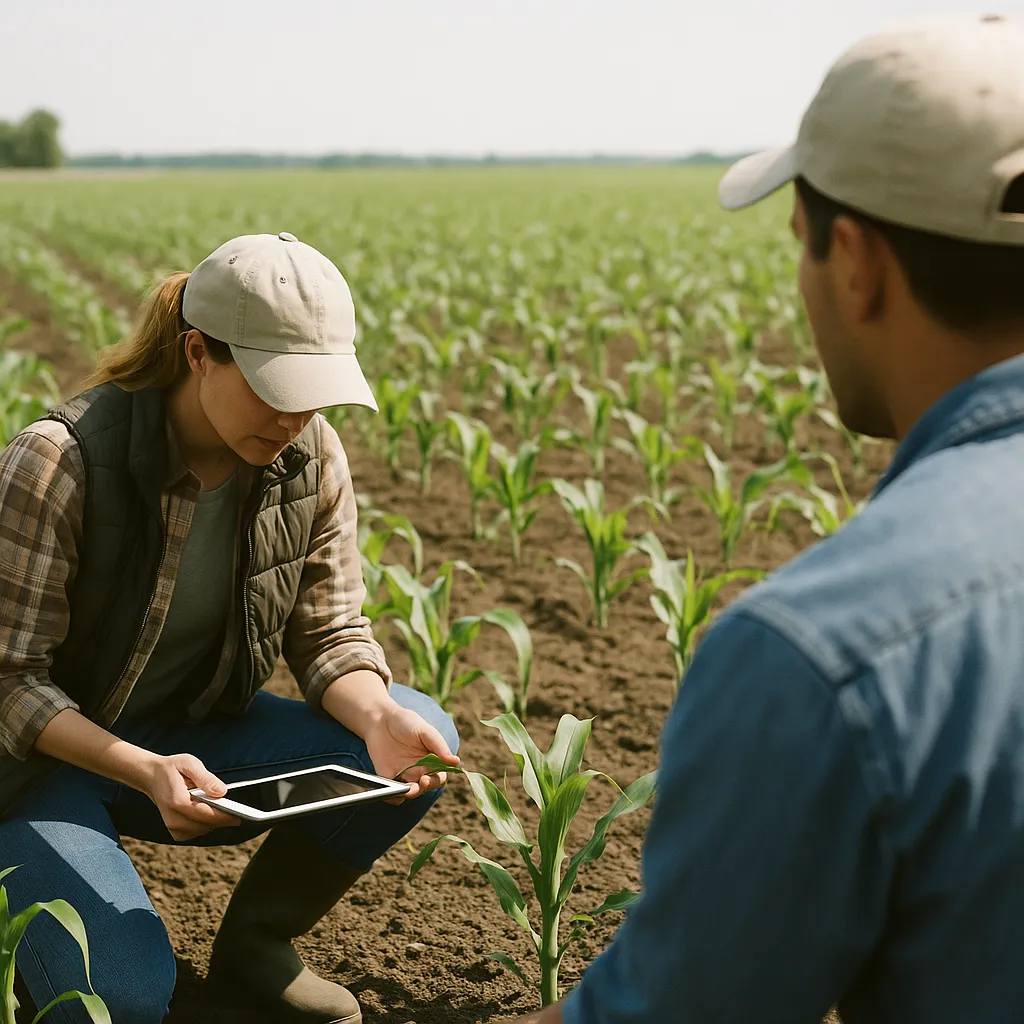
After years of pilot programs, AI in agriculture is delivering measurable commercial returns in 2026 — with John Deere's See & Spray reducing herbicide use by up to 90% in the field.
Farm AI Has Moved From Expensive Experiment to Measurable Returns in 2026
By Hector Herrera | May 11, 2026 | Agriculture
After years of pilot programs and technology demonstrations, AI in agriculture is generating real financial returns at commercial scale. ICL Group's 2026 industry analysis identifies 2026 as the decisive year when autonomous equipment, robotic sprayers, and AI-driven crop monitoring moved from controlled trials to operational farm deployments — with measurable results that justify the investment. The headline number: John Deere's See & Spray AI platform is reducing herbicide use by up to 90% in commercial field deployments.
That's not a projection. It's a field result. And it signals something important about where farm AI is in its maturity cycle — past the point of asking whether the technology works, now into the harder question of who can afford it and whether the infrastructure exists to support it.
What's Actually Working in 2026
Three categories of farm AI are demonstrating consistent, measurable ROI in commercial deployments:
1. AI-powered precision spraying
John Deere's See & Spray Ultimate technology uses computer vision and machine learning to distinguish crops from weeds in real time, activating individual nozzles only over weed targets. The commercial result: herbicide reduction of up to 90% compared to blanket spraying, with equivalent or better weed control outcomes.
At current herbicide costs — elevated by supply chain pressures and inflation — a 90% reduction in chemical inputs can represent tens of thousands of dollars per large farm operation per season. The technology pays for itself in chemical savings alone within a few growing seasons at scale.
2. Autonomous and semi-autonomous equipment
Autonomous tractors from John Deere (8R series), CNH Industrial (Case IH AFS Connect), and AGCO (Fendt Guide Connect) are operating commercially on large-scale grain operations, primarily in the U.S. Midwest, Brazil, and Australia. The technology handles repetitive field operations — tillage, planting, harvesting — with GPS precision while the operator monitors remotely or focuses on other tasks.
Get this in your inbox.
Daily AI intelligence. Free. No spam.
The labor argument is central here. U.S. agriculture faces an acute labor shortage that AI is partially filling: the H-2A visa program for agricultural guest workers reached record utilization in 2025, yet farm operators still report difficulty staffing seasonal operations. Autonomous equipment doesn't solve the whole labor problem, but it extends the productive capacity of available workers.
3. Drone-based crop monitoring and variable-rate application
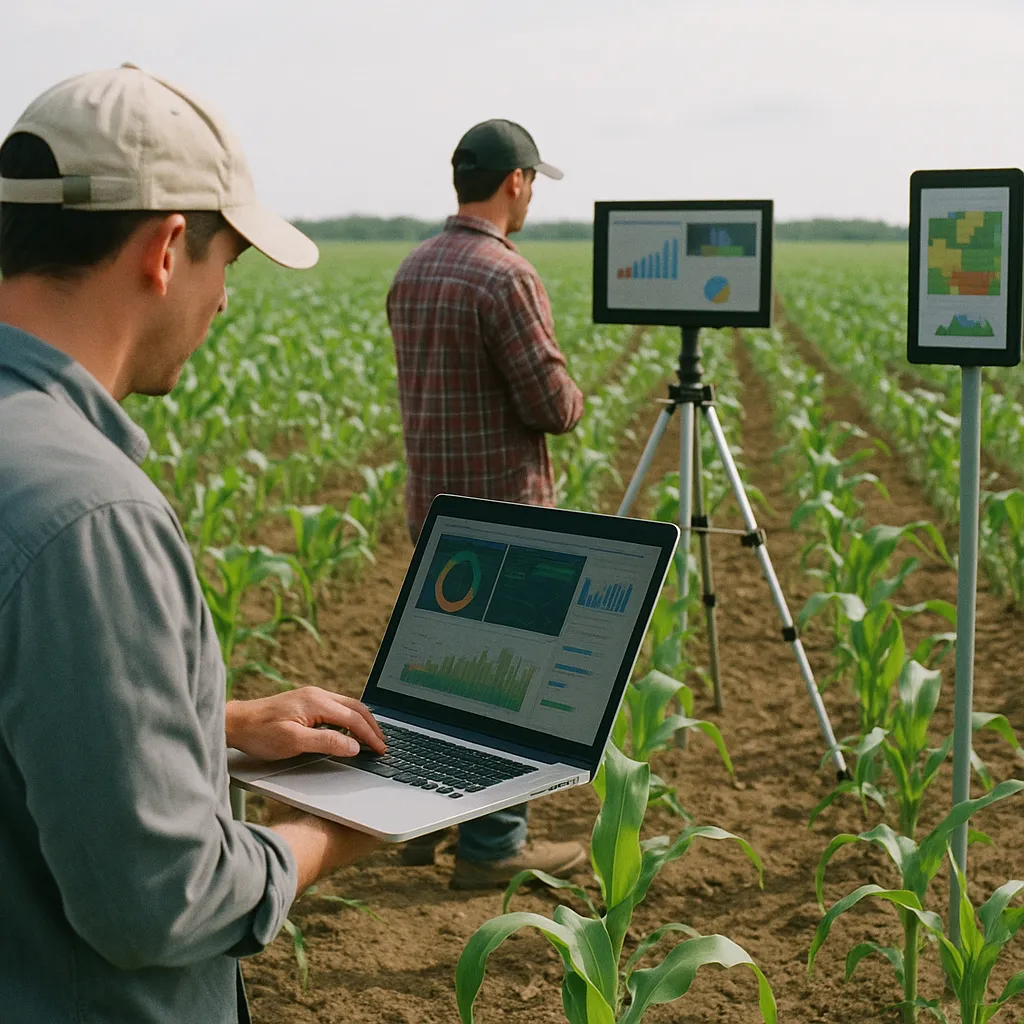
AI-powered drone systems from companies including DJI Agras, Precision AI, and Agri-Drone now fly automated field mapping missions, generating NDVI (Normalized Difference Vegetation Index) maps that identify crop stress, moisture variation, and pest pressure at sub-meter resolution. Those maps feed variable-rate application equipment that adjusts seed, fertilizer, or pesticide application rates by zone — reducing input waste and improving yield uniformity.
The New Farm Bill Provision Changes the Math
One of the most significant structural changes in 2026 is a provision in the updated Farm Bill that expands AI adoption cost reimbursement through the Environmental Quality Incentives Program (EQIP). Under the new terms:
- Farmers are eligible for 90% reimbursement of AI adoption costs — precision sprayers, autonomous equipment, drone monitoring systems — through EQIP payments
- This is 15 percentage points above the standard EQIP cost-share cap, reflecting Congress's designation of agricultural AI as an environmental priority (fewer chemicals, less fuel, reduced soil compaction)
- The provision applies to operations that submit qualifying conservation plans demonstrating how the AI technology reduces chemical or resource inputs
The economic effect is significant. A precision sprayer system that costs $50,000 becomes a $5,000 investment after EQIP reimbursement. At that price point, the technology is accessible to a much larger segment of the farming population — not just large commodity operations with capital to deploy.
Who Is Adopting — and Who Isn't
The honest picture of farm AI adoption in 2026 has a structural inequality problem that the industry tends to understate.
Who is adopting: Large-scale commodity grain operations (corn, soybeans, wheat), specialty crop producers (vineyards, orchards, vegetable operations) with high per-acre value, contract growers for large agribusiness companies that mandate technology adoption as a condition of contracts, and farmers with access to precision agriculture service providers that offer AI as a managed service.
Who isn't: Small and mid-scale diversified farms, beginning farmers without capital or credit for technology investment, and farms in regions without reliable broadband — a requirement for most connected AI agricultural systems. The USDA's 2025 Farm Computer Usage and Ownership survey found that farms with over 2,000 acres are more than twice as likely to use precision agriculture technology as farms under 500 acres.
The EQIP provision helps, but 90% reimbursement still requires farmers to front the capital initially and navigate a reimbursement process that small operations often lack the administrative capacity to manage.
What This Means for the Ag Tech Sector
For investors and companies in agricultural technology, the 2026 commercial deployments confirm several things:
- The technology works. Precision spraying, autonomous guidance, and AI crop monitoring have passed from demonstration to reliable commercial operation. The technical risk has largely been retired.
- Distribution and financing are now the constraints. Getting AI technology into the hands of mid-scale farmers requires dealer networks, financing products, managed service models, and government program navigation — business model problems, not engineering ones.
- Data ownership is becoming a competitive tension. AI agricultural platforms generate detailed records of field performance, crop health, and input application. The question of who owns that data — the farmer, the equipment manufacturer, or the platform — is moving from hypothetical to practical, particularly as climate disclosure requirements expand.
What to Watch
Watch EQIP application volumes over the 2026 growing season. If the 90% reimbursement provision drives a significant uptick in AI equipment applications, it will validate the cost-sharing model as a policy tool — and potentially prompt expansion or extension in the next budget cycle.
Also watch John Deere's See & Spray commercialization pace. The technology has proven itself in field trials. The question is how quickly it becomes standard equipment on new sprayer purchases, and how quickly aftermarket retrofit options reach the market for existing equipment.
Source: ICL Group — Agriculture in 2026: Moving from AI Hype to ROI & Resilience
Did this help you understand AI better?
Your feedback helps us write more useful content.
Get tomorrow's AI briefing
Join readers who start their day with NexChron. Free, daily, no spam.