The International Manufacturing Technology Show opens September 14 in Chicago as the first IMTS since physical AI took commercial hold — with AI platforms, humanoid robots, and digital twins moving from novelty to the central purchasing conversation on the show floor.
IMTS 2026 Opens in Chicago: Physical AI Takes Center Stage at Manufacturing's Most Important Show
The International Manufacturing Technology Show opens September 14 at McCormick Place in Chicago — and for the first time in its history, AI isn't a booth novelty or a future-state projection. Physical AI, humanoid robots, and digital twin simulation tools are the defining themes of IMTS 2026, reflecting how fast industrial AI has moved from research labs and pilots to the factory floor purchasing conversation.
IMTS draws roughly 90,000 attendees and more than 2,000 exhibitors across 1.2 million square feet — the largest manufacturing trade show in the Western Hemisphere. The 2026 edition, running September 14–19, is the first held since Physical AI — AI systems designed to perceive, reason, and act in physical environments — took meaningful commercial hold in manufacturing.
What's on the Floor
According to RobotToday's IMTS 2026 preview, three themes are shaping the show floor:
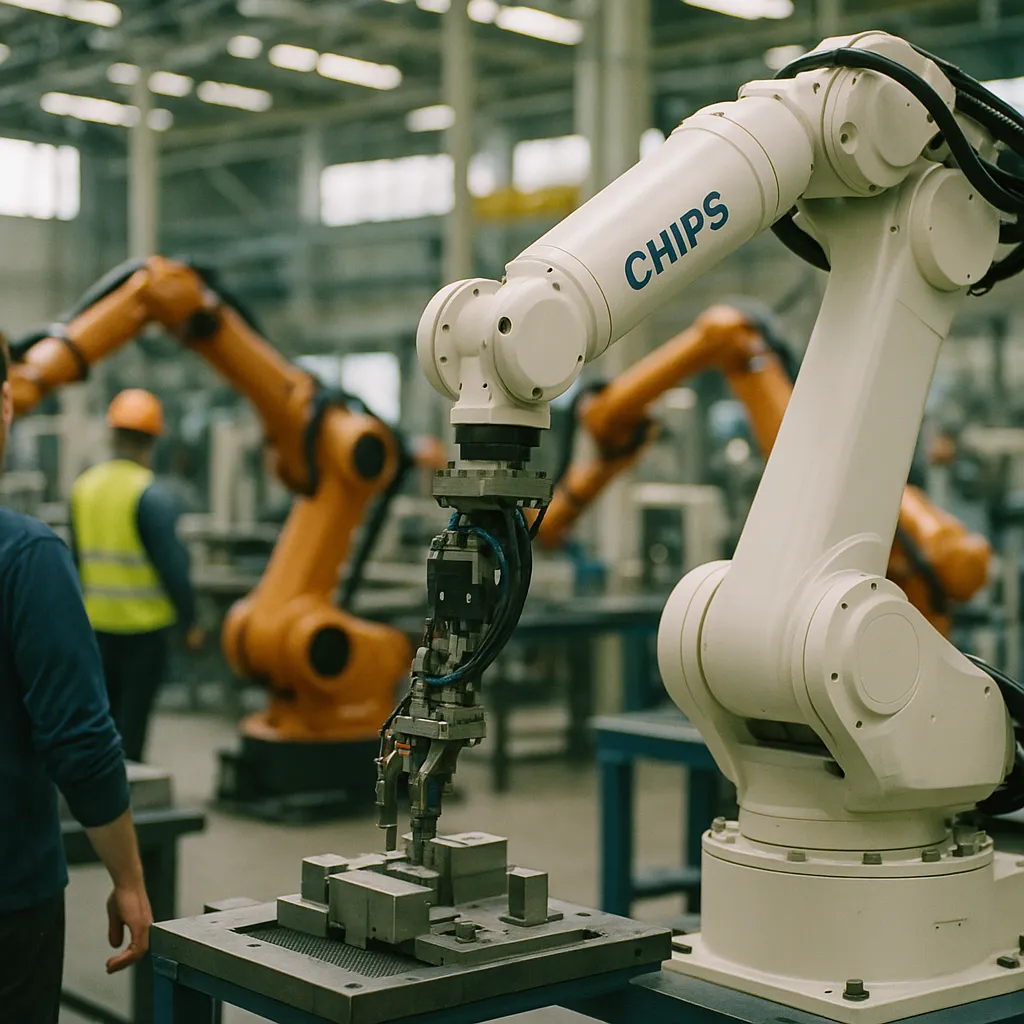
AI-driven manufacturing intelligence. The shift from isolated automation tools to unified AI platforms that manage machine scheduling, quality control, and production optimization across an entire facility. FANUC and Intrinsic — Google's industrial robotics software unit — are among exhibitors demonstrating integrated AI operating environments that treat the factory as a connected system rather than a collection of individual machines.
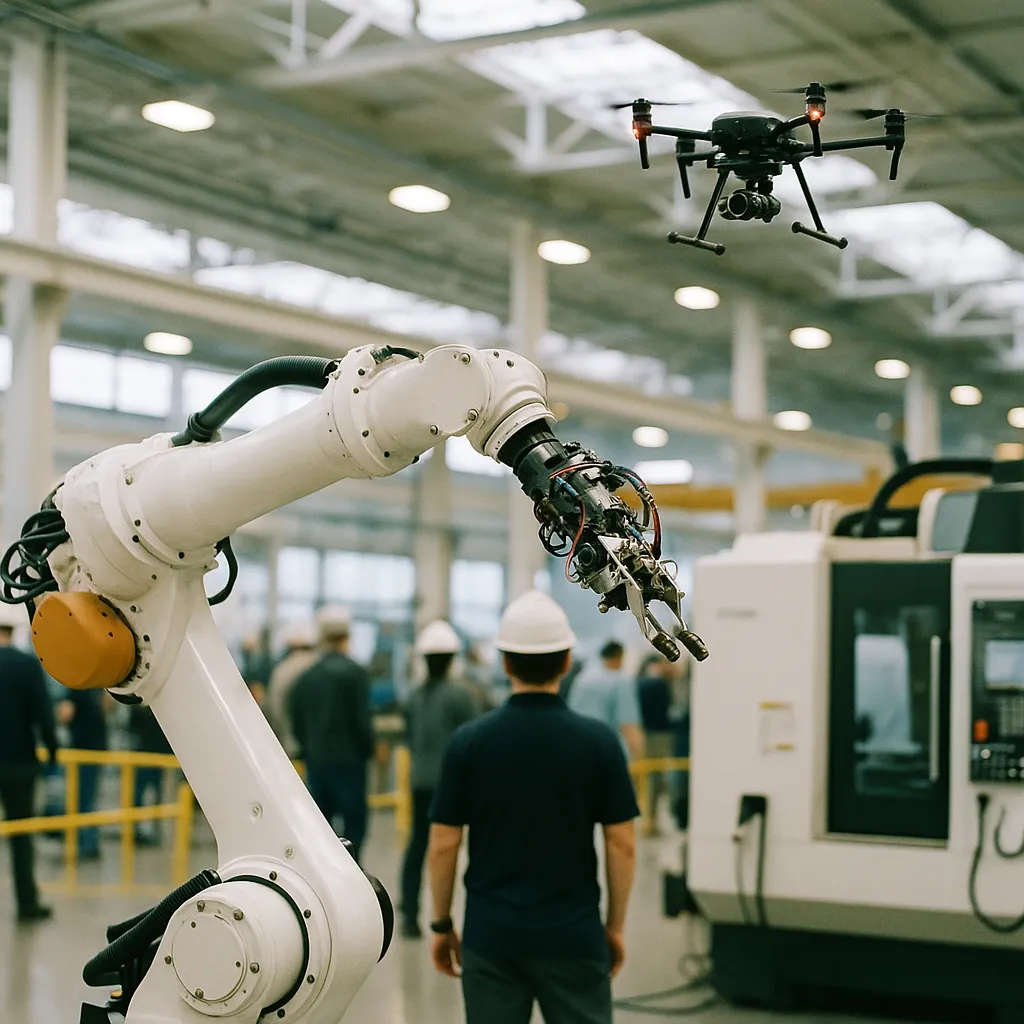
Humanoid robots in industrial settings. Richtech Robotics, Huayan Robotics, and other exhibitors are showing humanoid systems designed for high-mix manufacturing environments, where reconfiguration costs make traditional fixed automation economically difficult. The practical question IMTS 2026 is answering: can humanoids handle enough task variety to justify their cost premium over specialized collaborative robots?
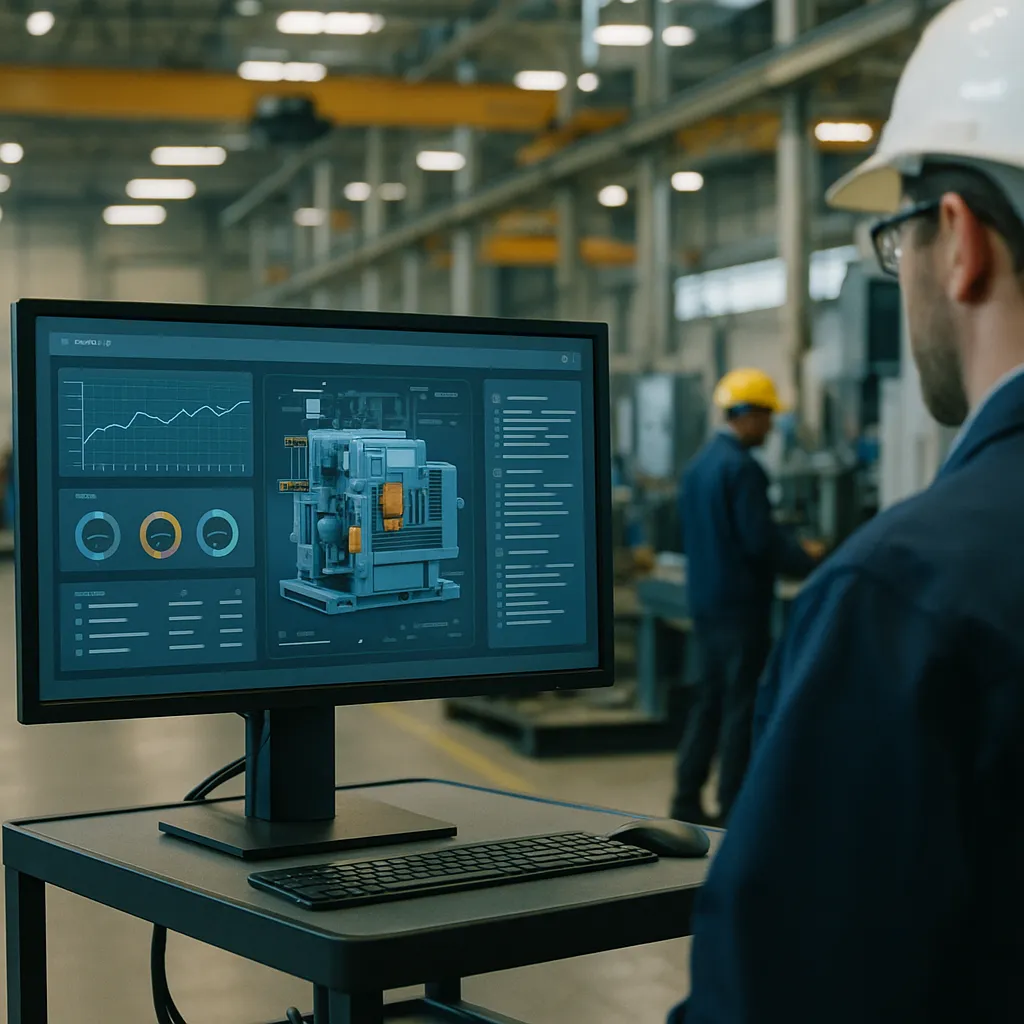
Digital twin simulation. Before deploying AI on a physical production line, manufacturers need to test it. Digital twin platforms — which simulate production environments so engineers can stress-test AI configurations without halting operations — are positioned at the show as the critical enabling layer for the Physical AI transition.
Why This Positioning Matters
Trade shows lag reality. By the time a technology dominates a show floor, it has already moved past the early-adopter phase and into mainstream purchasing conversations. That's what makes Physical AI's prominence at IMTS 2026 significant: it signals these systems are past the pilot stage and entering the procurement cycle for manufacturers who weren't part of the early-deployment wave.
Get this in your inbox.
Daily AI intelligence. Free. No spam.
The broader context: U.S. manufacturing is under simultaneous pressure from labor shortages, reshoring mandates driven by CHIPS Act and Inflation Reduction Act incentive structures, and cost competition from increasingly automated foreign production. AI and robotics are no longer just efficiency plays — they are increasingly necessary for domestic manufacturers to hit the cost targets that make reshored production economically viable.
This convergence has been building across multiple fronts. Nvidia built a coalition with major U.S. manufacturers around physical AI deployment earlier this year. Siemens [and Nvidia](/health/hoppr-nvidia-hospital-ai-foundation-models) announced an industrial AI operating system collaboration in June. BMW put humanoid robots on the Leipzig factory floor for Europe's first large-scale humanoid deployment in automotive manufacturing. IMTS is the moment the vendor ecosystem catches up to those announcements with products manufacturers can actually order.
The High-Mix Problem Is the Key Unlock
Most AI and robotics deployments to date have succeeded in high-volume, low-mix environments — automotive assembly lines, fulfillment warehouses, and other operations where the same task repeats thousands of times per day. The harder and more valuable problem is high-mix production: facilities that manufacture many different products in smaller quantities, requiring constant reconfiguration.
High-mix manufacturers — aerospace component suppliers, medical device producers, custom industrial equipment makers — have historically been left out of automation's benefits because retooling costs eat up efficiency gains before they compound. The core claim from exhibitors like Intrinsic and FANUC at IMTS 2026 is that AI-driven platforms can now reduce reconfiguration costs enough to make automation viable for high-mix environments.
If that claim holds up under production conditions, it opens a market that traditional robotics largely couldn't penetrate. The high-mix segment represents a large share of U.S. domestic manufacturing — the kind of specialized, lower-volume production that is hardest to offshore but also hardest to automate. Solving high-mix with AI would be the industrial equivalent of cracking a market others wrote off.
What the Humanoid Question Is Really About
The humanoid robot presence at IMTS deserves a specific note. Humanoids are expensive, slower than purpose-built machines, and still limited in dexterity for many precision tasks. Why are manufacturers paying attention?
The answer is flexibility. A humanoid robot that can be retasked through software — without physical retooling — has a different cost structure than a specialized cobot (collaborative robot) that requires hardware changes between product runs. For high-mix facilities that change configurations weekly or monthly, the humanoid's flexibility premium starts to look attractive even at a higher upfront cost.
The IMTS floor isn't showing humanoids as finished products ready for mass deployment. It's showing them as serious contenders in the conversation — a meaningful shift from three years ago, when humanoid manufacturing demos were widely viewed as proof-of-concept theater.
What to Watch
The real test from IMTS isn't what gets announced — it's what gets ordered. Purchase commitments made at IMTS typically take 12 to 24 months to show up as deployed systems. By late 2027, the industry will know whether the Physical AI products on display this week translated into working installations at scale — or whether they join the long history of manufacturing trade show demos that never achieved broad commercial deployment.
For manufacturers watching from the sidelines: IMTS 2026 is worth treating as a signal that the Physical AI purchasing window is open, not as confirmation that the technology is fully mature. The right response is evaluation, not adoption inertia.
By Hector Herrera
Did this help you understand AI better?
Your feedback helps us write more useful content.
Get tomorrow's AI briefing
Join readers who start their day with NexChron. Free, daily, no spam.