The International Manufacturing Technology Show opened September 14 in Chicago with a new Industrial AI Arena at its center—the clearest signal yet that applied factory-floor AI has moved from the innovation lab to the procurement conversation.
IMTS 2026 Opens in Chicago With New Industrial AI Arena as Factory-Floor AI Moves From Pilot to Purchase
The International Manufacturing Technology Show opened September 14 in Chicago with a new Industrial AI Arena at its center—the clearest signal yet that applied factory-floor AI has moved from the innovation lab to the procurement conversation. With 1,788 exhibitors and more than 90,000 attendees expected through September 19, IMTS 2026 is where the manufacturing industry will decide what it buys next.
IMTS runs every two years at McCormick Place and functions differently from strategy conferences: it is where purchase decisions get made. A dedicated pavilion for applied AI—not experimental AI, not roadmaps—signals that vendors believe the technology is ready for capital commitments today.
What the Industrial AI Arena Showcases
The Arena hosts a practitioner-focused AI conference running in parallel with the main exhibition floor. Three demonstrations from opening day define the show's direction:
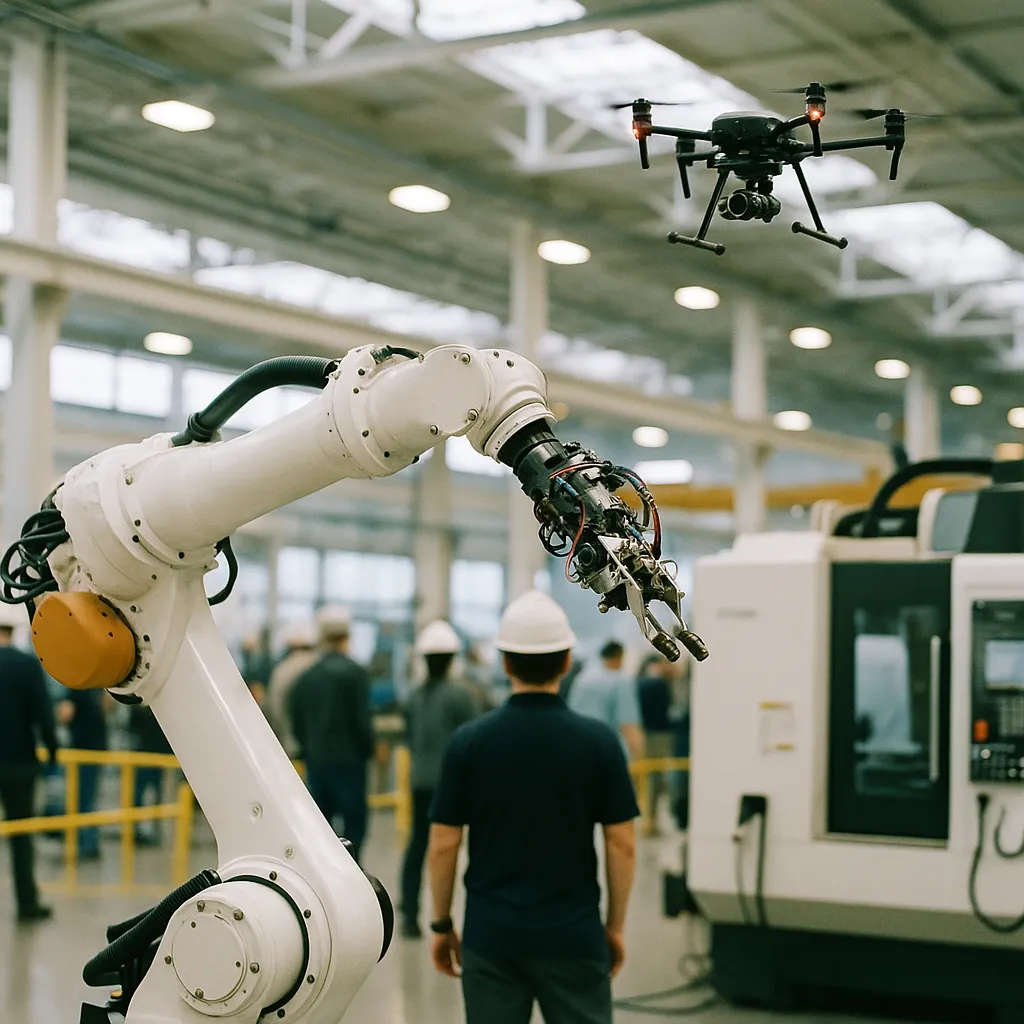
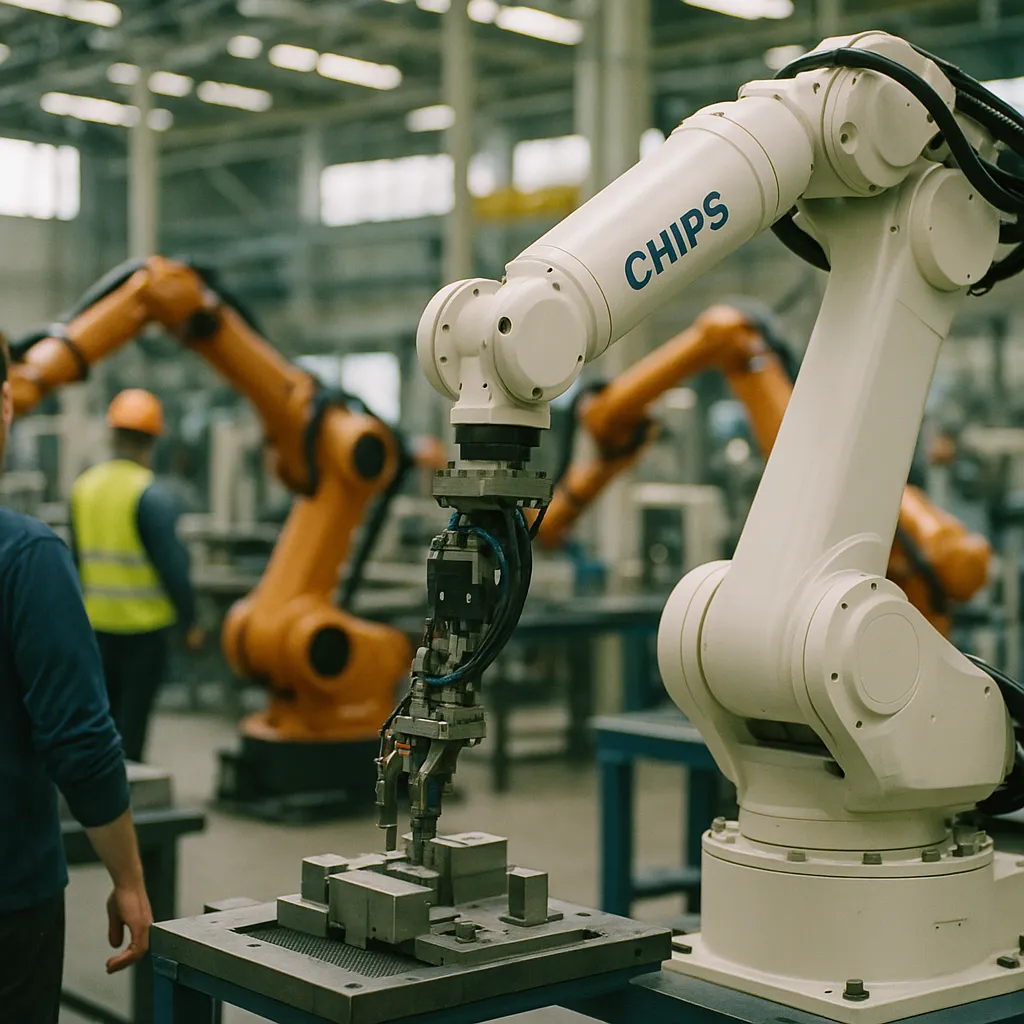
FANUC physical AI and robotics. FANUC, the world's largest industrial robot manufacturer by installed base, demonstrated AI-guided systems that adapt to variable workpieces on the production line. The practical significance: AI adaptation reduces the fixed-tooling setup costs that have historically made automation unworkable for short production runs and high-mix environments.
Intrinsic AI adaptive automation. Intrinsic, the robotics software company spun out of Alphabet, showed systems capable of handling product variation that previously required direct human judgment at the line level. High-mix manufacturing—producing multiple product variants on the same line—is the bottleneck most manufacturers cite as automation's persistent blind spot. Intrinsic's software layer addresses it without custom tooling.
Oak Ridge National Laboratory autonomous manufacturing cell. ORNL displayed a drone manufacturing cell running fully autonomous Mazak and FANUC machine tools. The government-backed installation functions as a reference architecture: a lights-out production system that mid-sized manufacturers can study as a blueprint, potentially with support through the federal Manufacturing USA network.
Why This Show Reflects an Industry Shift
IMTS 2026 arrives as US manufacturers face concurrent pressure to automate and to reshore production. According to the Association for Manufacturing Technology, US machine tool orders have increased for three consecutive quarters. Manufacturers are not waiting for labor market conditions to improve; they are building automated capacity now.
Get this in your inbox.
Daily AI intelligence. Free. No spam.
The Industrial AI Arena's existence reflects that calculus. When IMTS added automation pavilions in previous editions, it signaled industry intent. Adding an AI Arena in 2026—with production OEMs like Mazak and FANUC as participants, not research labs—signals that vendors believe buyers will sign purchase orders, not just collect brochures.
The show's reindustrialization framing is deliberate. Congress and the White House have made domestic manufacturing a policy priority, and defense supply-chain requirements increasingly specify American-made components. That policy environment gives manufacturers political cover to invest in automation capital they might otherwise defer.
What It Means for Manufacturers
For the roughly 90,000 attendees at McCormick Place this week, the practical question is: what can I buy and deploy in the next 12 months? The systems on display are not aspirational. FANUC sells approximately 25,000 robots per quarter globally. Mazak is a production-line OEM with active US manufacturing. Their participation alongside Intrinsic's software platform signals that the AI-integrated factory floor is a procurement category, not a research topic.
The highest-value opportunity is in high-mix environments—job shops, contract manufacturers, and Tier 2 automotive and aerospace suppliers that have been locked out of automation by setup costs. If Intrinsic's adaptive systems deliver at commercial scale what the IMTS demonstration suggests, the automation calculus for this segment changes materially. A shop that currently hand-sets fixtures for each batch run could eliminate that labor cost without the fixed investment in dedicated automation lines.
The ORNL drone cell carries a different signal: government-funded reference architectures exist precisely to de-risk commercial adoption. Manufacturers who visit that installation leave with a working blueprint, not a concept.
What to Watch
The telling signal comes after IMTS closes September 19: whether the Industrial AI Arena generates equipment orders that translate to deployment announcements before the 2028 show. The gap between "shown at trade show" and "running at scale" is where manufacturing AI initiatives reliably stall—not for lack of technology but for lack of integration support, workforce training, and change management at the plant level.
IMTS 2026 is the industry's clearest statement yet that it intends to close that gap. Whether the intent converts to installations will show up in AMT's order data over the next four quarters.
Source: IMTS 2026 Opening Coverage, RoboticsTomorrow
By Hector Herrera | NexChron
Did this help you understand AI better?
Your feedback helps us write more useful content.
Get tomorrow's AI briefing
Join readers who start their day with NexChron. Free, daily, no spam.