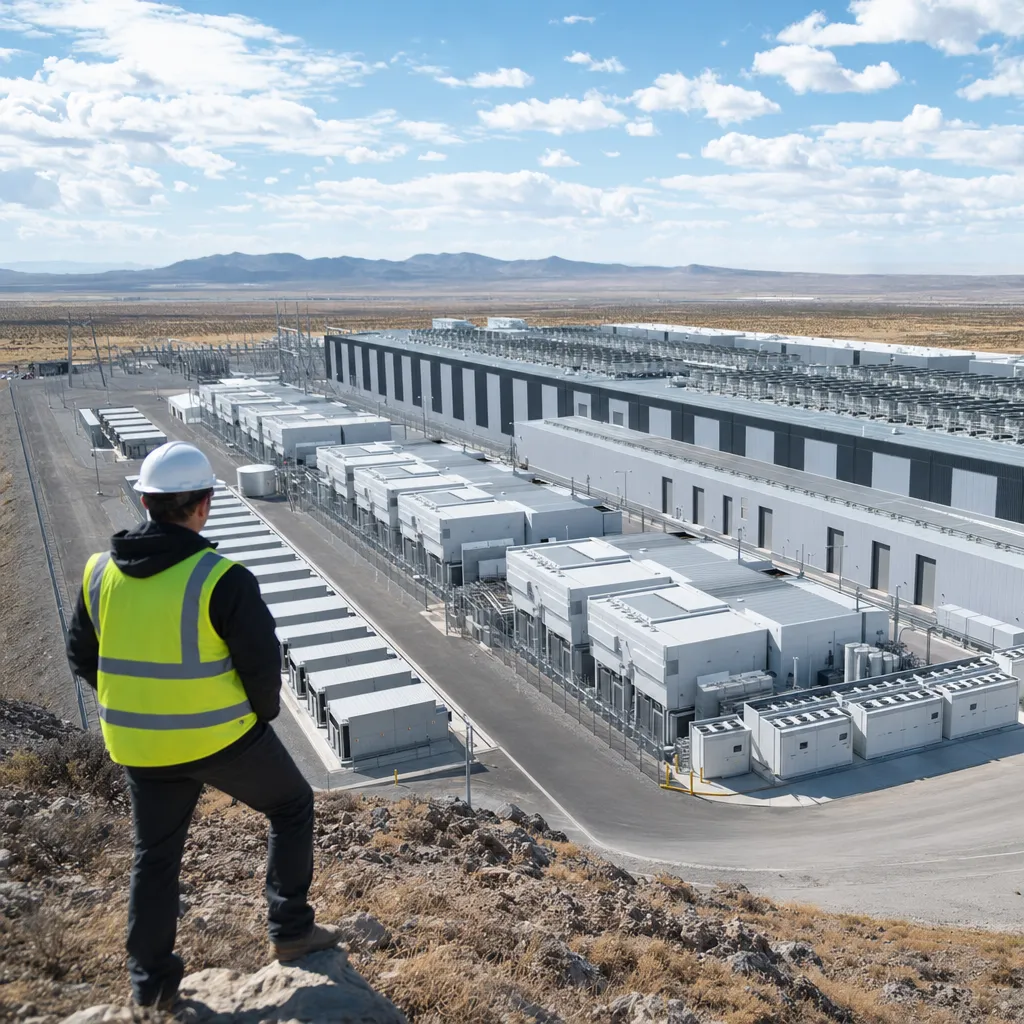
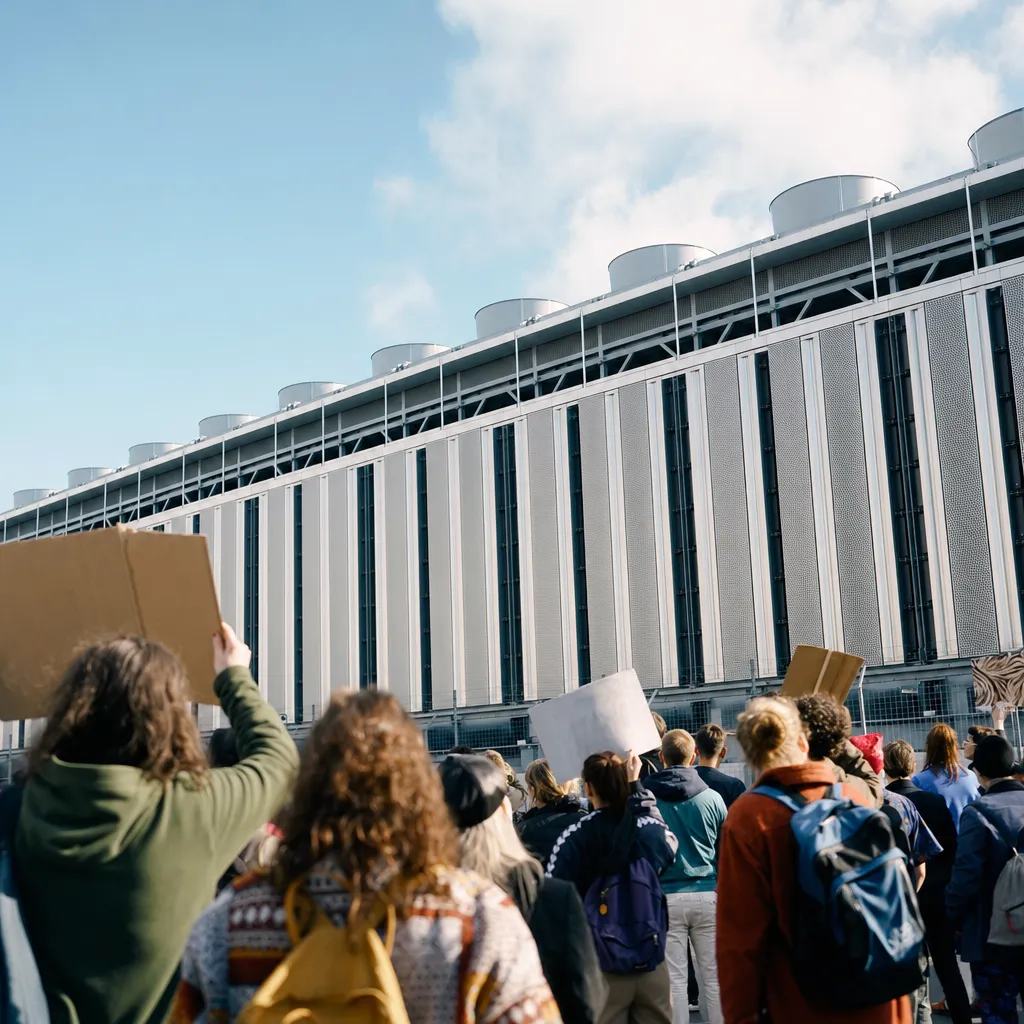
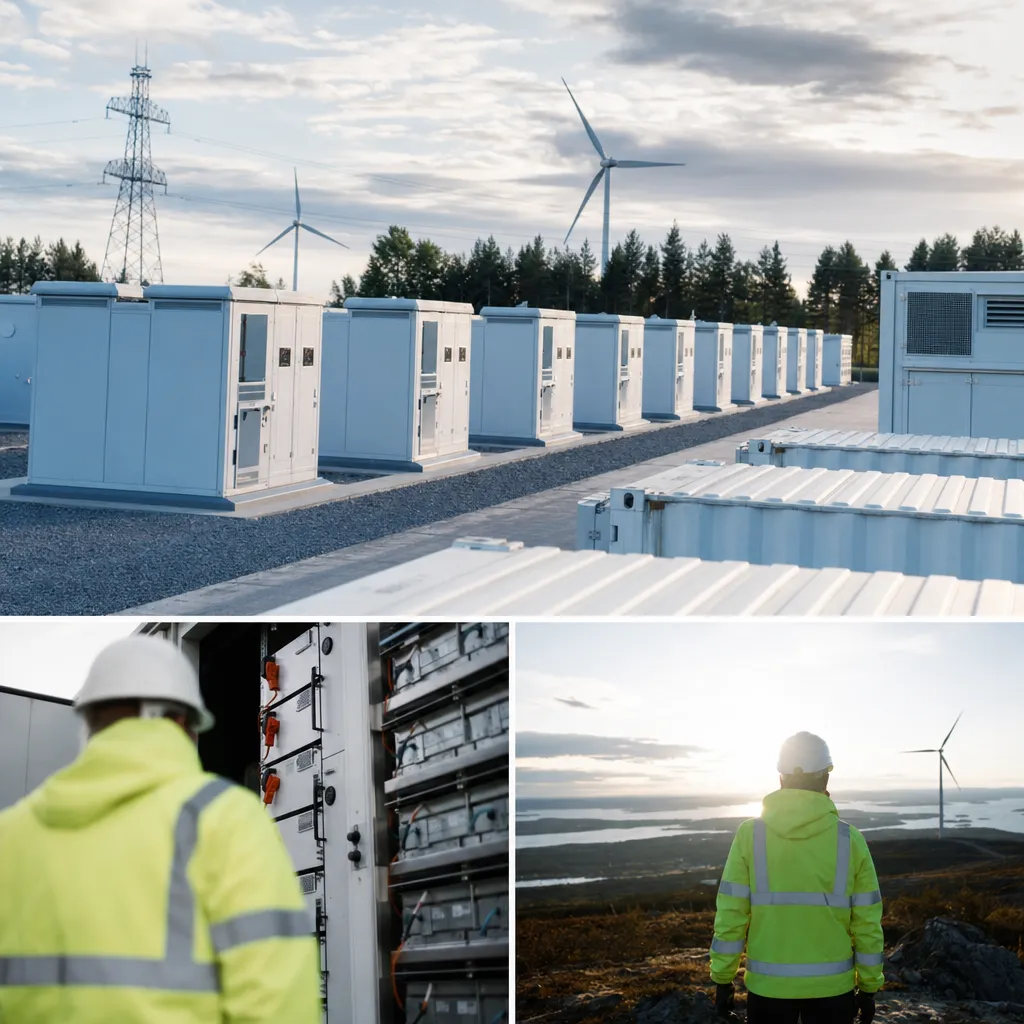
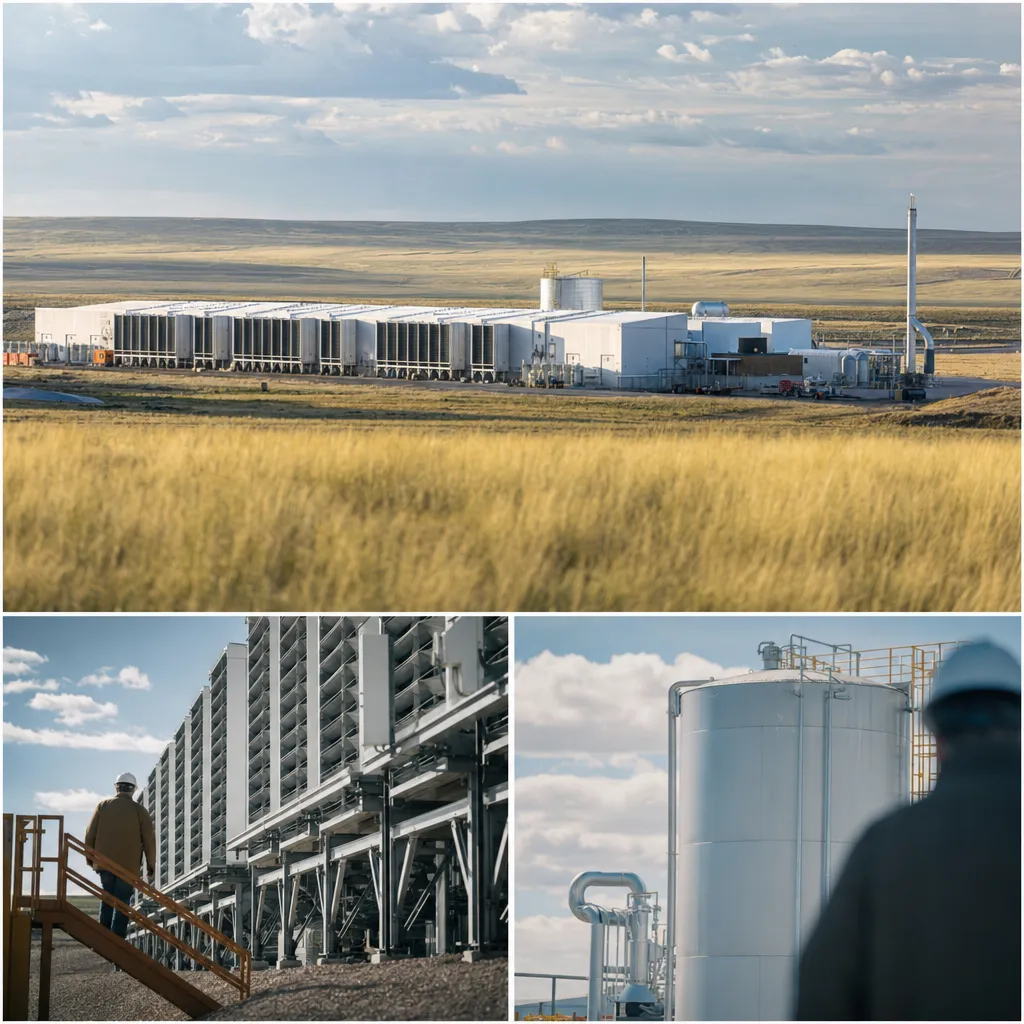
Following Democratic midterm gains, at least five U.S. states are advancing legislation requiring new gigawatt-scale AI data centers to co-locate with dedicated off-grid renewable power rather than draw from the shared public grid.
Following Democratic gains in the November 2026 midterm elections, state legislatures in at least five U.S. states are advancing bills that would require new gigawatt-scale AI data centers to co-locate with dedicated off-grid power—renewables or small modular reactors—rather than draw from the shared public grid. The proposals represent the sharpest policy response yet to growing concerns that AI infrastructure buildout is threatening grid reliability for ordinary ratepayers.
The Policy Shift
The proposals, tracked extensively in post-midterm energy coverage, share a common structure: any new data center requiring more than 100 megawatts of grid capacity—a threshold that covers most hyperscale AI training and inference facilities—would be required to demonstrate a co-located dedicated power supply before receiving a grid interconnection permit. The dedicated supply must come from new generation capacity, not from power already committed to the existing grid.
The rationale: data center applications have created a massive backlog in grid interconnection queues. As of late 2026, more than 2,700 gigawatts of proposed generation and storage projects were waiting in interconnection queues nationally, with large load customers—primarily data centers—responsible for a significant portion of new demand requests that are accelerating the queue.
States advancing legislation include Virginia, Texas, Georgia, North Carolina, and Washington—all states with substantial existing or planned data center concentrations.
Australia and Canada Are Moving in the Same Direction
The U.S. proposals are not isolated. Australia's federal government is considering a "Responsible AI Infrastructure" framework that would tie data center approvals to dedicated renewable contracts signed before construction begins. Canada's province of Ontario—home to a significant AI infrastructure buildout—is weighing similar requirements as its Independent Electricity System Operator reports demand projections that would require doubling generation capacity within eight years to accommodate announced AI projects.
The parallel movement across three countries signals a convergence: governments that have welcomed AI investment are now drawing a line at who absorbs the grid cost.
Get this in your inbox.
Daily AI intelligence. Free. No spam.
What Triggered This
The proximate causes are specific and documented:
Reliability warnings. In August 2026, the North American Electric Reliability Corporation (NERC) issued a formal warning that large load growth—led by AI data centers—was creating reliability risks in several regions, particularly in the Carolinas and the Mid-Atlantic. NERC's modeling showed that without additional generation, some regions could face reliability shortfalls as early as 2028 during extreme weather events.
Ratepayer impact. Utilities in Virginia, Georgia, and Texas have filed rate cases requesting increases of 8-14% over three years, citing data center load growth as the primary driver of new transmission and generation investment needs. Residential customers in those states are paying for infrastructure built to serve hyperscale AI operators.
Queue dysfunction. The Federal Energy Regulatory Commission (FERC) has implemented queue reform rules, but the backlog of clean energy projects—solar, wind, storage—waiting to connect behind the data center demand surge has become a renewable energy bottleneck as well as a reliability issue.
What the Industry Is Saying
Hyperscalers have pushed back, arguing that co-location mandates are operationally impractical—wind and solar are intermittent, and data centers require guaranteed uptime—and that nuclear small modular reactors (SMRs) are not yet commercially deployed at scale. Microsoft, Google, and Amazon have pointed to their power purchase agreements (PPAs) as evidence that they are already driving renewable buildout.
State legislators are not persuaded. The counterargument: a PPA for renewable energy on the grid does not guarantee that the electrons powering a data center are from that renewable source, and it does not prevent the data center from drawing heavily on fossil-fueled peakers during demand spikes.
The Practical Challenge
Genuinely co-locating gigawatt-scale power with gigawatt-scale compute is an engineering problem that has not been solved at commercial scale. The most advanced version of it—tech companies building dedicated nuclear capacity adjacent to their data centers—is a path [Microsoft and](/business/microsoft-openai-exclusivity-deal-ends) others are exploring, but SMRs are years from widespread commercial availability.
The gap between what the bills require and what is currently buildable creates a real possibility that the mandates, if enacted, slow or redirect data center development rather than simply shift its power source. That may be precisely the intent of some of the legislators advancing them.
What to Watch
Whether the federal government preempts state mandates. The incoming Democratic-controlled Congress is expected to take up AI infrastructure legislation in early 2027, and energy provisions are likely to be a significant part of any bill. If federal legislation sets a national standard—possibly less restrictive than the most aggressive state proposals—it could supersede state-level co-location requirements. How that plays out will determine whether AI's power footprint becomes a genuinely regulated category or remains subject to the existing, strained interconnection process.
Did this help you understand AI better?
Your feedback helps us write more useful content.
Get tomorrow's AI briefing
Join readers who start their day with NexChron. Free, daily, no spam.