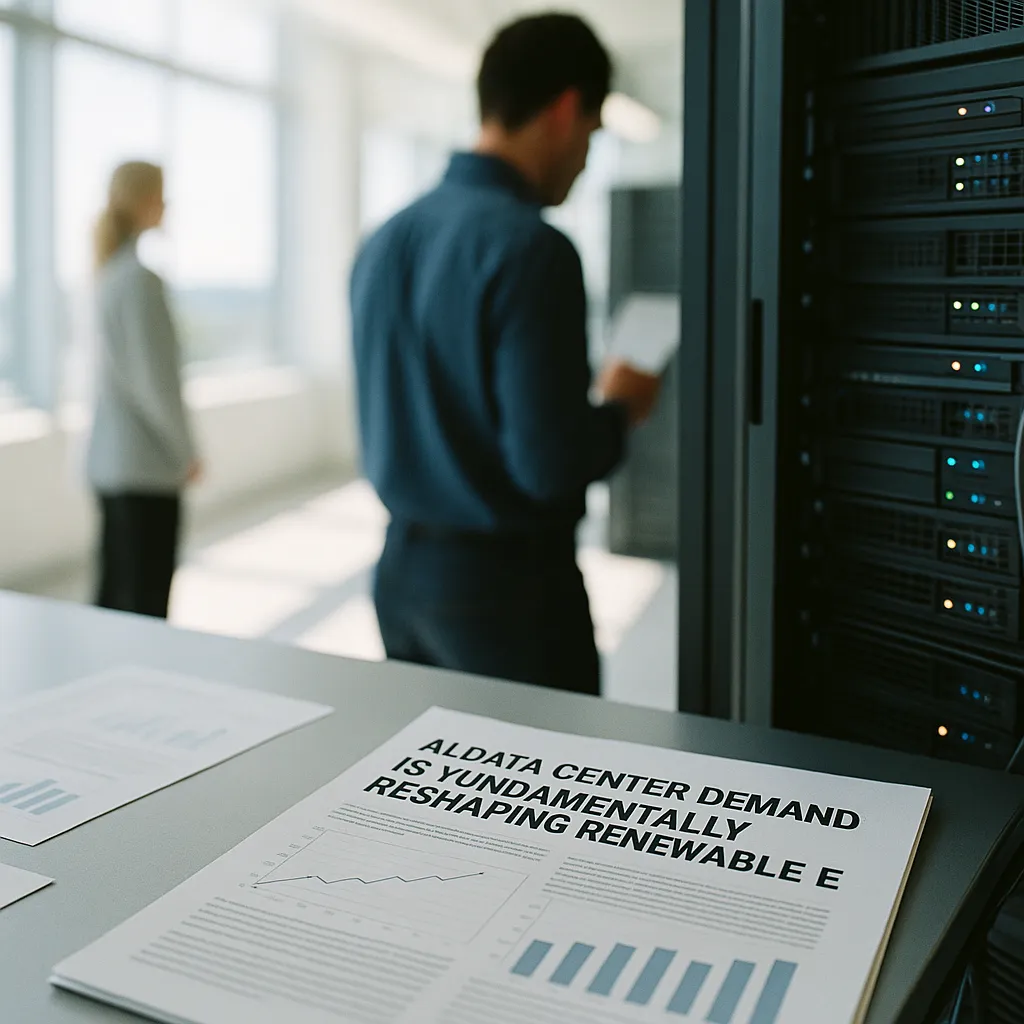
AI server racks now draw 50–100 kW each versus 5–10 kW for traditional servers, and a new RatedPower report shows that gap is forcing a total rethink of how renewable energy projects get designed and sited.
The surge in AI infrastructure is fundamentally rewriting the economics of building renewable energy projects. A 2026 Global Renewable Energy Trends Report from RatedPower, published by Enverus, documents how AI's outsized power demands are forcing project developers to treat grid constraints, co-located storage, and long-term power purchase agreements (PPAs) as first-order design variables — not afterthoughts — for the first time in the utility-scale renewables industry.
The driver is simple and stark: an AI server rack now draws 50 to 100 kilowatts of power. A traditional server rack draws 5 to 10 kilowatts. That's a tenfold increase in power density at minimum — and it's arriving at a scale that's overwhelming grid interconnection queues, straining transmission infrastructure, and changing where and how wind and solar projects get built.
The Power Density Problem
The numbers matter here because they change the physical and financial math of every renewable project sited near an AI data center.
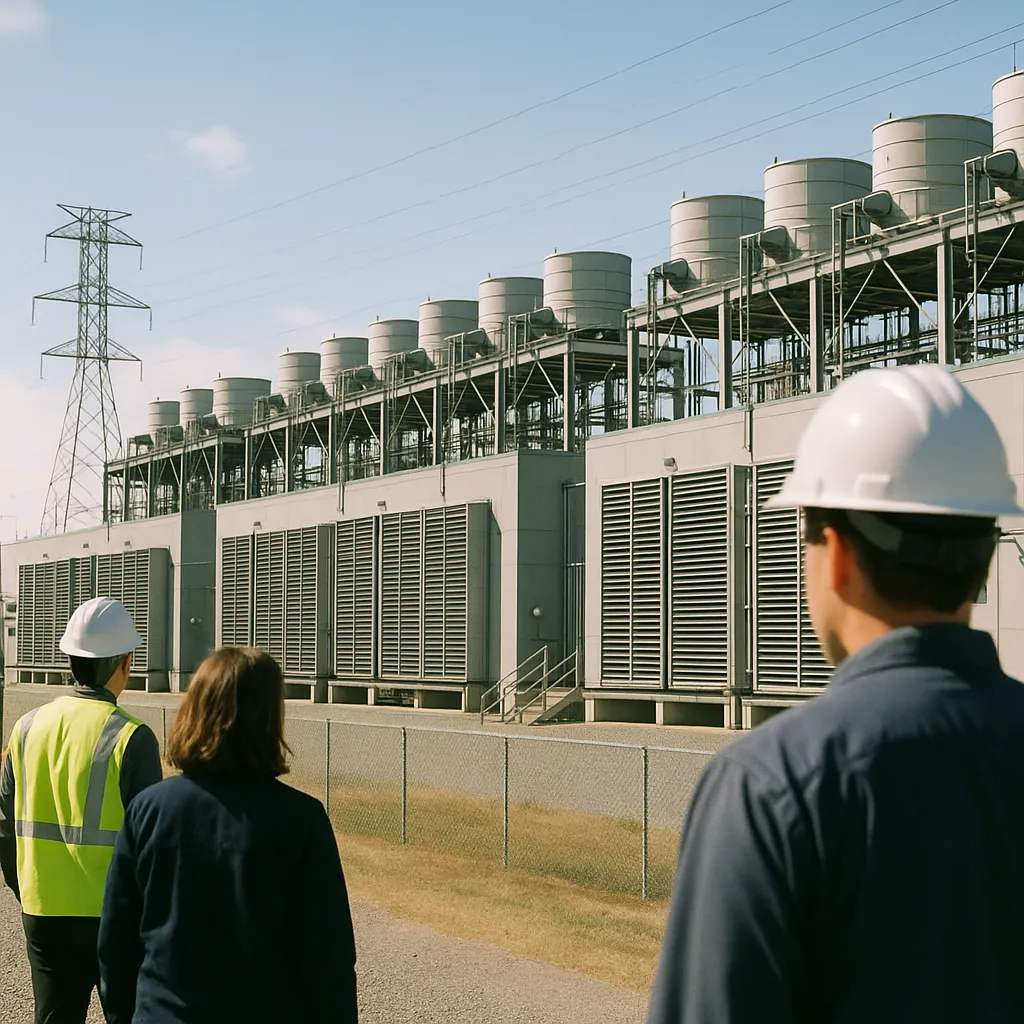
A hyperscale AI data center consuming 1 gigawatt of power — a figure that is increasingly common in large deployments being announced for 2026 and beyond — requires continuous, reliable power at a scale that no single renewable source can provide without substantial backup and storage. Solar generation drops at night. Wind generation is intermittent. The grid, particularly in regions where AI data center buildouts are concentrated (Virginia, Texas, the Midwest, parts of Europe), is already congested.
The RatedPower report identifies three consequences reshaping the industry:
Grid congestion is now a site-selection variable. Developers are analyzing interconnection queue wait times — which have stretched to 5 years or more in some regions — before committing to project locations. Areas with available transmission capacity that might have been dismissed in prior years for suboptimal solar irradiance or wind resources are becoming attractive because the grid access is faster.
Get this in your inbox.
Daily AI intelligence. Free. No spam.
Co-located storage is transitioning from optional to required. Battery storage paired directly with renewable generation sites allows project operators to firm up intermittent supply and meet the continuous load demands of AI data centers. The cost of co-located storage has fallen enough that its inclusion is increasingly a prerequisite for winning a PPA with a technology buyer, not a premium add-on.
Long-term PPAs are being structured differently. Technology companies procuring renewable power for AI data centers are demanding firmed power — guaranteed delivery at a specific volume and time — rather than the traditional energy attribute certificates (EACs) that many corporate sustainability programs have relied on. This structural shift is forcing developers to engineer for reliability in ways that weren't required when corporate buyers primarily cared about matching annual carbon credits.
What This Means for Renewable Project Economics
The traditional utility-scale solar or wind project was optimized primarily for levelized cost of energy (LCOE) — the total cost of building and operating the project divided by its lifetime energy output. Site selection, turbine spacing, panel orientation — all of it flowed from minimizing LCOE.
AI demand is adding new objective functions to that optimization. A project with a slightly higher LCOE but better proximity to available grid interconnection, co-located storage capability, and bankable long-term offtake commitments from a creditworthy technology buyer is now more valuable than a cheaper project with weaker grid access and an uncertain buyer.
The implication is that renewable energy development is becoming more capital-intensive and more engineering-complex — not less — even as the raw cost of solar panels and wind turbines continues to fall. The balance-of-system costs (grid connection, storage, permitting) are rising as a share of total project cost precisely because AI demand is concentrated in locations and at scales that stress the existing infrastructure.
Regional Divergence Is Accelerating
The RatedPower report also highlights that AI's impact on renewable markets is not uniform globally. In the United States, the concentration of data center buildouts in a handful of regions is creating acute local grid stress while leaving other regions largely unaffected. In Europe, energy sovereignty concerns are driving AI data center siting toward countries with established renewable resources and available grid capacity — Scandinavia, Iberia — rather than the traditional commercial hubs.
This regional divergence matters for investors. Renewable project portfolios weighted toward grid-constrained markets will face a different risk and return profile than those in markets where grid access remains relatively unconstrained.
What to Watch
The Federal Energy Regulatory Commission (FERC) in the U.S. has proposed interconnection queue reform rules that, if implemented, would prioritize projects that meet certain readiness criteria — which should in theory accelerate projects that include storage and have secured offtake agreements. How aggressively those rules are enforced and whether they survive legal challenge is the near-term variable that will determine how quickly the market can respond to AI's renewable energy demand.
On the technology side, the emergence of small modular reactors (SMRs) as a potential baseload solution for AI data centers — with deals already announced between Microsoft, Google, and Amazon and nuclear developers — represents a potential structural alternative to the storage-heavy renewable model. Whether SMRs can deliver at scale within the timeframe AI infrastructure requires remains an open question for 2027 and beyond.
Did this help you understand AI better?
Your feedback helps us write more useful content.
Get tomorrow's AI briefing
Join readers who start their day with NexChron. Free, daily, no spam.