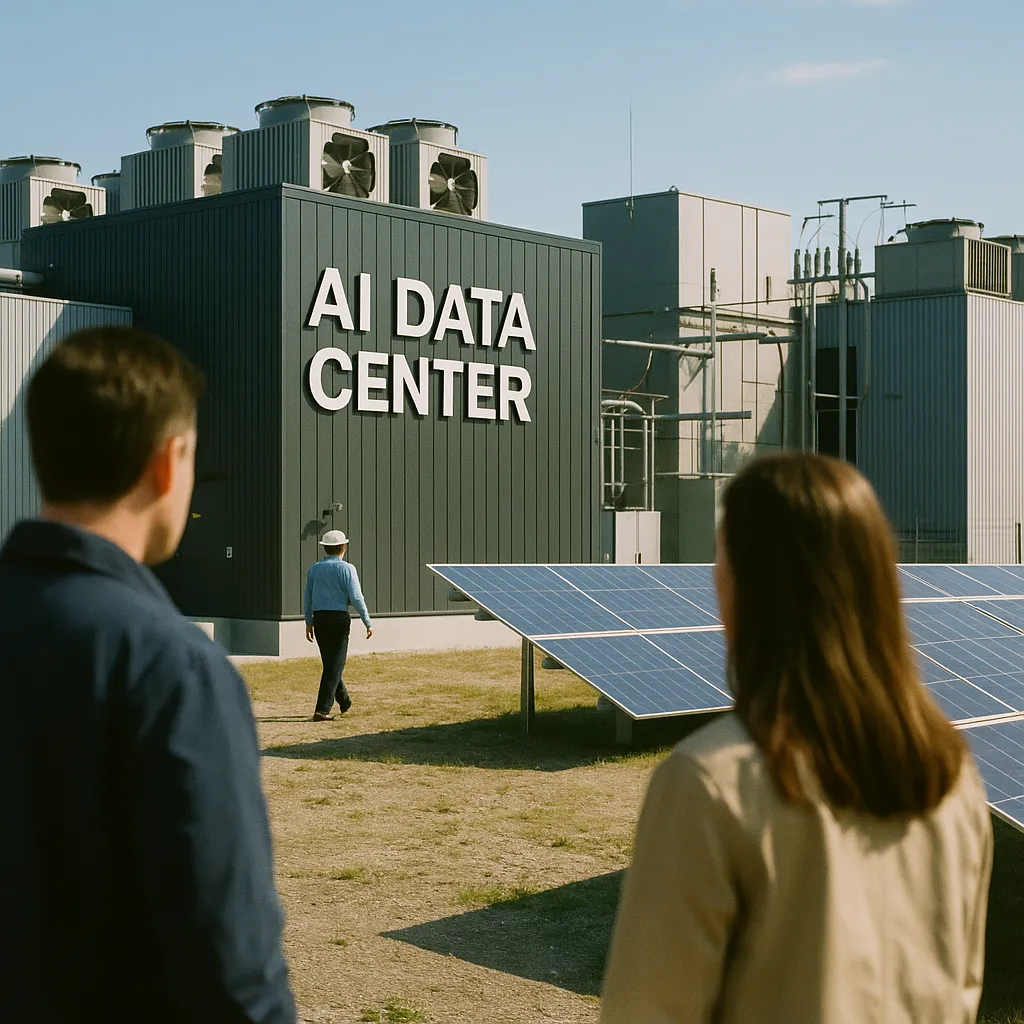
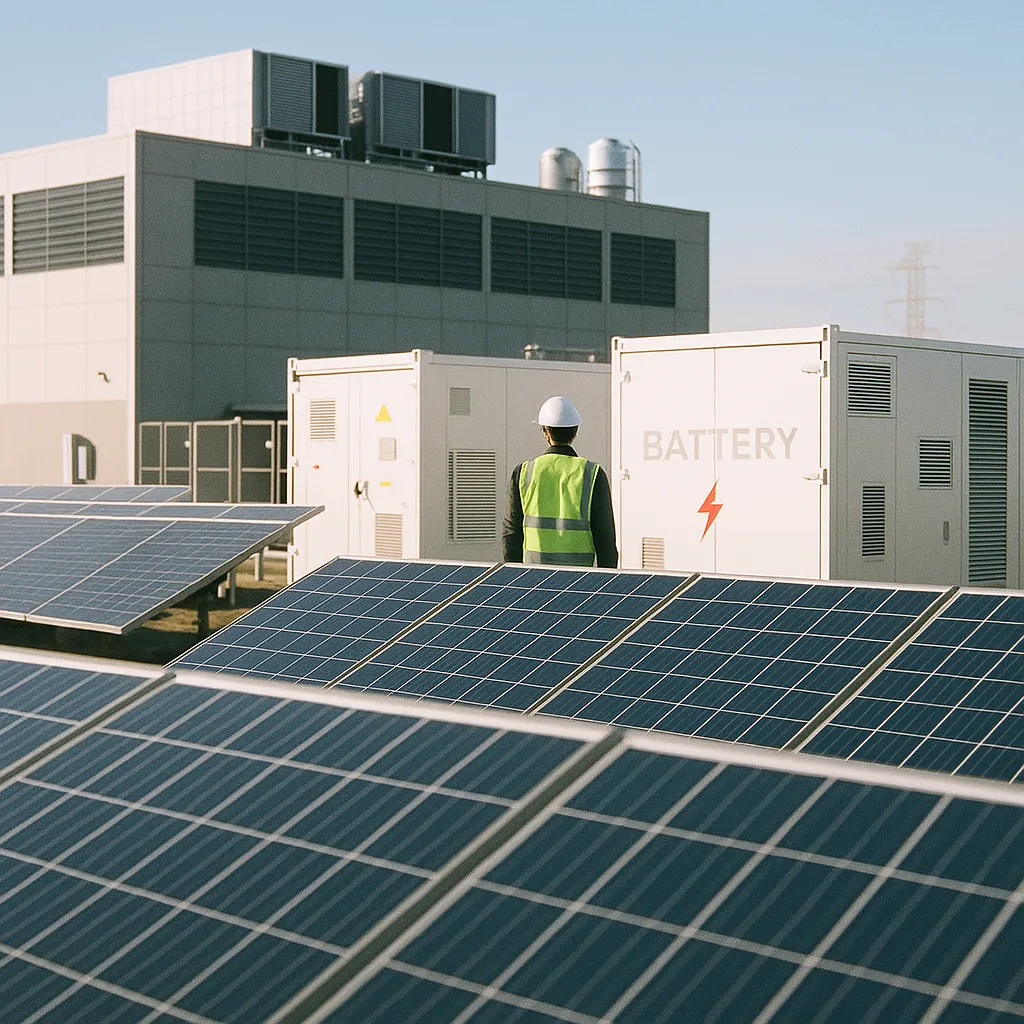
The CEO of PJM Interconnection — which manages electricity for 65 million people across 13 states — says the U.S. grid needs a fundamental structural redesign, not upgrades, to absorb AI-driven data center demand.
America's Biggest Grid Operator Says the Power System Needs a Fundamental Redesign — Not Upgrades
The CEO of PJM Interconnection, which manages electricity for 65 million people across 13 states and Washington D.C., said this week that the current grid architecture cannot absorb AI-driven data center demand without a fundamental structural redesign. Not incremental upgrades. A redesign. The statement elevates what has been treated as a permitting backlog problem into a national infrastructure challenge of a different order.
What PJM's CEO Said
PJM CEO Manu Asthana told Energy Connects that the grid was not built for the load profile that AI data centers represent — large, concentrated, continuous draws at locations that don't necessarily align with existing transmission infrastructure. The interconnection queue PJM is managing is the largest in its history, with hundreds of gigawatts of pending requests from data centers and generation projects. The grid, as currently designed, cannot process that queue and deliver reliable power to new loads on a timeline that matches the pace of AI infrastructure buildout.
Asthana's use of "fundamental redesign" is not typical utility-sector language. Grid operators are usually cautious about framing that implies current infrastructure is inadequate — it creates regulatory and political exposure. When the CEO of the largest grid operator in the country uses that language publicly, it reflects a situation that has moved past the point where careful phrasing is possible.
PJM's Scale and Why It Matters
PJM is the largest competitive electricity market in the world. Its territory covers Delaware, Illinois, Indiana, Kentucky, Maryland, Michigan, New Jersey, North Carolina, Ohio, Pennsylvania, Tennessee, Virginia, West Virginia, and Washington D.C. When PJM has a problem, it's not a regional problem.
The interconnection queue — the waiting list of power generation and load projects seeking grid access — had more than 3,300 pending projects as of late 2025. A significant share are data center load requests concentrated in the Northern Virginia corridor, which is already the world's densest data center market. That corridor is now adding load faster than PJM can build the transmission to serve it reliably.
Get this in your inbox.
Daily AI intelligence. Free. No spam.
Why This Is Different From Past Grid Stress
The grid has faced stress before — extreme weather events, the retirements of coal plants, the integration of variable wind and solar. Each of those stressed the system in ways that could be managed with engineering patches, new interconnection agreements, or emergency operating procedures.
AI data center demand is different in three ways:
- The scale is larger. A single hyperscale AI training campus can draw 500 megawatts or more — the equivalent of a mid-sized city. Dozens of these are in the queue simultaneously.
- The load is continuous. Unlike manufacturing or commercial buildings, AI data centers run at near-full load 24 hours a day, 365 days a year. That removes the load diversity that grid operators rely on to avoid peak stress.
- The timeline is compressed. AI companies are building faster than transmission infrastructure can follow. The typical timeline from interconnection application to energized connection is five to seven years. Data center developers expect power in 18 to 36 months.
What a Redesign Would Actually Involve
Asthana didn't detail a specific redesign blueprint, but grid analysts have pointed to several structural changes that a fundamental redesign would require:
- New transmission authority: Expedited federal or regional authority to site and build high-voltage transmission corridors, bypassing the current state-by-state permitting process that is a primary bottleneck
- Revised interconnection rules: Moving from a "first come, first served" queue to a cluster study model that processes compatible projects together, which FERC has already begun but has not yet fully implemented
- Demand flexibility requirements: Mandating that large loads like data centers demonstrate demand-response capability — the ability to curtail usage during grid stress — as a condition of interconnection
- Updated capacity markets: PJM's capacity auction structure was designed for a different generation mix; it needs to account for AI load profiles and the retirement of dispatchable generation
Impact on Data Center Development
The practical consequence of PJM's capacity constraints is already playing out. Several hyperscale data center projects in Virginia have been delayed or rerouted to other regions — Georgia, Texas, Ohio — where interconnection timelines are shorter. If PJM cannot process the queue, capital will flow around it.
That's not a solution; it's a redistribution of pressure. Every region that absorbs displaced AI infrastructure development faces its own version of the same challenge on a compressed timeline.
What to Watch
Congress has the authority to grant FERC additional transmission siting powers — something the Biden administration pushed for but did not fully achieve. The current session has several competing energy bills in committee. Whether any of them address transmission bottlenecks at the scale PJM is describing will be the indicator to watch in the coming months.
By Hector Herrera
Did this help you understand AI better?
Your feedback helps us write more useful content.
Get tomorrow's AI briefing
Join readers who start their day with NexChron. Free, daily, no spam.