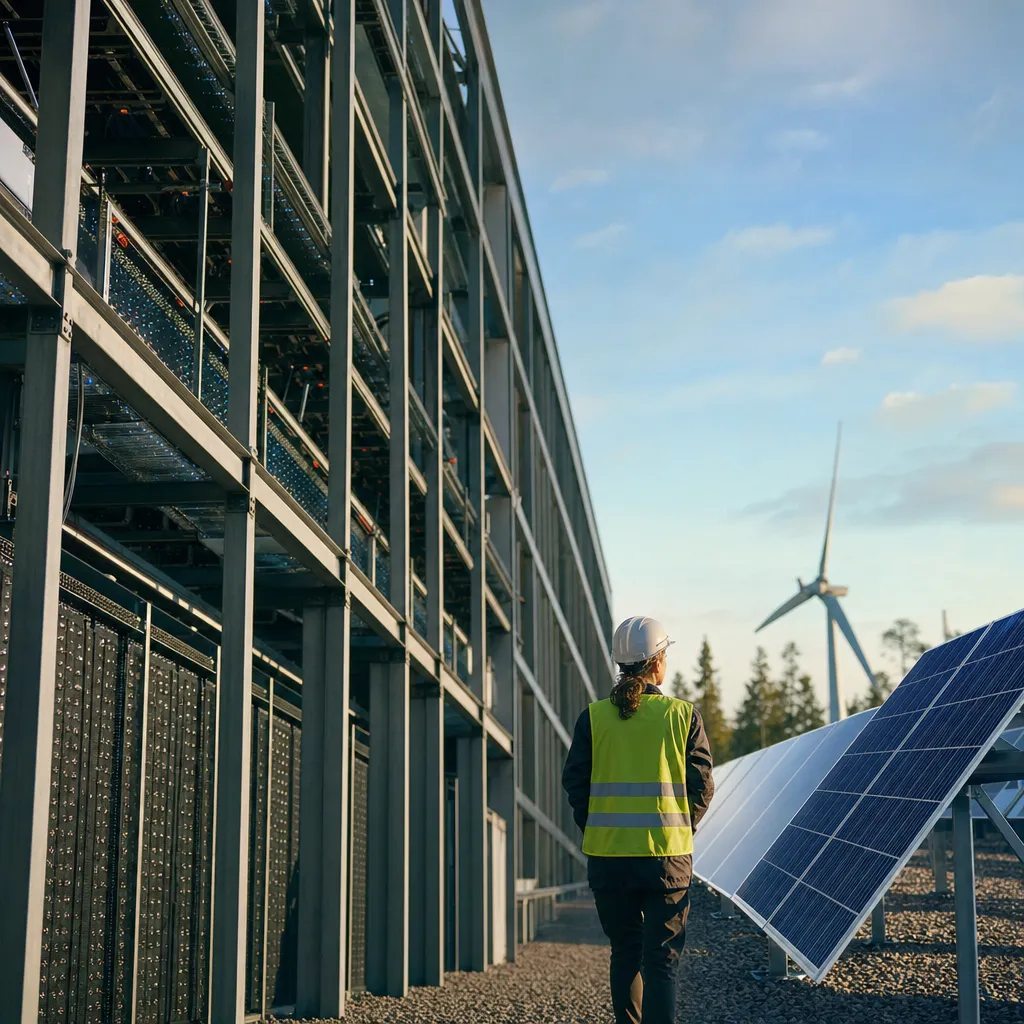
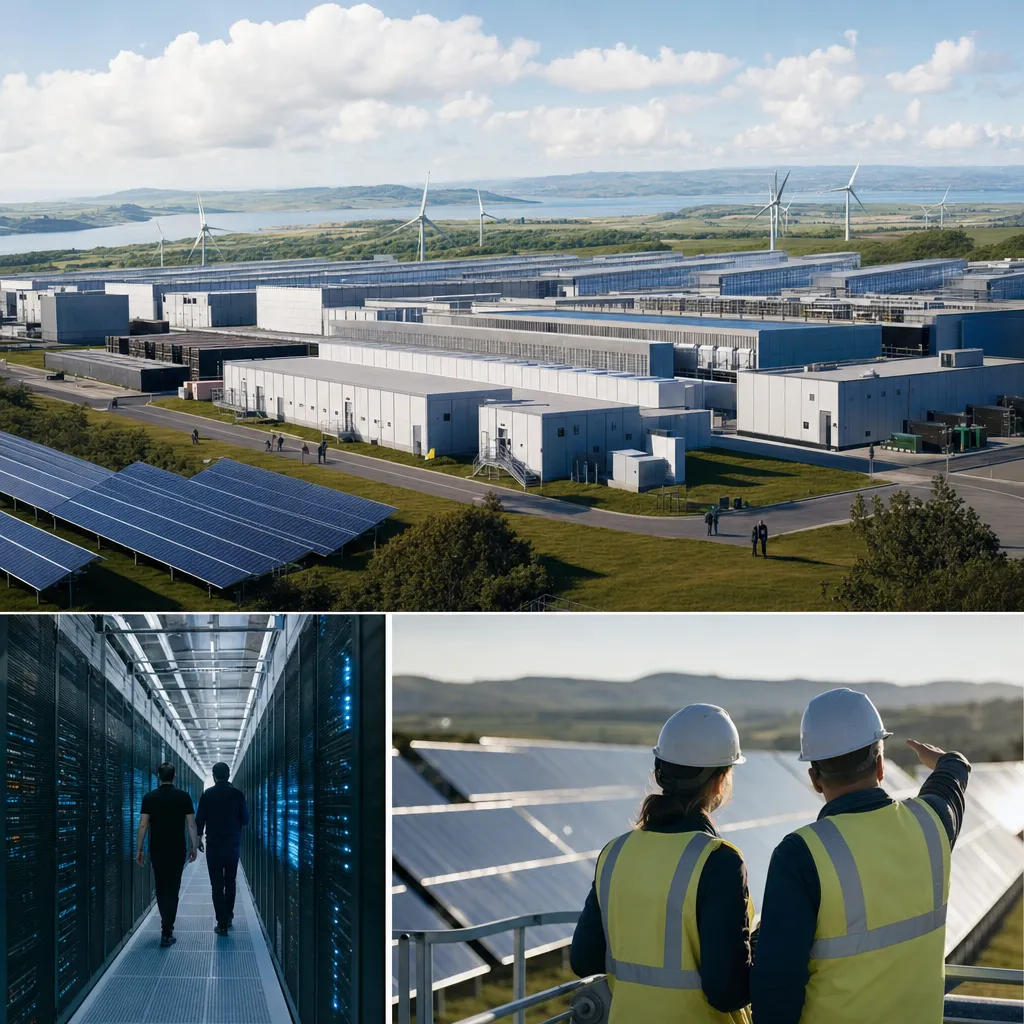
Google.org awarded $2.5 million to LF Energy to scale open-source AI demand forecasting and grid resilience tools across European grid operators, arriving as AI data centers drive surging power demand that aging grid infrastructure wasn't built to handle.
Google.org Just Funded Open-Source AI for Europe's Power Grid. Here's Why That Matters Now.
By Hector Herrera | November 15, 2026 | Energy
Google.org awarded $2.5 million to LF Energy — the Linux Foundation's energy sector initiative — to scale open-source AI tools for electricity grid operators across Europe. The grant will fund AI-powered demand forecasting, renewable integration modeling, and grid resilience software specifically designed for operators who don't have Google's budget. The timing is not coincidental: European power grids are under mounting pressure from AI data center load growth, and most of them are running on planning software that wasn't designed for what's coming.
LF Energy (Linux Foundation Energy) is an open-source foundation that develops shared software for the global power sector. Think of it as the Linux Foundation for electricity systems — collaborative, vendor-neutral, and designed to avoid every grid operator in Europe spending their own budget to solve the same problems. The foundation already has tools in production use at grid operators in North America and Europe, but adoption among smaller and mid-sized utilities has been limited by the same factor that limits all open-source enterprise adoption: implementation resources.
What the .5M Will Fund
The grant targets three capability areas that European grid operators need most urgently:
AI-powered demand forecasting. Traditional grid demand models were calibrated on historical consumption patterns that are no longer representative. AI data centers, electric vehicles, heat pumps, and renewable generation intermittency are all reshaping load curves in ways that historical models handle poorly. AI forecasting tools can incorporate more variables and update faster — but they require training data, model development, and integration work that most utilities can't fund independently.
Renewable integration modeling. Europe has aggressive renewable capacity targets, but integrating high percentages of solar and wind into grid operations requires sophisticated modeling of generation intermittency, storage dispatch, and cross-border flows. LF Energy's tools in this area already exist; the grant funds the deployment engineering needed to get them into smaller operators' production systems.
Grid resilience tools. Cyber resilience, fault detection, and recovery modeling are increasingly AI-driven. The grant includes funding for AI-assisted grid resilience capabilities that can be deployed across the range of operator sizes — from major transmission system operators to smaller distribution networks.
Get this in your inbox.
Daily AI intelligence. Free. No spam.
Why European Grids Are Under Pressure
The grant comes at a specific moment in European grid development that makes it particularly timely. Three forces are converging:
AI data center demand is surging. European data center capacity is growing rapidly to support both European AI development and U.S. hyperscalers expanding into European markets. Ireland, the Netherlands, Germany, and Sweden are all seeing significant new demand from AI infrastructure projects. A single large AI training cluster can consume more electricity than a mid-sized city.
Aging infrastructure. Much of Europe's grid infrastructure was built decades ago and is running at or near capacity in key regions. The investment cycle needed to upgrade transmission and distribution networks is long — planning, permitting, and construction timelines measured in years — while AI demand is arriving in months.
Renewable integration complexity. Europe has made strong progress on renewable capacity, but integrating very high shares of intermittent generation requires operational sophistication that many grid operators are still developing. The same planning tools that worked well at 20% renewable penetration are struggling at 50-70%.
Why Open-Source Matters Here
The case for open-source AI tools in grid operations is different from the case for open-source in consumer software. It's not primarily about cost — though cost matters for smaller utilities. It's about trust, auditability, and interoperability.
Electricity grid operations are critical infrastructure. Grid operators are, understandably, cautious about deploying AI tools that they cannot inspect, audit, or verify. Proprietary AI forecasting and dispatch tools are black boxes — the operator sees inputs and outputs but cannot examine the reasoning. For a decision that affects grid stability, that opacity is a problem.
Open-source tools give grid operators the ability to review the code, understand the model, audit the decisions, and modify the implementation for their specific grid topology. That matters for regulatory compliance, incident investigation, and operator confidence.
Interoperability matters too. European grid operators exchange data and coordinate operations across national borders. Open-source standards and shared tooling reduce the friction of that coordination in ways that a fragmented market of proprietary vendor tools cannot.
The Scale Gap This Grant Addresses
The specific focus on "grid operators of all sizes" is the most practically important part of the grant's design. Major transmission system operators in Europe — like Elia in Belgium, TenneT in the Netherlands and Germany, or National Grid in the UK — have the internal resources to develop or procure sophisticated AI tools. They don't need Google.org's $2.5 million.
What they can't do alone is ensure that the hundreds of smaller distribution network operators, regional utilities, and cooperative utilities across Europe get equivalent tooling. Those operators are the ones most likely to be caught under-prepared when AI data center load hits their networks. The open-source approach, with LF Energy providing the engineering support to deploy tools across the size spectrum, is a viable path to closing that gap.
What to Watch
How quickly LF Energy's expanded team can deploy these tools into production at smaller European utilities — and whether this grant becomes a template for other technology philanthropies funding critical infrastructure modernization through open-source channels. The EU's AI Act and energy regulatory bodies are watching AI adoption in grid operations closely; if LF Energy's tools gain traction, they may shape what "AI-assisted grid operations" looks like under future European regulatory frameworks.
Did this help you understand AI better?
Your feedback helps us write more useful content.
Get tomorrow's AI briefing
Join readers who start their day with NexChron. Free, daily, no spam.