Goldman Sachs now considers energy infrastructure delays the most likely near-term constraint on AI growth, while PG&E argues AI grid-planning tools are already helping clear a 2,700 GW interconnection backlog.
Goldman Sachs: Energy Grid Delays Are the Likeliest Near-Term Brake on the AI Buildout
By Hector Herrera | October 26, 2026 | vertical: energy | type: vertical-article
Goldman Sachs published a warning this week that the AI buildout is colliding with an old-economy constraint: the electrical grid cannot be built as fast as compute demand is growing. The bank now considers energy infrastructure delays the most likely near-term brake on the AI investment cycle — ahead of regulation, model capability limits, or chip supply.
The Gap
Data center power demand is growing at roughly 15–20% annually, driven by training and inference workloads for large language models, AI agents, and video generation. Grid infrastructure — high-voltage transmission lines, substations, interconnection queues — moves on a 5–15 year permitting and construction timeline.
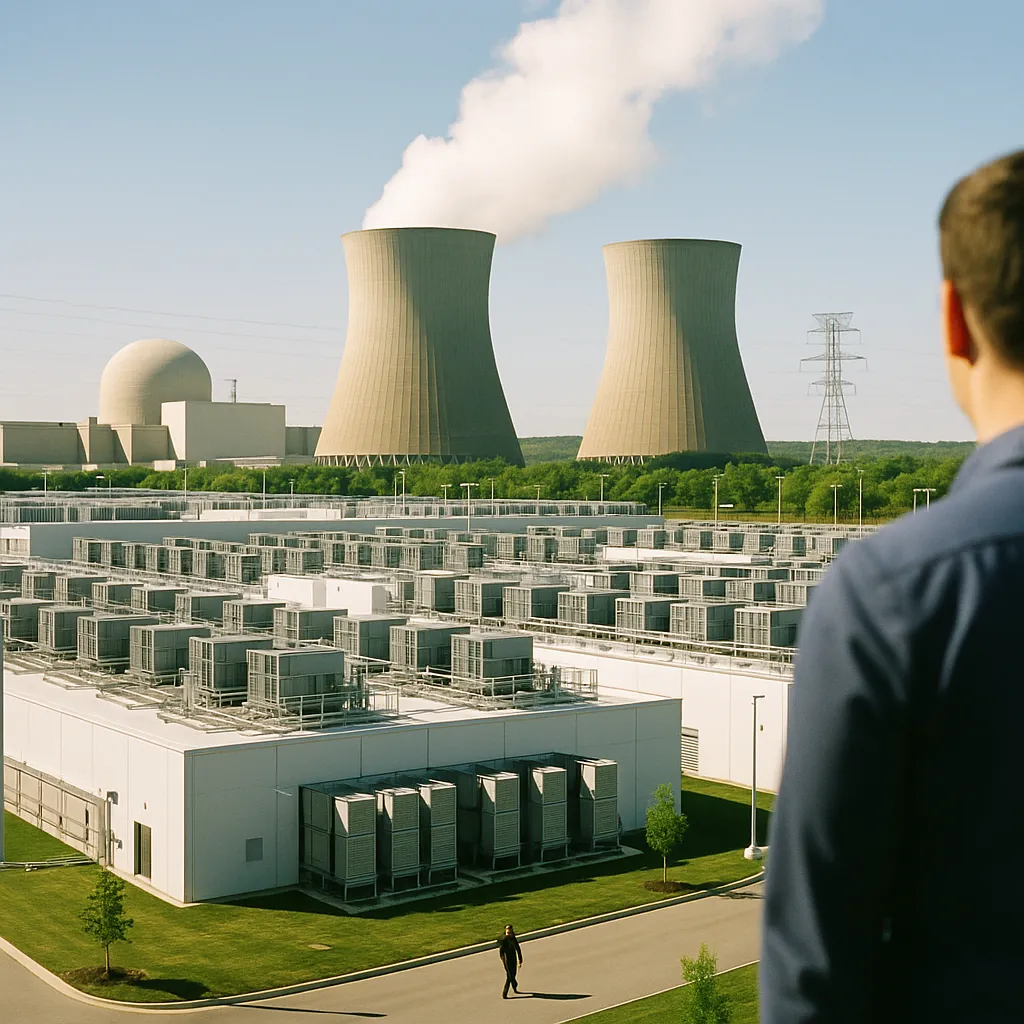
According to Goldman Sachs via Axios, that mismatch is the central near-term risk in the AI infrastructure trade. Projects that cannot get grid interconnection cannot get power. Projects that cannot get power cannot build data centers. The constraint is structural, not cyclical — it does not ease when investment budgets increase.
The Counterargument From the Utilities
PG&E CEO Patti Poppe offered a sharply different framing in the same week. Her position: AI is "the best thing that could have happened to the grid," not just a burden on it. PG&E added 33 gigawatts of California renewable capacity in five years and has 22 GW more coming by 2030 — a pace enabled in part by AI grid-modeling tools that run thousands of what-if scenarios simultaneously to help clear interconnection backlogs.
Get this in your inbox.
Daily AI intelligence. Free. No spam.
That use case is real. Interconnection queues across the US hold more than 2,700 GW of solar, wind, and battery projects waiting for grid access. Much of that backlog persists because manual engineering review cannot process the volume. AI modeling that can simulate grid stress, identify blocking constraints, and propose solutions in hours rather than months could materially accelerate clearance rates.
The tension between Goldman's warning and PG&E's optimism is not contradictory — it reflects two different timeframes. The AI grid constraint is acute in the next 3–5 years. AI tools that accelerate interconnection may help over the 5–10 year horizon. The problem is that data centers need power now.
Who Faces the Biggest Risk
Not all AI operators face equal exposure. Hyperscalers — Microsoft, Google, Amazon, Meta — have the capital and regulatory relationships to negotiate priority interconnection agreements, co-locate with power plants, or build dedicated transmission infrastructure. Their timelines are long but manageable.
Startups and mid-tier AI infrastructure companies building their own data centers are more exposed. They enter interconnection queues the same as anyone else, and they do not have the leverage to negotiate priority processing.
The AI grid tool vendors — companies building AI models specifically for grid management, interconnection analysis, and energy forecasting — are the clearest commercial beneficiaries of both sides of this story. Utilities with growing workloads and shrinking engineering headcount need automation tools regardless of whether the bottleneck eases.
The Renewable Timing Problem
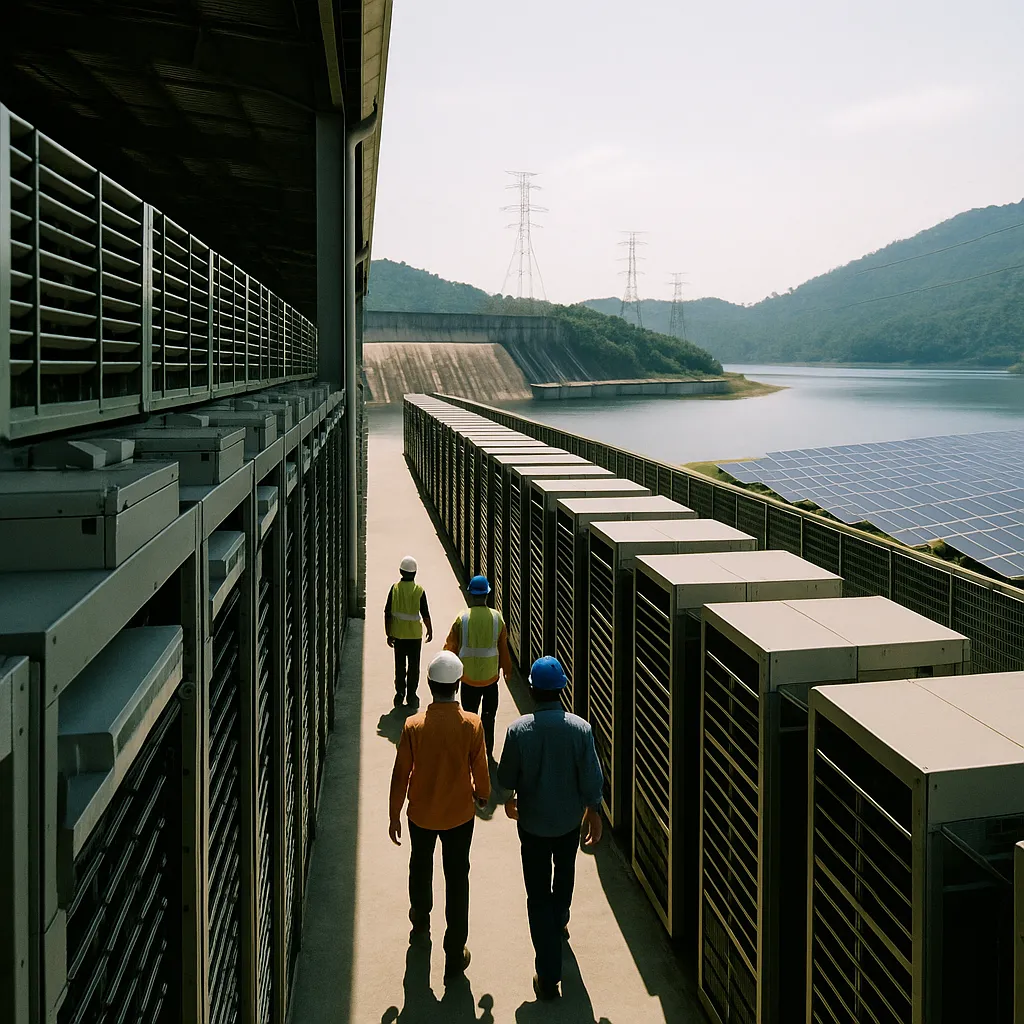
Goldman's warning arrives at the same moment renewables are scaling faster than any prior energy technology. The US added a record 50 GW of clean energy capacity in 2025. The problem is not generation supply — it is the transmission and distribution infrastructure needed to move power from where it is generated (rural, high-wind or high-solar areas) to where data centers are being built (suburban, cheap-land corridors without existing grid headroom).
The result is a two-speed economy inside AI infrastructure: large incumbents with capital and relationships to navigate constraints, and everyone else waiting in a queue that extends into the late 2020s.
What to Watch
Whether the Federal Energy Regulatory Commission accelerates interconnection reform implementation, and whether AI grid-planning tools can demonstrate measurable reductions in queue processing times by mid-2027.
Did this help you understand AI better?
Your feedback helps us write more useful content.
Get tomorrow's AI briefing
Join readers who start their day with NexChron. Free, daily, no spam.