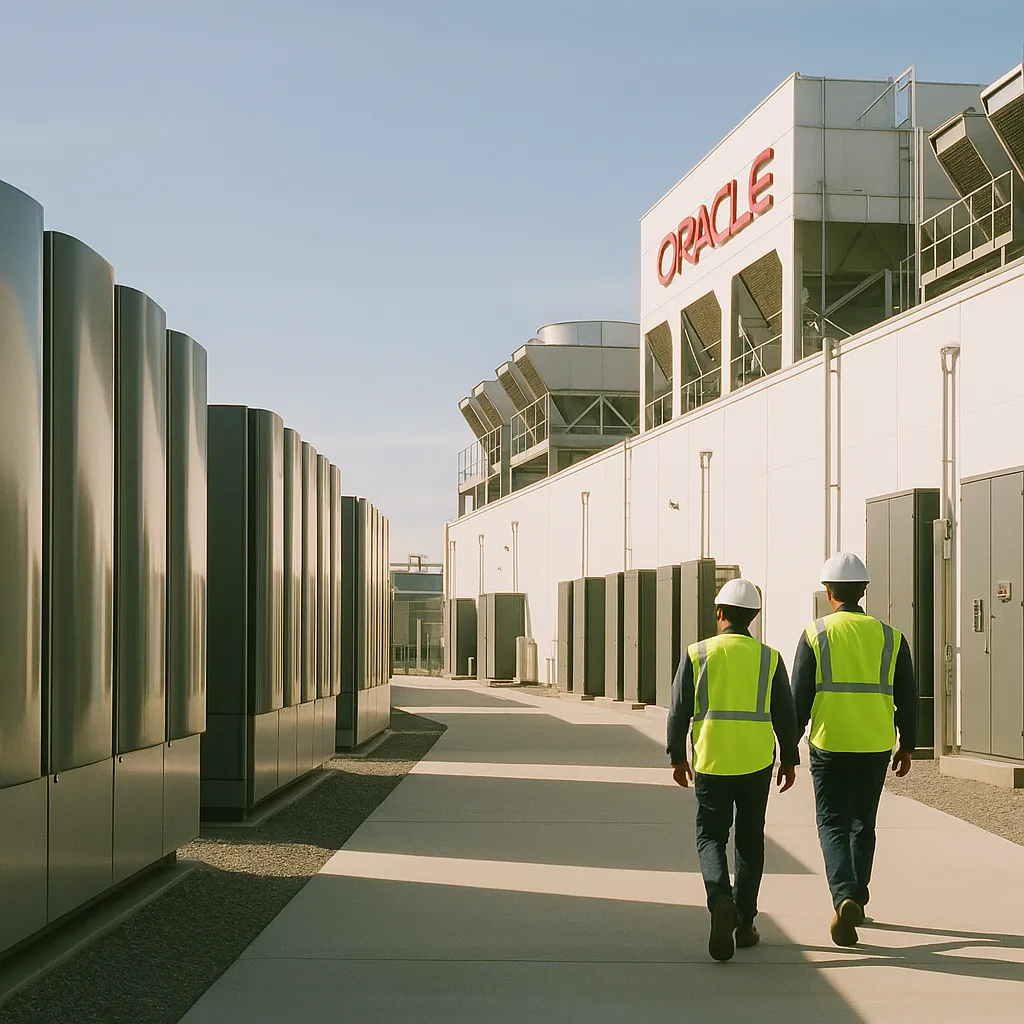
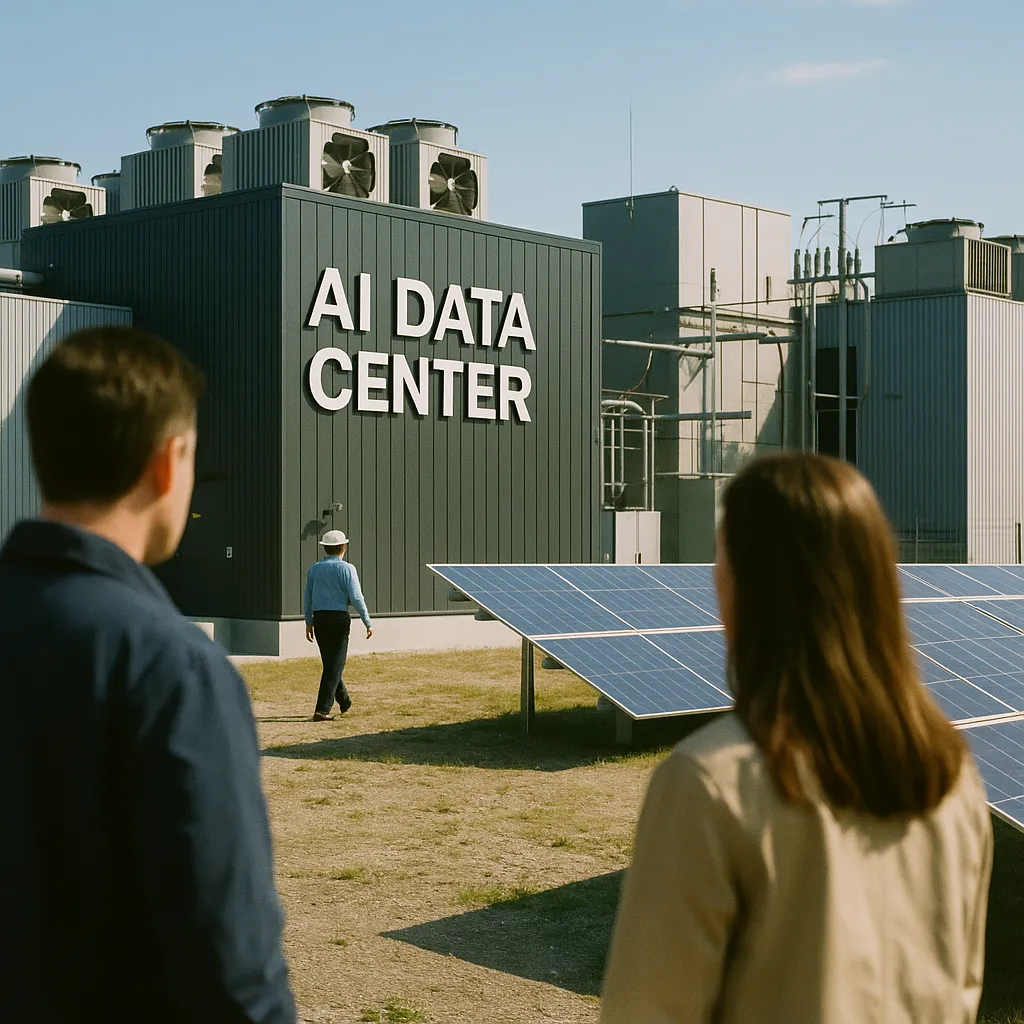
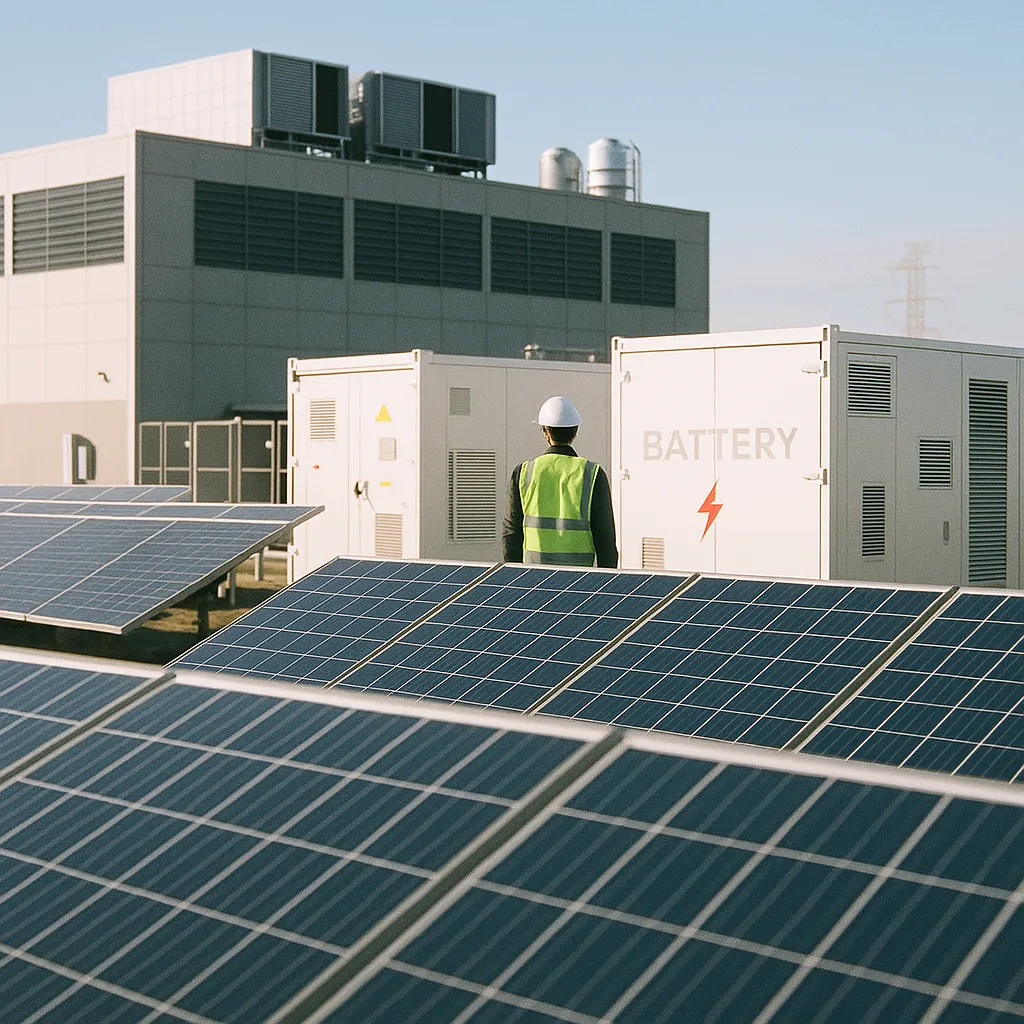
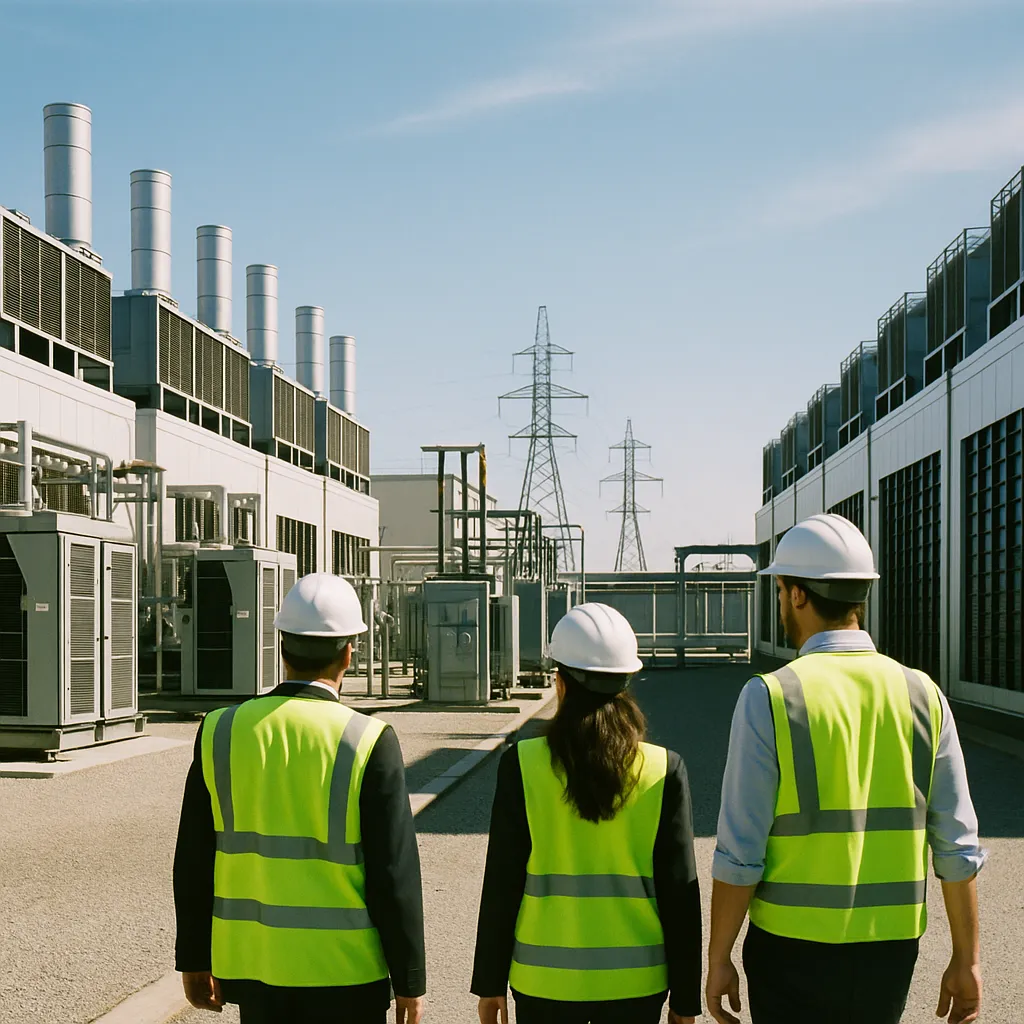
Bloom Energy and Oracle have partnered to supply AI data centers with on-site fuel cell power — deployable in weeks, not years. Bloom shares surged 15% on news that the deal sidesteps grid bottlenecks blocking AI compute expansion.
Bloom Energy and Oracle Are Building AI Data Centers That Bypass the Power Grid
By Hector Herrera | April 20, 2026 | Energy
Bloom Energy and Oracle have announced a partnership to supply AI data centers with on-site fuel cell power — installations deployable in weeks rather than the years required to build new grid connections, according to Renewable Energy Industry reporting. Bloom Energy shares surged approximately 15% on the announcement. The deal is not primarily a clean energy story — it is an infrastructure story about how AI compute is being built to avoid the grid entirely, because the grid cannot move fast enough.
Every major cloud provider and hyperscaler is looking at the same problem: the demand for AI compute is accelerating faster than grid capacity can expand. On-site power generation is becoming a serious part of the answer.
Why the Grid Is the Bottleneck
Building a new large-scale data center — the kind needed to train and serve frontier AI models — requires enormous amounts of continuous, reliable power. A hyperscale facility can consume 100 to 500 megawatts or more. Connecting that to the grid requires:
- Utility interconnection agreements that can take 3 to 7 years to negotiate and complete
- New transmission infrastructure that may require its own permitting and construction cycles
- Grid capacity that in many high-demand areas (Northern Virginia, Phoenix, parts of Texas) is simply not available on a near-term timeline
The result: companies are announcing data center campuses they cannot actually power on their planned timelines. The announcement is real; the grid connection is aspirational.
On-site power generation changes the equation. If a data center can generate its own electricity — from fuel cells, small modular nuclear reactors, natural gas turbines, or other distributed sources — it does not need to wait for a grid connection. It can operate independently, or use the grid as a backup rather than a primary source.
Get this in your inbox.
Daily AI intelligence. Free. No spam.
What Bloom Energy Brings
Bloom Energy makes solid oxide fuel cells — devices that generate electricity through an electrochemical reaction between a fuel (typically natural gas or hydrogen) and oxygen, without combustion. Fuel cells are quieter and have lower emissions than diesel generators, and they can be scaled modularly (add more units to add more capacity).
For data center applications, Bloom's cells offer:
- Rapid deployment: Fuel cell installations can be operational in weeks. Compare that to years for a grid interconnection.
- High reliability: Fuel cells have no turbines or combustion engines and have fewer mechanical failure points than traditional generators. Data centers require near-100% uptime.
- Scalability: Oracle can start with a defined power budget and add capacity as demand grows, without waiting for utility upgrades.
The partnership with Oracle specifically addresses AI workloads, which are more power-intensive and less predictable than traditional enterprise computing. A training run for a large AI model can spike power demand sharply — fuel cells handle variable load better than some grid-scale alternatives.
The Broader Race to Solve AI's Energy Problem
Bloom and Oracle are not alone. The AI energy problem is driving experiments across the industry:
- Microsoft and Constellation Energy are pursuing the restart of Three Mile Island Unit 1 to supply dedicated nuclear power to Microsoft's AI data centers in Pennsylvania — a deal announced in 2024 and now in regulatory review.
- Amazon has signed several agreements to purchase power from small modular reactor (SMR) developers, though SMR technology is still years from commercial deployment.
- Google has invested in geothermal energy and has signed its own nuclear supply agreements.
The common thread: every major AI infrastructure operator is building energy acquisition strategies that bypass or minimize dependence on the traditional utility grid. The grid is too slow, in some markets too constrained, and in the long run possibly too expensive for AI's power requirements.
The fuel cell approach is notable for its speed. Where nuclear takes decades and SMRs are still unproven at commercial scale, Bloom Energy can deliver operating fuel cell arrays in weeks. For companies that need power now to meet AI compute demand now, that deployment speed is decisive.
What to Watch
Bloom Energy's 15% share surge reflects investor recognition that the data center energy problem is large and real, and that Bloom has a deployable solution. The signal to watch is whether other hyperscalers — Microsoft, Amazon Web Services, Google — follow Oracle's lead and sign similar agreements. A second or third major fuel cell partnership announcement would confirm that on-site generation is becoming standard infrastructure for AI data centers rather than a one-off experiment. Also watch the hydrogen angle: Bloom's fuel cells can run on hydrogen as well as natural gas. If green hydrogen supply chains mature, the same infrastructure that today runs on natural gas can transition to a genuinely low-carbon power source without rebuilding the data center.
Hector Herrera is the founder of Hex AI Systems and editor of NexChron.
Did this help you understand AI better?
Your feedback helps us write more useful content.
Get tomorrow's AI briefing
Join readers who start their day with NexChron. Free, daily, no spam.