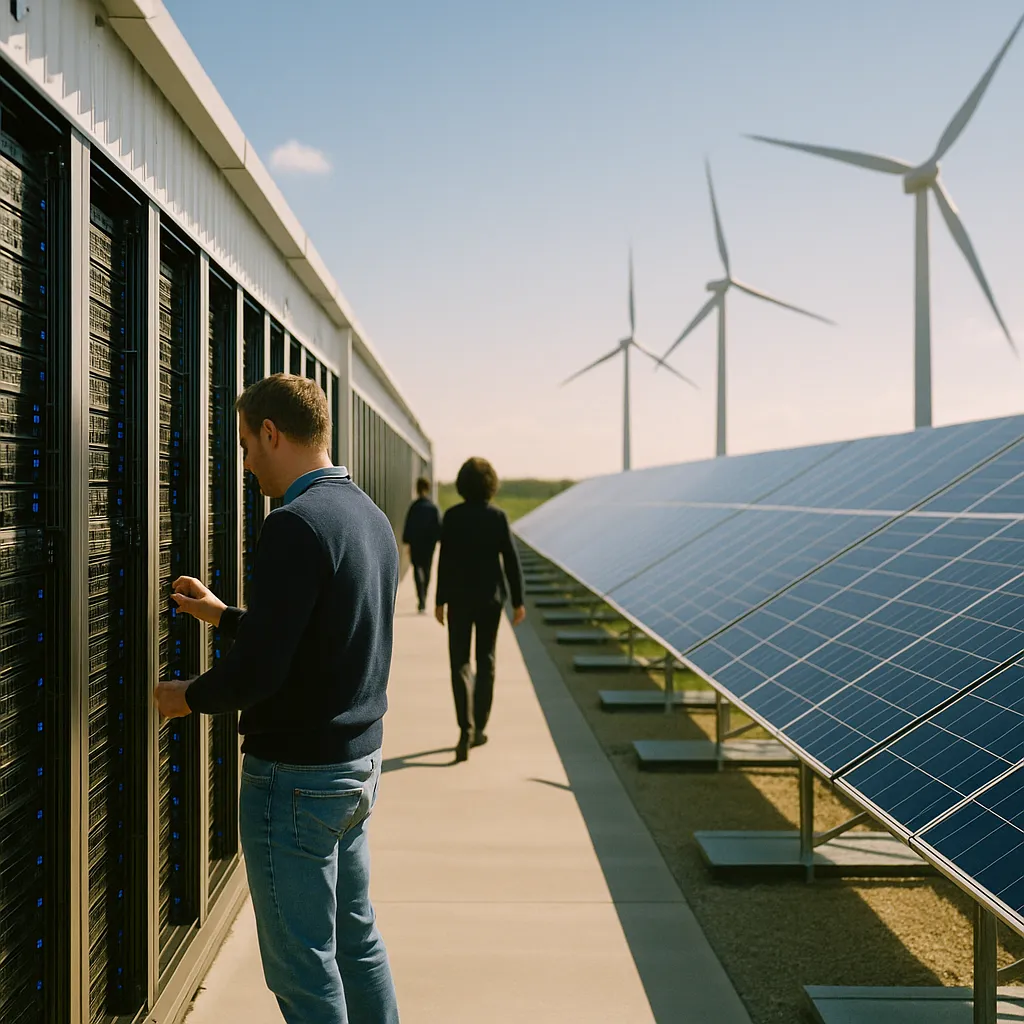
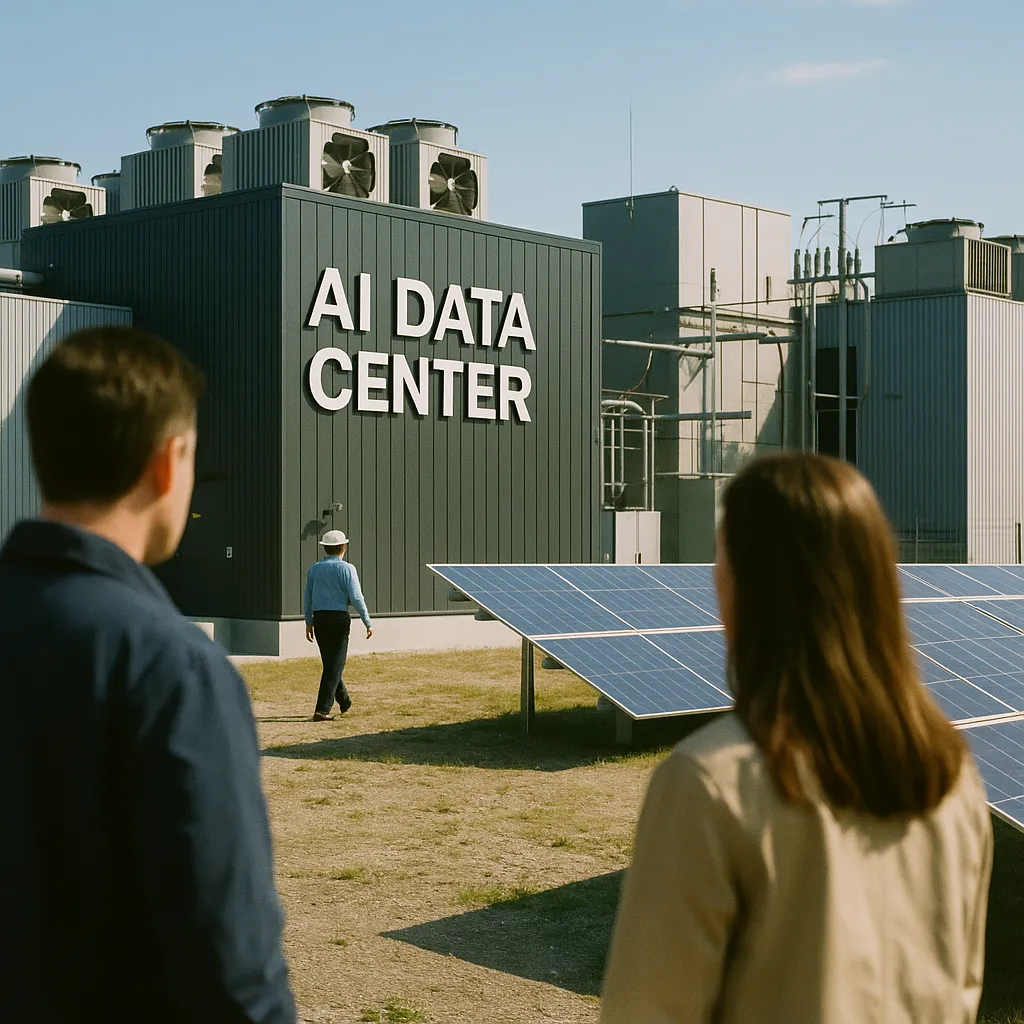
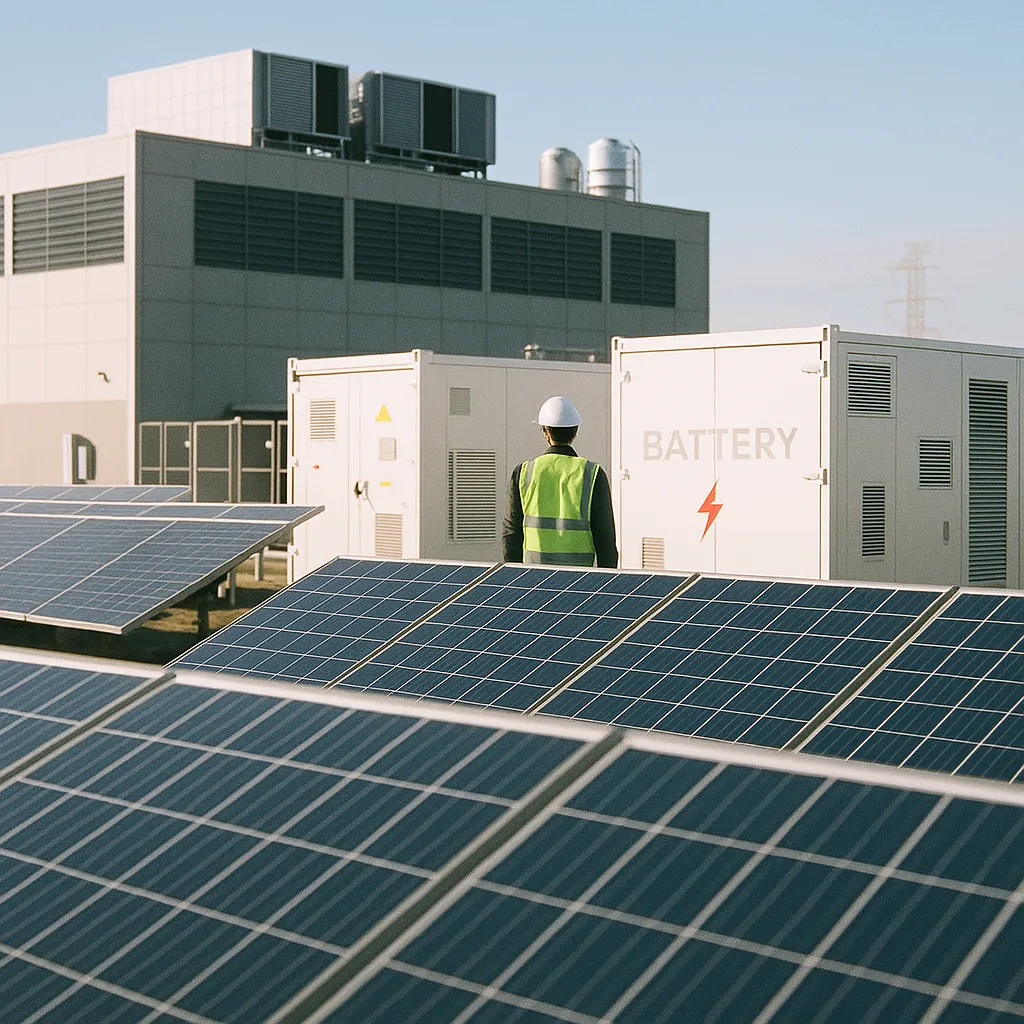
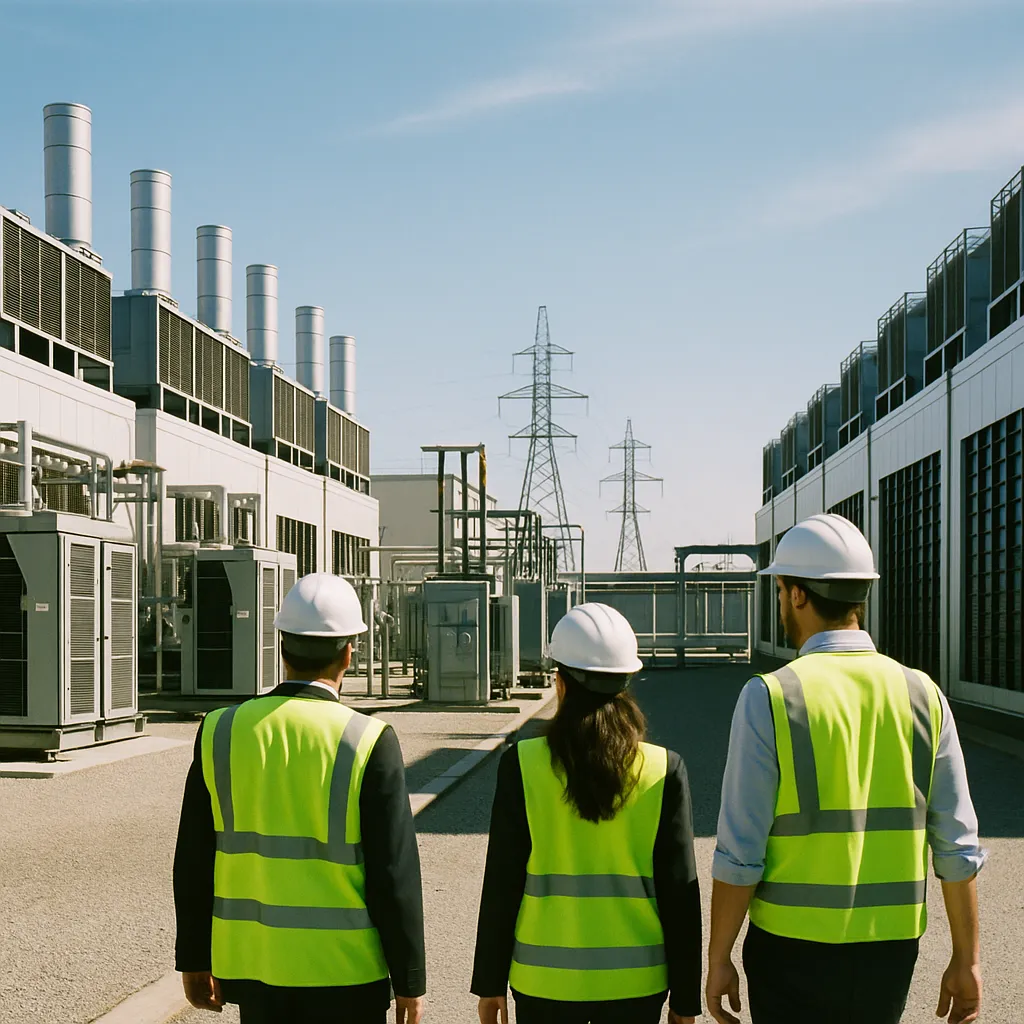
AI's energy demand is accelerating renewable buildout through hyperscaler procurement commitments — but the feedback loop is policy-dependent and could reverse if clean-energy matching requirements aren't enforced.
AI and Renewables Are Driving the Same Power Surge — and Each Other
By Hector Herrera | May 12, 2026
AI's exploding energy appetite is simultaneously funding a renewable buildout that might not otherwise happen at this pace — creating a feedback loop that is real, measurable, and politically fragile. A new analysis finds that 793 gigawatts of new renewable capacity was added globally in 2025 alone — 83% of it solar — partly driven by hyperscaler commitments to clean power procurement that AI data center expansion has made financially necessary. The problem: if policy fails to enforce those clean-energy matching requirements, data centers will default to natural gas, and the feedback loop runs in reverse.
This is now the defining infrastructure policy question of the decade, and most policymakers are not yet treating it that way.
The Numbers Behind the Feedback Loop
793 GW of renewable capacity in a single year is not a rounding error. For context, the entire installed renewable energy capacity in the United States is approximately 400 GW. The world added twice that in 2025.
The acceleration has multiple causes — continued cost declines in solar panels, improving storage economics, manufacturing scale — but hyperscaler demand is a meaningful contributor. Google, Microsoft, Amazon, and Meta have each made public commitments to match their data center electricity consumption with renewable energy procurement. As AI workloads expand their data center footprints, those commitments translate into long-term renewable energy contracts that provide the revenue certainty developers need to build.
This is how the loop works:
- AI workloads grow → data center electricity demand grows
- Hyperscalers commit to clean power procurement to meet sustainability targets → renewable developers have bankable customers
- Renewable capacity gets financed and built → more clean energy enters the grid
- Clean energy supply expands → data centers have more renewable capacity to purchase
The loop is real. The question is whether it's robust enough to govern itself without policy enforcement — and the evidence says it is not.
Where the Loop Breaks
The fragility is in step 2. Hyperscaler clean energy commitments are voluntary and, in practice, often measured against annual averages rather than hourly matching. A data center that runs 24/7 on a grid that is 60% renewable on an annual average basis is not actually running on clean energy 60% of the time — it's running on gas when renewables aren't generating and claiming the annual average as its environmental performance.
Get this in your inbox.
Daily AI intelligence. Free. No spam.
This matters because grid operators cannot expand renewable capacity fast enough to provide 24/7 clean power matching in most US markets. When data centers can meet their commitments through annual averaging, the financial pressure to invest in storage, demand response, and new transmission — the infrastructure that would enable real-time clean energy matching — is significantly lower.
The policy gap: The SEC's climate disclosure rules, currently in litigation, would require more rigorous reporting on energy matching. The EPA's clean power plans set grid-level targets but don't specifically address data center consumption. No federal regulation currently mandates that AI data centers achieve hourly clean energy matching rather than annual averaging.
Without that mandate, the path of least resistance when renewable capacity can't keep up with data center demand growth is to build gas peaker plants. That is already happening in some US markets. PJM — the grid operator covering much of the Mid-Atlantic and Midwest — has reported that interconnection queues are increasingly dominated by new gas capacity driven by data center demand in Northern Virginia and other AI hub regions.
The 2025 Numbers in Context
- 793 GW of new renewable capacity added globally in 2025
- 83% of that was solar — reflecting continued cost declines and speed of deployment
- Global electricity demand grew by approximately 4.5% in 2025, the fastest rate in decades
- AI data centers are estimated to have contributed 15-20% of incremental electricity demand growth in developed economies
Those numbers will grow. IEA projections estimate that data center electricity consumption could double or triple by 2030 depending on AI adoption rates. A 793 GW annual renewable addition — impressive as it is — may not be sufficient to keep the grid clean as AI demand accelerates.
The Policy Fork
There are two plausible futures from here:
Scenario 1 — Policy enforces clean matching: Regulators require data centers to match consumption with renewable generation on an hourly basis, backed by verified energy attribute certificates. This creates sustained financial pressure to invest in storage and new transmission, keeps the feedback loop running in the right direction, and makes AI infrastructure a genuine driver of grid decarbonization.
Scenario 2 — Policy lets averaging stand: Annual averaging remains the standard. Data centers expand faster than renewable capacity can track. Gas generation fills the gap. The feedback loop stalls, AI becomes a net driver of emissions growth despite corporate commitments, and the clean-energy narrative becomes a liability when scrutinized.
The current US regulatory trajectory is closer to Scenario 2. The Biden-era clean energy rules that would have pushed the grid toward hourly matching are under challenge. The Trump administration's energy policy has deprioritized clean energy mandates. Corporate voluntary commitments, without enforcement, are insufficient.
What States Can Do
In the absence of federal action, states with major AI data center concentrations — Virginia, Texas, Georgia, California — have the authority to set their own clean energy requirements for large commercial electricity consumers. Virginia, where Northern Virginia hosts the largest data center cluster in the world, is the most consequential jurisdiction. A state-level hourly matching requirement there would directly affect the largest AI data center market in the US.
California already has strong clean energy standards, though its data center concentration is smaller and its grid carbon intensity lower. Texas is a deregulated market with significant renewable capacity but no clean energy mandates for commercial consumers. Georgia is emerging as a major data center destination with relatively limited clean energy policy infrastructure.
What to Watch
The key near-term policy indicators are: (1) whether Virginia advances data center energy legislation, (2) whether PJM's interconnection queue shifts back toward renewables or continues trending toward gas, and (3) whether any hyperscaler publishes hourly-matched clean energy performance data rather than annual averages — which would signal a voluntary shift toward the more rigorous standard that's needed. The IEA's annual World Energy Outlook, expected in October, will update its AI energy demand projections and will be the most-cited data point in the policy debate for the next twelve months.
Hector Herrera covers AI, energy, and infrastructure at NexChron. Source: Science-Technology News
Did this help you understand AI better?
Your feedback helps us write more useful content.
Get tomorrow's AI briefing
Join readers who start their day with NexChron. Free, daily, no spam.