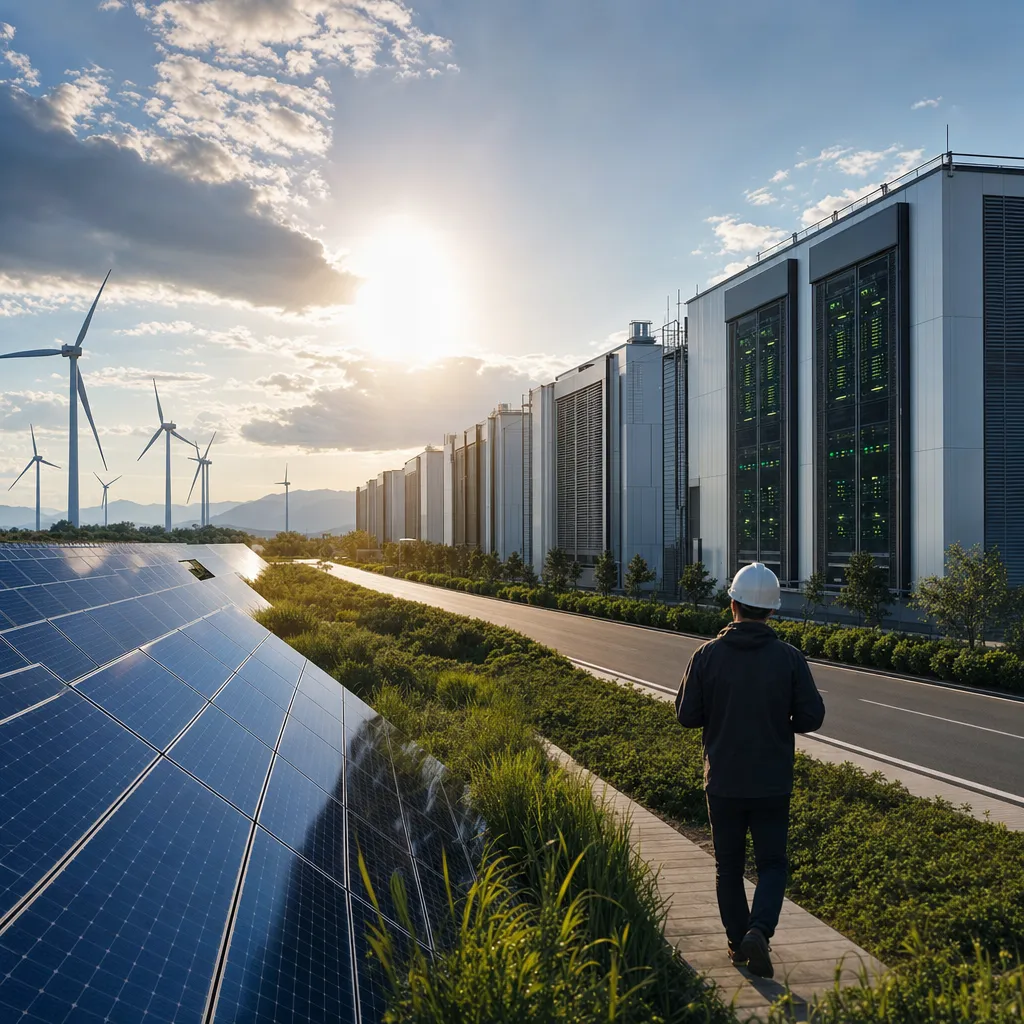
ADNOC has become the first energy company to deploy OpenAI Frontier technology, signing a multi-year deal with OpenAI and G42 at ADIPEC 2026.
ADNOC has become the first energy company in the world to deploy OpenAI's Frontier technology, signing a multi-year partnership with OpenAI and Abu Dhabi-based AI firm G42 at the ADIPEC 2026 conference on November 2. The deal marks a significant escalation in the Gulf's bid to reshape its oil and gas operations around large-scale artificial intelligence.
The agreement is one of four separate AI deals OpenAI signed with Abu Dhabi entities on the same day, including Mubadala and the UAE government itself — signaling that the emirate is moving from AI ambition to operational deployment at speed.
What the Deal Covers
Under the partnership, G42 — the Abu Dhabi technology conglomerate that has built one of the largest sovereign AI infrastructure stacks outside the United States — will provide the compute and cloud backbone. OpenAI contributes its most advanced Frontier models. ADNOC feeds both with its industrial dataset: decades of reservoir data, drilling records, refinery operations, logistics, and supply chain information.
OpenAI Frontier refers to the company's top-tier model tier, designed for enterprise and government deployments requiring the highest capability levels and custom fine-tuning on proprietary data.
The signing happened at ADIPEC — the Abu Dhabi International Petroleum Exhibition and Conference — one of the world's largest energy industry gatherings, held annually in Abu Dhabi.
Why This Is Different From Prior AI Announcements in Energy
The energy sector has been cautious with AI adoption. Most deployments have been narrow: predictive maintenance on specific equipment, anomaly detection on pipelines, or scheduling optimization for logistics. What ADNOC is doing is architecturally different.
Get this in your inbox.
Daily AI intelligence. Free. No spam.
By deploying Frontier-class models on its full industrial data stack — not a single use case — ADNOC is positioning AI as a core operating layer rather than a point solution. G42's sovereign infrastructure means the data doesn't leave UAE jurisdiction, which matters for a national oil company with significant geopolitical sensitivity around its operational data.
This approach mirrors what a handful of financial institutions have attempted with large language models, but no energy major has moved this fast or this broadly.
The Wider Abu Dhabi AI Push
The four OpenAI agreements signed on November 2 make Abu Dhabi the most active non-US government partner in OpenAI's history in a single day. The deals include:
- ADNOC — Frontier deployment across oil and gas operations
- Mubadala — Abu Dhabi's sovereign wealth fund, terms not yet disclosed
- UAE government — specifics to be announced separately
- A fourth entity not yet named publicly
G42's involvement across multiple of these deals is notable. The company has existing infrastructure agreements with Microsoft, and its position as the sovereign AI layer for UAE government and enterprise deployments appears to be expanding rapidly. G42 CEO Peng Xiao has previously described the company's role as "the picks and shovels" of Gulf AI deployment.
What This Means for the Energy Industry
For international oil majors — Shell, BP, Chevron, ExxonMobil — the ADNOC-OpenAI deal creates immediate competitive pressure. If frontier AI applied to industrial data can meaningfully improve reservoir recovery rates, reduce unplanned downtime, or optimize refinery throughput, the companies that deploy it earliest will carry a structural cost advantage.
For AI providers, the energy sector is one of the last large industries where AI has not yet moved from pilot to platform. ADNOC's deployment could be the proof case that accelerates boardroom decisions at other energy companies globally.
For the Gulf, the optics matter as much as the operations. Abu Dhabi is actively positioning itself as a hub for sovereign AI deployment — the place where nations that want AI at scale but not routed through US or Chinese hyperscaler infrastructure go to build.
What to Watch
ADNOC has not disclosed specific performance targets or timelines for the deployment. The first real test will be whether measurable operational outcomes — production efficiency, cost per barrel, unplanned downtime reduction — appear in ADNOC's quarterly reporting in 2027. Watch also for whether other Gulf Cooperation Council (GCC) energy companies — Saudi Aramco, QatarEnergy — announce comparable deals in the coming months.
Did this help you understand AI better?
Your feedback helps us write more useful content.
Get tomorrow's AI briefing
Join readers who start their day with NexChron. Free, daily, no spam.