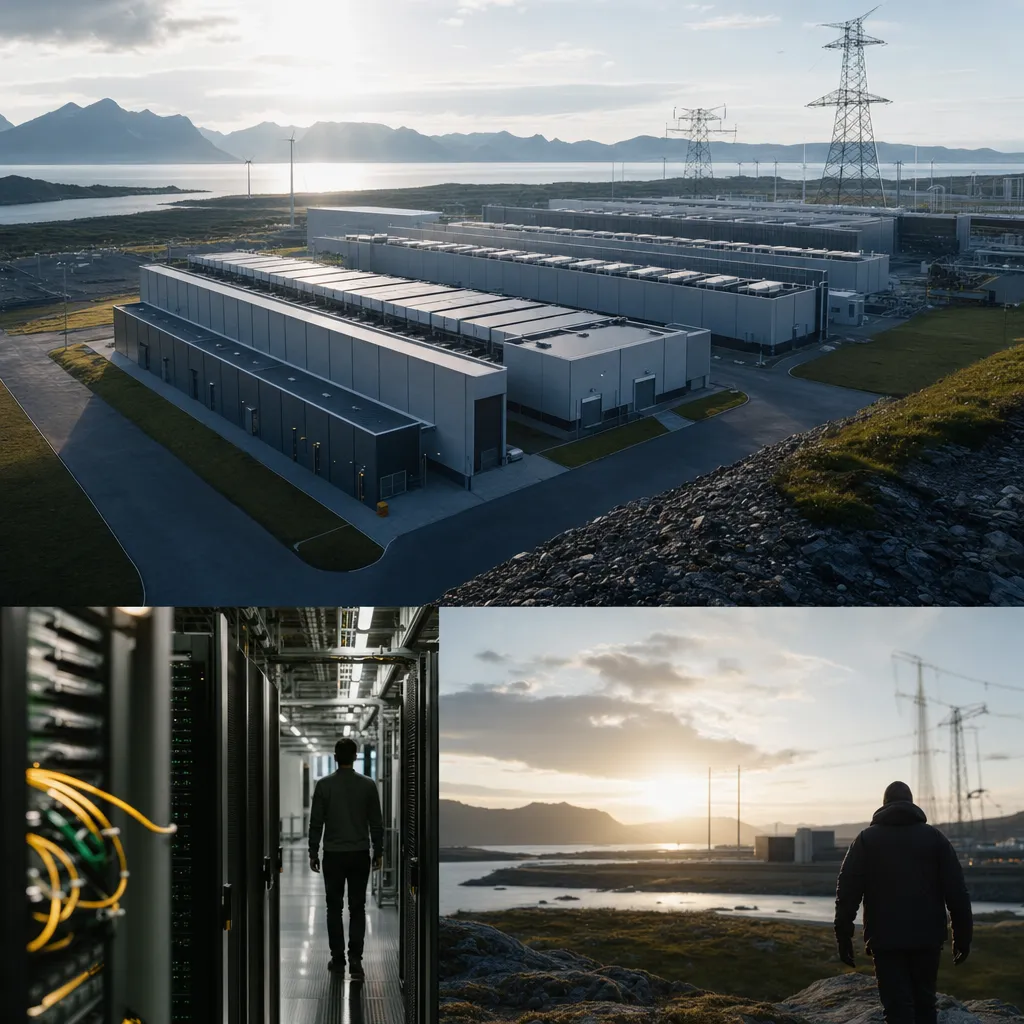
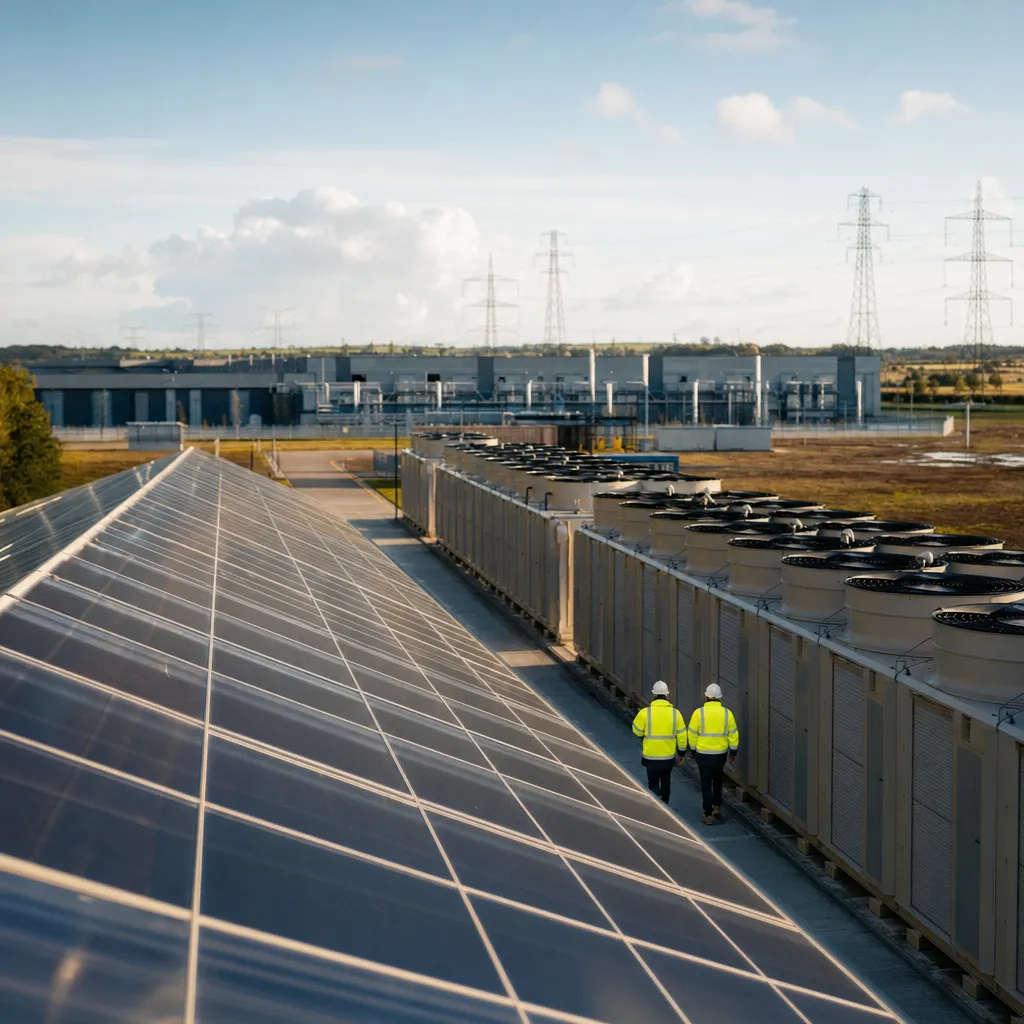
At ADIPEC 2026, Dr. Sultan Al Jaber and Sam Altman jointly declared AI a mission-critical necessity for energy grid operations — a turning point for how the energy sector frames AI's role.
ADIPEC 2026: Industry Leaders Declare AI a Mission-Critical Necessity for Energy Grid Resilience
By Hector Herrera | November 5, 2026 | Energy
The world's largest energy event just drew a line in the sand: AI is no longer an add-on for the energy sector — it's core infrastructure. At ADIPEC 2026 in Abu Dhabi, Dr. Sultan Al Jaber, UAE Minister of Industry and CEO of ADNOC, and OpenAI's Sam Altman jointly declared AI a mission-critical necessity for energy operations and grid delivery resilience — framing AI simultaneously as the sector's biggest new power consumer and its most powerful optimization tool.
The dual framing matters. For years, the energy industry has struggled to reconcile a contradiction: AI data centers are driving unprecedented demand on power grids, while AI software promises to optimize those same grids. ADIPEC 2026 marked the first time senior industry and technology leadership converged on a single answer — both things are true, and both must be managed in parallel.
Why ADIPEC Matters as a Signal
ADIPEC — the Abu Dhabi International Petroleum Exhibition and Conference — is the energy industry's annual gathering point for decision-makers from national oil companies, utilities, power grid operators, and technology providers. When consensus forms here, it tends to hold.
This year's event saw AI move from a panel discussion topic to a central strategic thread. The joint statement by Al Jaber and Altman — representing the world's largest state-owned oil company and the world's most prominent AI company — signals that AI-energy integration has cleared the credibility threshold in energy boardrooms.
The rhetorical shift is significant: AI has gone from "experimental technology that requires careful evaluation" to "mission-critical infrastructure that requires operational integration."
Get this in your inbox.
Daily AI intelligence. Free. No spam.
What Changed
Three factors converged to drive this consensus at ADIPEC 2026:
Power demand projections are no longer hypothetical. AI data center construction is accelerating globally, and national grid operators are now dealing with interconnection queues measured in years. The energy sector's forecast models have incorporated AI demand as a base-case assumption, not a scenario.
Optimization gains are measurable. Early AI deployments in grid balancing, predictive maintenance, and renewable energy dispatch have produced documented efficiency gains that energy operators can cite internally. The case for AI as an operational tool no longer requires projection — it rests on results.
Grid resilience is under political pressure. Extreme weather events and geopolitical supply disruptions have made grid resilience a priority for governments globally. AI tools that can anticipate failures, reroute power flows, and optimize storage dispatch are increasingly framed as risk management, not innovation.
The Dual-Use Paradox
The paradox Al Jaber and Altman addressed directly is real: AI increases energy demand while AI also improves energy efficiency.
A hyperscale data center running large language models at scale can consume hundreds of megawatts. That same AI, deployed as an energy management system, can reduce grid losses by 10–15%, accelerate renewable dispatch, and extend the life of aging infrastructure.
The resolution the energy sector is working toward: AI demand is a known, plannable load — unlike industrial surges or weather-driven spikes. Utilities can design for it. What they cannot design for is a grid running legacy optimization software against a renewable-heavy, demand-volatile future.
Impact for Energy Companies
The practical implications for energy operators:
- Grid operators face pressure to accelerate AI deployment for real-time balancing as renewable penetration increases and dispatchable generation decreases.
- Oil and gas companies are under investor pressure to demonstrate AI-driven efficiency gains that offset capital expenditure growth.
- Utilities are evaluating AI for predictive maintenance on aging infrastructure where replacement cycles are measured in decades.
- Regulators are beginning to ask whether AI grid management tools require certification standards — a gap that ADIPEC 2026 surfaced but did not resolve.
What to Watch
The next concrete milestone is whether ADNOC and OpenAI announce a formal partnership in the wake of the ADIPEC declaration — the joint public framing suggests negotiations are at an advanced stage. Watch also for utility regulators in the EU and US to respond: a declaration that AI is "mission-critical" infrastructure raises hard questions about accountability when AI-driven grid management fails.
Did this help you understand AI better?
Your feedback helps us write more useful content.
Get tomorrow's AI briefing
Join readers who start their day with NexChron. Free, daily, no spam.