The House Agriculture Committee's draft 2026 Farm Bill directs USDA, NIST, and FCC to build the first federal AI governance framework for precision agriculture — a move that could reshape platform interoperability requirements across the industry.
U.S. Farm Bill 2026 Draft Directs USDA and NIST to Build National AI Precision-Ag Standards
By Hector Herrera | September 30, 2026 | Agriculture
The House Agriculture Committee's draft 2026 Farm Bill includes a provision directing USDA, NIST, and the FCC to jointly develop voluntary standards for AI and precision agriculture — the first time Congress has formally tasked federal agencies with building an AI governance framework specifically for farming.
The provision is a federal admission that AI in agriculture has outpaced any regulatory structure. Precision farming tools now guide irrigation, fertilization, crop monitoring, and harvest decisions across millions of American acres, but there are no interoperability requirements, no cybersecurity baseline, and no standard way for platforms to communicate with each other.
What's in the Provision
The draft language, reported by Precision Farming Dealer, directs USDA, NIST, and the FCC to jointly develop voluntary standards covering three domains:
- Rural connectivity: Baseline broadband and wireless infrastructure requirements for AI-enabled farm equipment to operate reliably in low-coverage areas
- Cybersecurity: Security standards for connected farm systems, including tractors, sensors, and crop management software
- AI and wireless integration: Interoperability requirements for precision ag platforms — enabling tools from different vendors to share data without proprietary lock-in
The standards would start as voluntary, following the model NIST used for its Cybersecurity Framework in 2014. That framework began voluntary but became an effective industry requirement once it was tied to federal contracts, crop insurance program eligibility, and subsidy conditions. The House Agriculture Committee is expected to mark up the full bill in October, with floor debate anticipated before year's end.
Why Voluntary Standards Matter More Than They Sound
Voluntary NIST frameworks routinely become de facto compliance requirements. USDA loan programs, crop insurance subsidies, and federal conservation payments frequently condition eligibility on adherence to NIST frameworks once they exist. A vendor whose platform doesn't meet the voluntary baseline often finds itself excluded from procurement cycles tied to federal funding.
For farmers who rely on government-backed financing or conservation program payments — a large portion of American row crop producers — "voluntary" standards issued by USDA and NIST carry significant practical weight.
Get this in your inbox.
Daily AI intelligence. Free. No spam.
The Fragmentation Problem the Standards Target
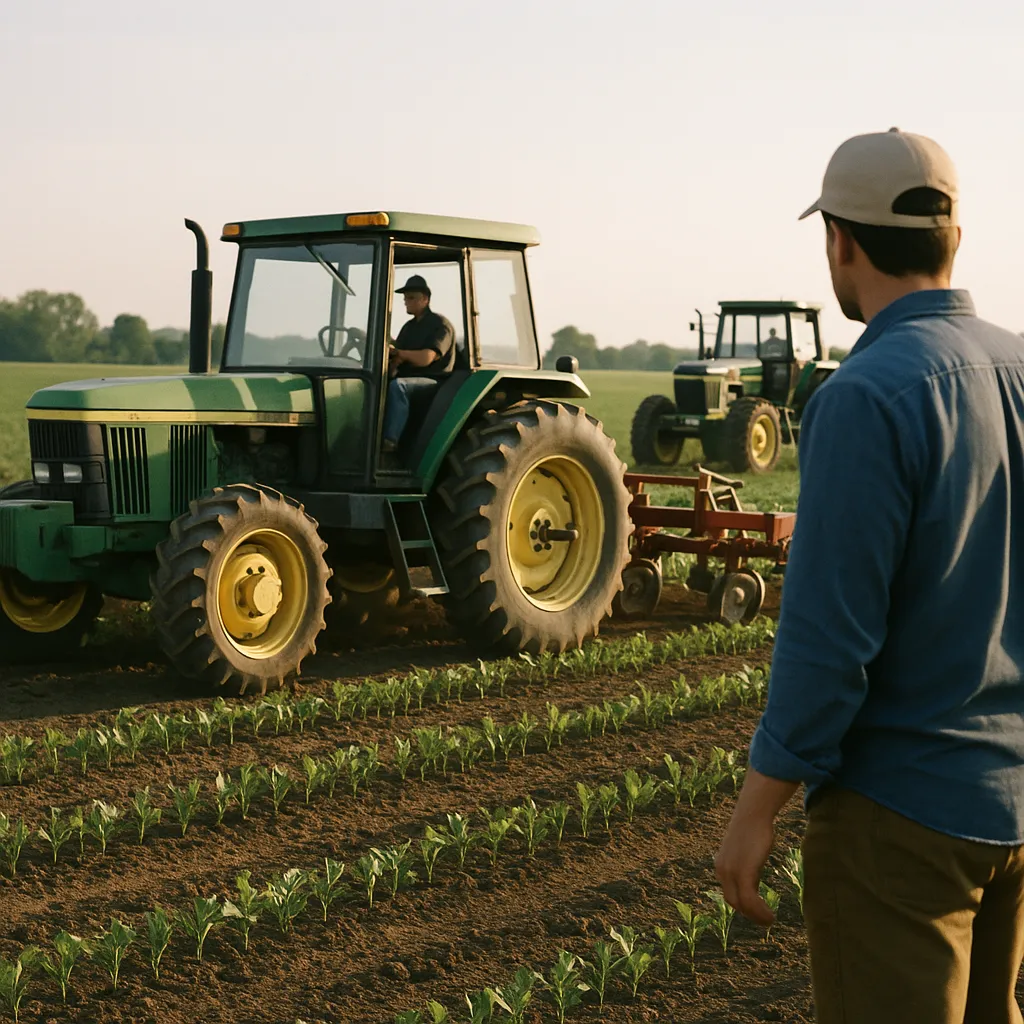
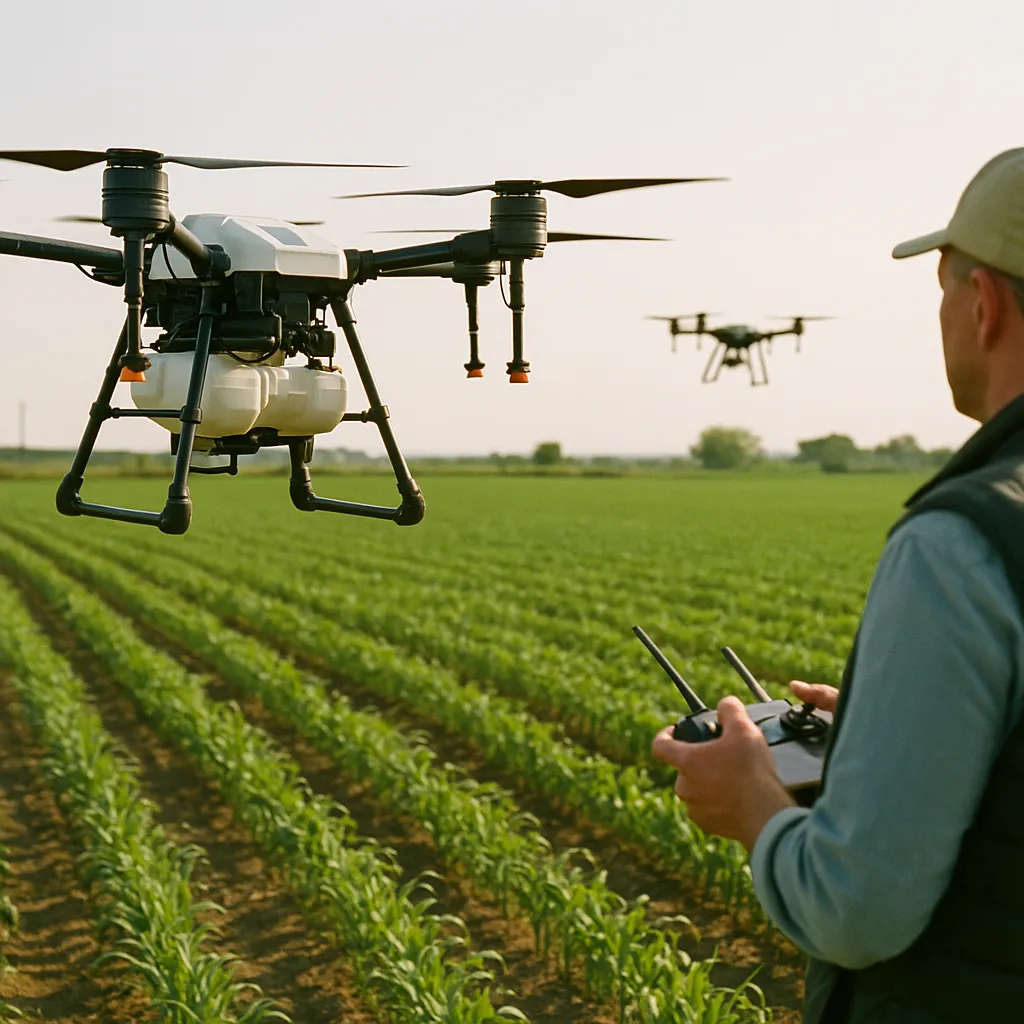
The precision agriculture market is on track to reach $17 billion by 2031, with AI embedded across the full crop cycle: satellite crop monitoring, autonomous tractors, AI-guided irrigation, real-time yield modeling, and variable-rate fertilizer application. The problem is that every major equipment manufacturer — John Deere, CNH Industrial, AGCO — runs proprietary data platforms with limited ability to share information across brands.
A grower using a John Deere tractor, a Trimble GPS system, and a third-party crop monitoring app may be unable to get those systems to share data without paying for a manufacturer's own data management subscription or hiring a custom integration developer. Federal interoperability standards would shift that dynamic, enabling farmers to choose the best tool for each task rather than being locked into a single-vendor ecosystem.
There is also a cybersecurity dimension that is becoming harder to ignore. Connected farm equipment is classified as critical infrastructure by CISA, yet a 2025 assessment found it significantly underprotected compared to other critical infrastructure sectors. AI-guided irrigation and fertilization systems that are networked but unsecured represent a meaningful attack surface with potential supply chain consequences during planting or harvest windows.
A Secondary Signal: AI in Controlled-Environment Farming
While the Farm Bill provision focuses on field-scale precision agriculture, a parallel development points to AI's reach in controlled-environment food production. German AgTech startup Hortiya is drawing industry attention for a generative AI greenhouse management model that has shown up to 30% energy savings in laboratory tests by dynamically optimizing lighting, humidity, and CO₂ levels using AI-generated control parameters rather than fixed schedules.
That result, while still early-stage, matters because controlled-environment agriculture — indoor vertical farms, greenhouse operations — is growing rapidly as a hedge against climate volatility and urban proximity to food consumers. If AI can cut the energy cost of indoor growing by 30%, the economics of that sector shift materially.
What This Means for the Industry
For precision ag software vendors: Voluntary federal standards are typically the precursor to procurement requirements. Vendors whose platforms already offer data portability and documented interoperability APIs are best positioned for what comes next. Companies with proprietary lock-in architectures have the most to lose if interoperability becomes a baseline expectation tied to federal program eligibility.
For farmers: Standardization means easier platform switching, lower integration costs, and better data portability across multi-vendor equipment fleets. It also creates a clearer liability framework when AI-guided decisions — a misread soil sensor, an irrigation override — cause crop losses.
For equipment manufacturers: The provision signals that participation in the standards-development process is now a strategic imperative. Companies that help write the voluntary standards historically write them in ways that favor their existing architectures. John Deere, CNH, and AGCO have significant incentives to engage early.
What to Watch
The October markup in the House Agriculture Committee will determine whether the AI standards provision survives in its current form or gets stripped in negotiations over other contentious Farm Bill provisions. If it passes to the floor intact, USDA and NIST will have 18 months to publish a draft framework — putting the first federal AI rules for farming on track for late 2028 at the earliest.
That timeline gives the industry a meaningful window to shape the standards before they become a compliance baseline. How the major equipment manufacturers respond — whether they engage constructively or lobby for weaker language — will be a signal worth tracking.
Did this help you understand AI better?
Your feedback helps us write more useful content.
Get tomorrow's AI briefing
Join readers who start their day with NexChron. Free, daily, no spam.