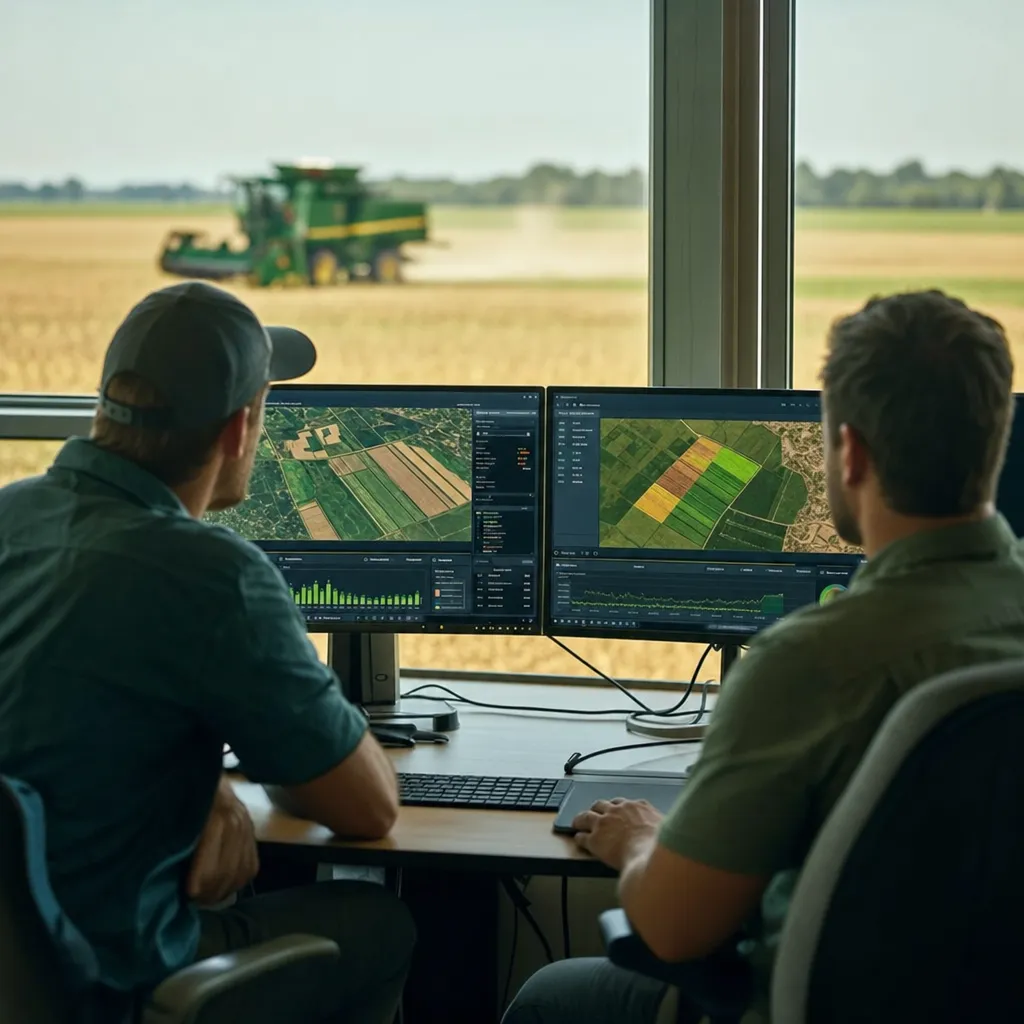
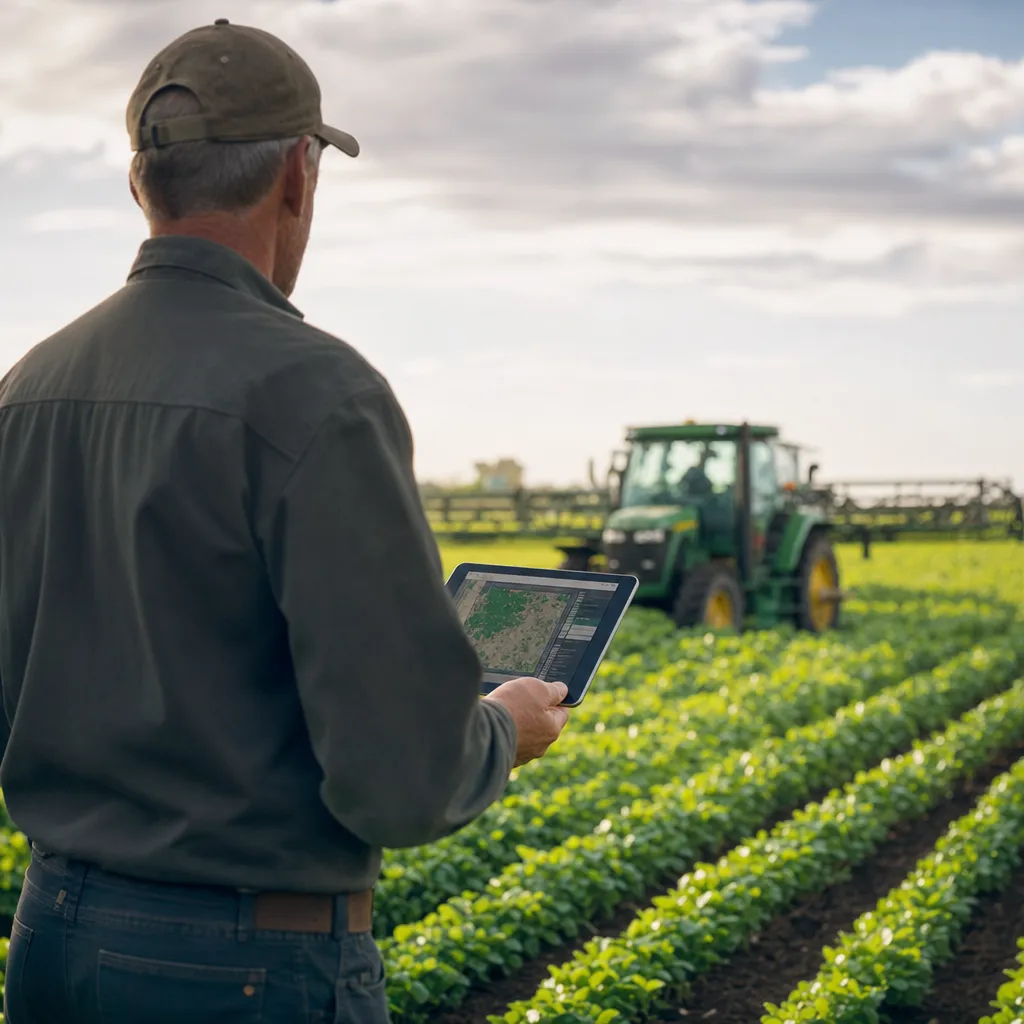
FarmQA integrated directly with John Deere's Operations Center, allowing agronomists to combine machine performance data and AI crop recommendations in a single workflow without manually exporting files between platforms.
AgTech platform FarmQA integrated directly with John Deere's Operations Center on November 10, allowing agronomists to pull machine performance data and AI crop recommendations into a single workflow without manually exporting files between platforms — closing a data silo gap that has long frustrated precision agriculture practitioners.
The silo problem is one of precision agriculture's most persistent complaints. Modern farm operations generate data from multiple incompatible sources: equipment sensors, satellite imagery, weather stations, soil sampling services, and crop advisory platforms. Agronomists who want to combine all of that data for decision-making have typically had to export files from each system and reconcile them manually — a process that is time-consuming and often means insights arrive too late to influence time-sensitive field decisions.
What the integration does
GlobeNewsWire reports that the integration lets agronomists pull machine operational data — including equipment hours, field pass timing, and application records — directly into FarmQA's platform alongside AI-generated crop recommendations and field scouting observations. The integration is available immediately to FarmQA's existing customer base across North America, with no additional installation required.
Get this in your inbox.
Daily AI intelligence. Free. No spam.
John Deere's Operations Center is the company's cloud-based farm management platform, used by a large share of North American row crop and livestock producers. FarmQA operates as an agronomic intelligence layer: crop scouting tools, disease and pest tracking, and AI-powered advisory content for agronomists and crop consultants.
The strategic pattern
The John Deere integration continues FarmQA's platform-expansion approach. The company connected with Planet Labs for satellite imagery earlier in 2026, adding another data layer to its AI recommendation engine. Each new data source — satellite imagery, machine activity, weather data — improves the precision of the AI crop advisory output.
For agronomists managing large farm operations with complex equipment fleets, the ability to correlate what machines have recently done with what AI is currently recommending can meaningfully change response time on crop protection and input decisions.
What to watch
Agronomic AI is competitive. Granular, Ag-Analytics, and John Deere's own Precision Ag tools all compete for the same advisory workflow. The question is whether the FarmQA-John Deere connection drives measurable customer growth for FarmQA, or becomes a table-stakes feature that every platform in the category is expected to match.
Did this help you understand AI better?
Your feedback helps us write more useful content.
Get tomorrow's AI briefing
Join readers who start their day with NexChron. Free, daily, no spam.