AgTech startups Vylor and Rainbow Crops are using machine learning to identify gene targets and CRISPR to edit them, compressing the development of climate-resilient crops from a decade to under three years.
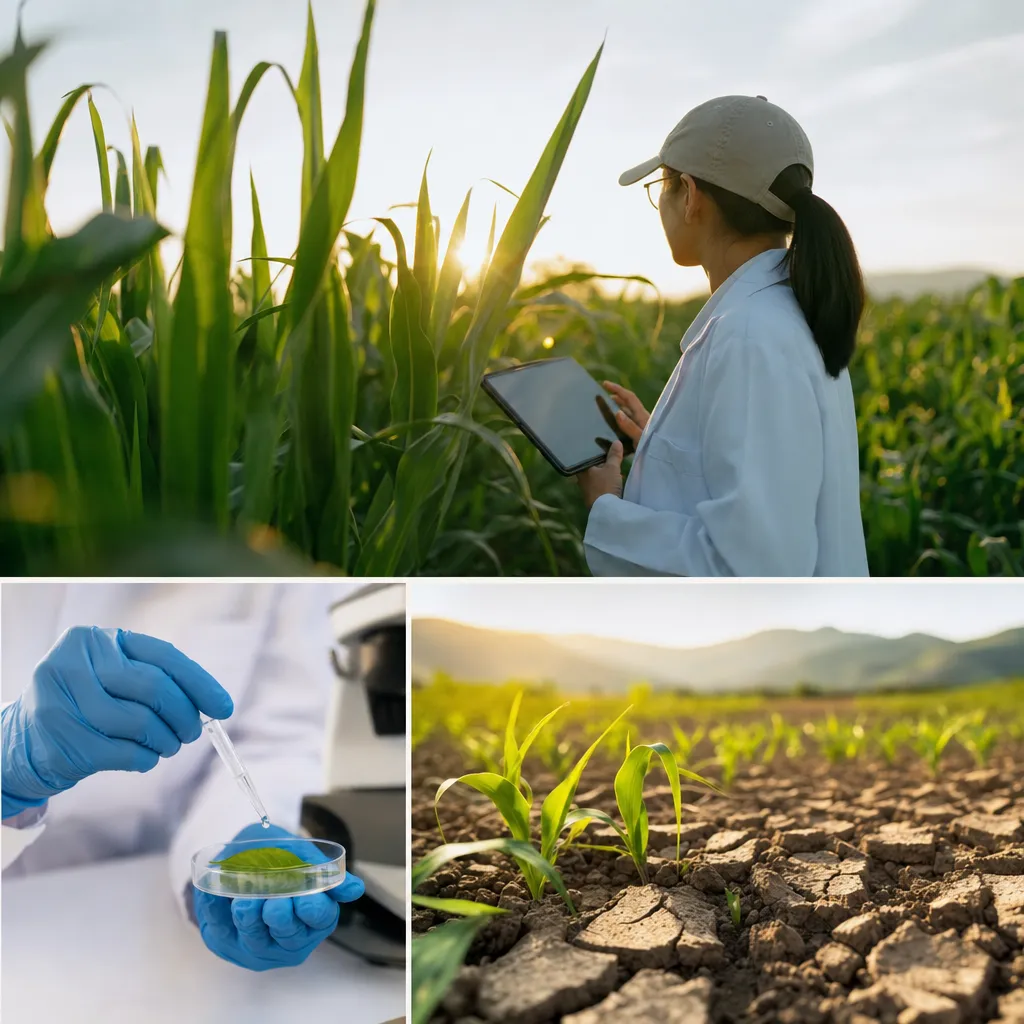
The combination of machine learning and CRISPR gene editing is compressing the timeline for developing climate-resilient crops from a decade to under three years. Research and company reporting tracked by GlobeNewswire documents AgTech startups including Vylor and Rainbow Crops using AI to identify gene targets that maximize stress tolerance — then using CRISPR to execute those edits with precision. The result: corn varieties engineered to survive heat events, extended droughts, and flood conditions that would have wiped out conventional crops.
For global food systems absorbing the first sustained wave of climate disruption, the timing is not academic.
What Was Hard About This Before
Traditional crop breeding relies on crossing plant varieties and selecting for desired traits across multiple growing seasons. Even with molecular biology accelerating some steps, developing a commercially viable stress-tolerant crop variety historically took 8 to 12 years from initial research to field deployment.
The bottleneck was not knowing whether gene editing could help — it was knowing which genes to target among thousands of candidates, and predicting how combinations of edits would interact with plant physiology across different environmental conditions. Researchers had to run experiments sequentially, each one taking a growing season to evaluate.
How AI Changes the Problem
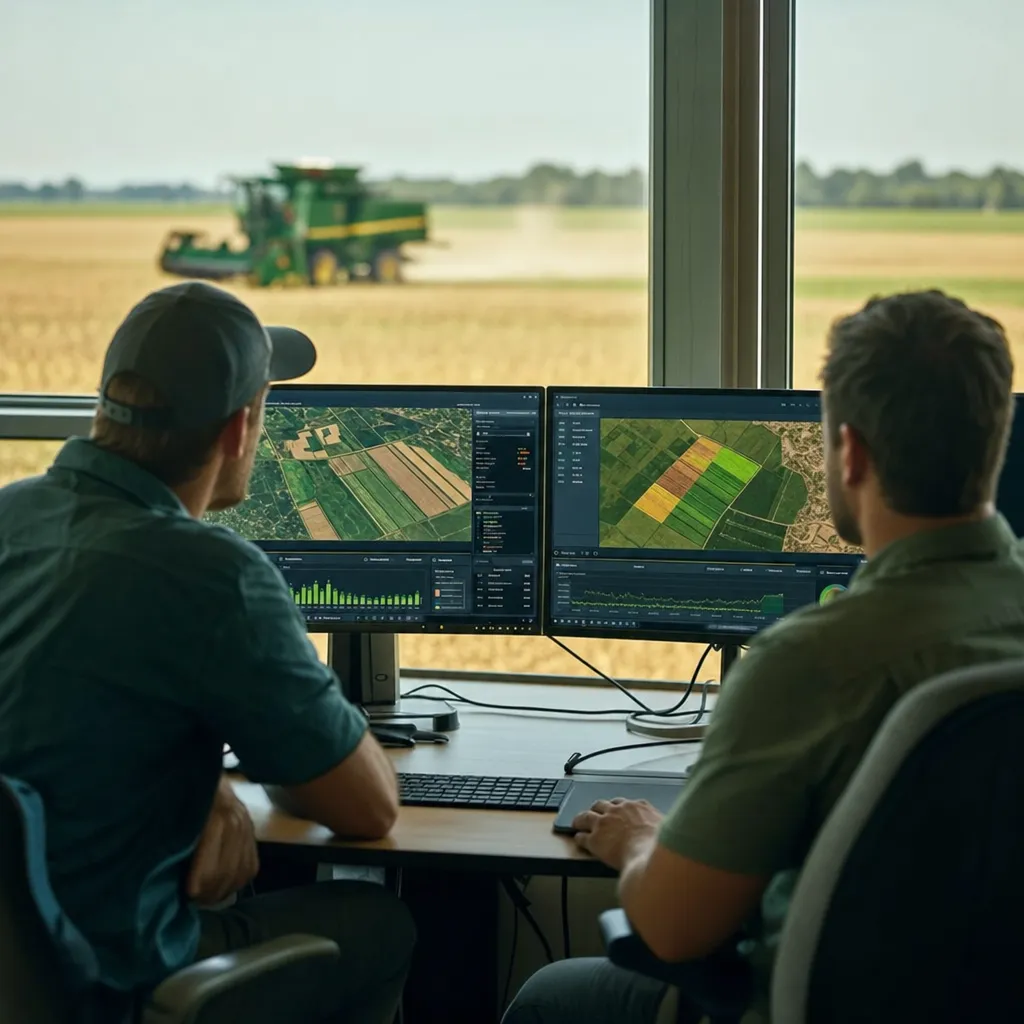
AI models trained on genomic data, climate records, field performance data, and published plant science research can analyze the full gene expression landscape of a crop under stress conditions. They identify which gene variants correlate with survival under specific climate stressors, which combinations amplify tolerance, and which edits are most likely to introduce unintended metabolic consequences.
This is fundamentally a pattern recognition and prediction problem. Machine learning models are built for exactly this.
Vylor and Rainbow Crops combine this AI analysis layer with CRISPR execution. Rather than screening thousands of potential edits manually across multiple growing seasons, their AI models narrow the target list to a small set of high-probability candidates. CRISPR then executes those targeted edits with precision unavailable to conventional breeding.
The development cycle compresses from a decade to roughly 24 to 36 months.
Get this in your inbox.
Daily AI intelligence. Free. No spam.
The Climate Stakes Are Real and Immediate
The 2026 growing season saw significant crop stress events across North America, South Asia, and sub-Saharan Africa. NOAA data show 2026 on track as one of the three hottest years on record. Agricultural systems bred over the 20th century for a stable climate are encountering conditions they were never designed to handle.
A drought-tolerant corn variety available in 2027 is valuable. The same variety available in 2032 may come too late for farmers already managing chronic yield degradation and planning future crop rotations.
This is not an abstract future technology. It is a response to an active emergency with a narrowing window for intervention.
Beyond Corn: The Broader Pipeline
Corn is the near-term focus because it is the world's most widely grown crop and among the most vulnerable to heat stress. But the AI-and-CRISPR pipeline applies to any crop with sufficient genomic data and research history.
Wheat, rice, and soybeans are likely next. Each represents a different stress profile — wheat faces heat and drought pressure across Central Asia and North Africa; rice is vulnerable to flooding and salinity in South and Southeast Asia; soybeans face temperature swings across the US Midwest. The same AI methodology that works for corn can be adapted to these crops with training data and domain expertise.
Intellectual Property Questions Are Unresolved
The AI-and-CRISPR pipeline raises novel IP questions that existing agricultural patent law was not designed to address.
If an AI model identifies the gene sequence that confers drought tolerance — without direct human design of that sequence — who owns the discovery? The company that trained the model? The researchers who compiled the genomic data the model learned from? The public institutions that funded the foundational science?
Current US patent law requires human inventorship for a patent claim. AI-discovered gene sequences exist in a legal gray zone. As Vylor, Rainbow Crops, and competitors move toward commercial deployment of AI-identified edits, IP litigation risk will follow — and could slow adoption if courts impose ambiguity on ownership.
Regulatory Pathway
In the United States, CRISPR-edited crops are currently treated differently from transgenic GMOs by the USDA. Many CRISPR edits that do not introduce foreign DNA are exempt from full GMO review under existing rules, allowing faster regulatory clearance.
How regulators classify AI-designed edits — as a novel category requiring new oversight, or as equivalent to conventional CRISPR work — will determine how fast commercial deployment can proceed. The FDA and USDA have not yet issued guidance specific to AI-identified targets.
What to Watch
Watch the USDA's regulatory stance on the first commercial applications of AI-designed CRISPR crops. The first regulatory approval of a Vylor or Rainbow Crops variety would set the precedent for how the entire category is governed — and either open or constrain the pipeline for dozens of similar products now in development.
Did this help you understand AI better?
Your feedback helps us write more useful content.
Get tomorrow's AI briefing
Join readers who start their day with NexChron. Free, daily, no spam.