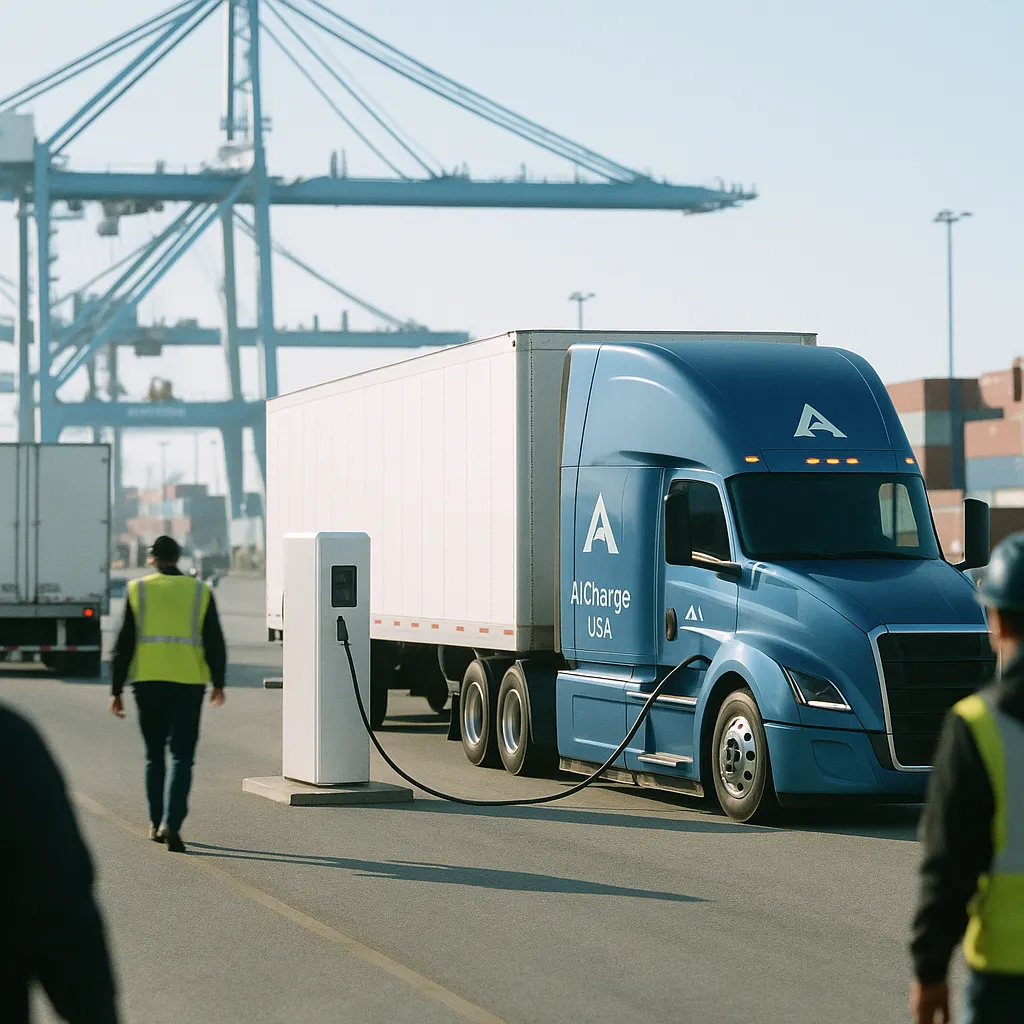
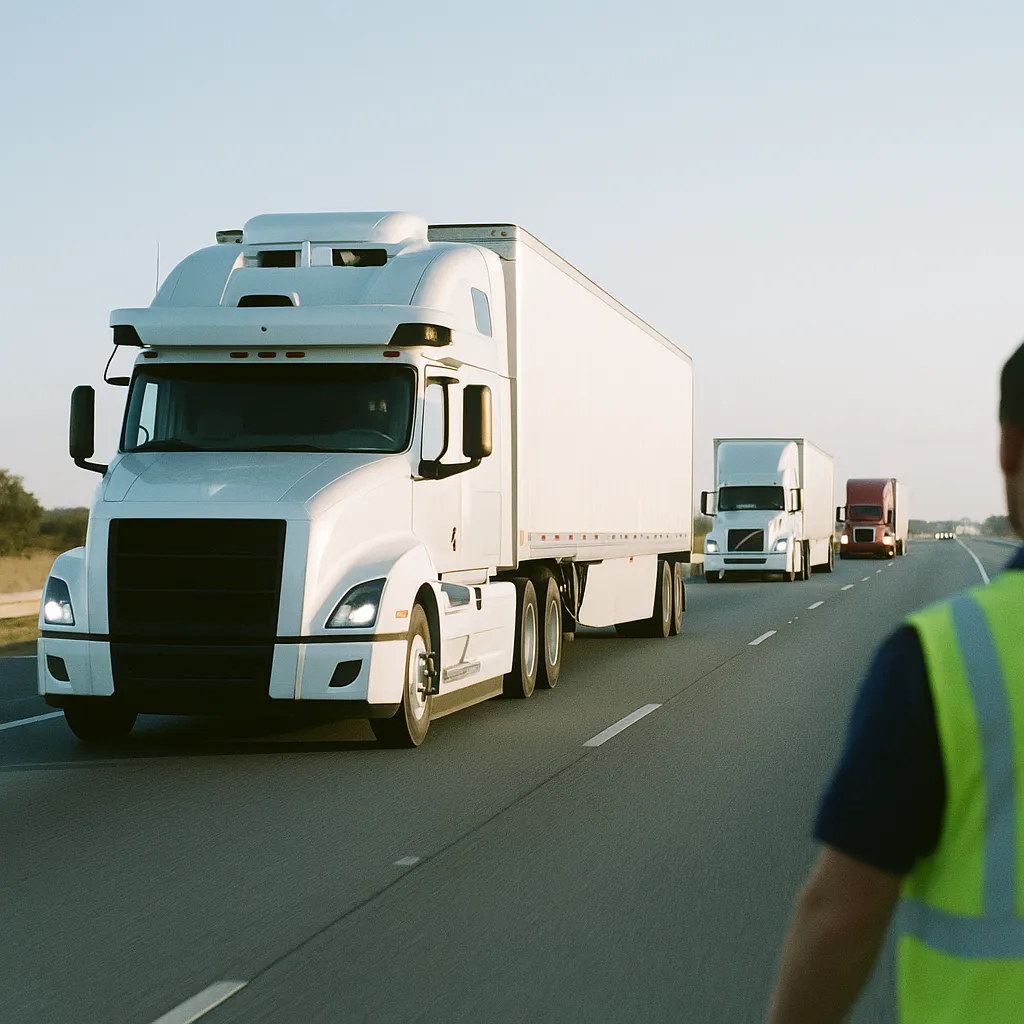
Kodiak AI and Charger USA are running commercial autonomous freight on the 435-mile Dallas–Laredo corridor — the approach route to the busiest commercial land port in the United States.
Kodiak AI and Charger USA launched commercial autonomous freight service on October 8 between Dallas and Laredo, Texas — a 435-mile corridor ending at the busiest commercial land port of entry in the United States. The first delivery on the route was completed September 8, with regular commercial operations now underway.
The corridor matters precisely because of what it handles. The Laredo port of entry processes an estimated $300 billion in annual US-Mexico trade. Autonomous freight on this specific route isn't a controlled research pilot — it's a direct operational test in one of the highest-volume, highest-stakes commercial freight environments in North America.
How Operations Work Now
According to Kodiak's announcement via GlobeNewswire, trucks equipped with the Kodiak Driver autonomous system handle steering, braking, and throttle on the full 435-mile run while a trained safety driver remains in the cab. This is the standard operational configuration for this phase — Kodiak is accumulating safety data and completing its safety case documentation for the eventual transition to fully driverless operations.
Cargo includes both refrigerated and dry goods. Cold chain logistics — temperature-sensitive freight requiring consistent environmental monitoring and control — adds operational complexity beyond standard dry freight. Running this cargo type from day one, rather than starting with simpler dry loads, signals that Kodiak and Charger are treating this as a commercial production deployment, not a graduated pilot.
Key details:
- Route: Dallas to Laredo, Texas — 435 miles
- First delivery: September 8, 2026
- Current configuration: Kodiak Driver system with safety driver onboard
- Targeted driverless transition: end of 2026
- Long-term scale target: 30,000 autonomous trucks by 2030
Why the Dallas-Laredo Corridor
The route's characteristics match the operational profile where autonomous systems perform most reliably. Long-haul interstate trucking involves fewer unpredictable interactions than urban delivery: highway driving, fixed waypoints, and limited lane-change complexity compared to dense urban environments.
Get this in your inbox.
Daily AI intelligence. Free. No spam.
Dallas-to-Laredo is also a commercially underserved corridor from a workforce perspective. The run requires long operating hours and overnight operations, conditions that make it structurally difficult to staff with drivers. Recruitment and retention challenges on routes like this are among the strongest economic arguments for autonomous freight — the value isn't hypothetical future cost savings, it's addressing a present staffing constraint.
For Charger USA, the partnership provides both the operational advantage and a first-mover position on a trade corridor that will see significant autonomous freight expansion if the Kodiak system validates. Early operators on autonomous routes historically retain preferred-partner relationships as capacity scales.
The Driverless Transition
Kodiak has publicly targeted driverless operations on the Dallas-Laredo corridor by end of 2026. This is an ambitious timeline for full removal of the safety driver on a commercial freight corridor, but it follows an established pattern of regulatory momentum: Kodiak received a California permit earlier this year for driverless freight operations on perishable cargo routes, demonstrating that regulators are willing to grant driverless authorization on commercial corridors where a sufficient safety case has been assembled.
The 2030 target of 30,000 autonomous trucks requires scaling far beyond a single corridor. Dallas-Laredo provides the commercial validation data — accumulated miles, safety incident records, schedule reliability metrics, cargo condition on delivery — that regulators, insurers, and fleet operators need before expansion decisions can be made at scale.
Competitive Landscape
Kodiak operates in a field that includes several well-capitalized competitors pursuing the same Texas corridor strategy:
Aurora has announced plans for commercial driverless freight operations on Texas routes by end of 2026, with a focus on the Dallas-Houston corridor and subsequent expansion. Aurora and Kodiak are on near-identical public timelines for driverless transition.
Waymo Via, Torc Robotics (owned by Daimler Truck), and Waabi each have active programs in long-haul autonomous freight with Texas as a priority market due to its straight highways, favorable weather, and high freight volume.
The competitive timeline is compressing. The first company to demonstrate sustained, commercial-scale driverless freight — multiple trucks, consistent operations, clean safety record — will establish the benchmark that regulators, insurers, and fleet buyers use to evaluate all subsequent entrants. Dallas-Laredo puts Kodiak in direct contention for that position.
What to Watch
The driverless transition on the Dallas-Laredo corridor — Kodiak's stated target for end of 2026 — is the critical near-term milestone. Federal Motor Carrier Safety Administration (FMCSA) response to driverless commercial freight operations at the US-Mexico border will set regulatory precedent for this entire class of operation; no autonomous freight company has yet run driverless commercial operations through a port of this volume and sensitivity. Watch also for Charger USA route expansion announcements once the safety case for the Dallas-Laredo corridor is filed and reviewed.
Did this help you understand AI better?
Your feedback helps us write more useful content.
Get tomorrow's AI briefing
Join readers who start their day with NexChron. Free, daily, no spam.