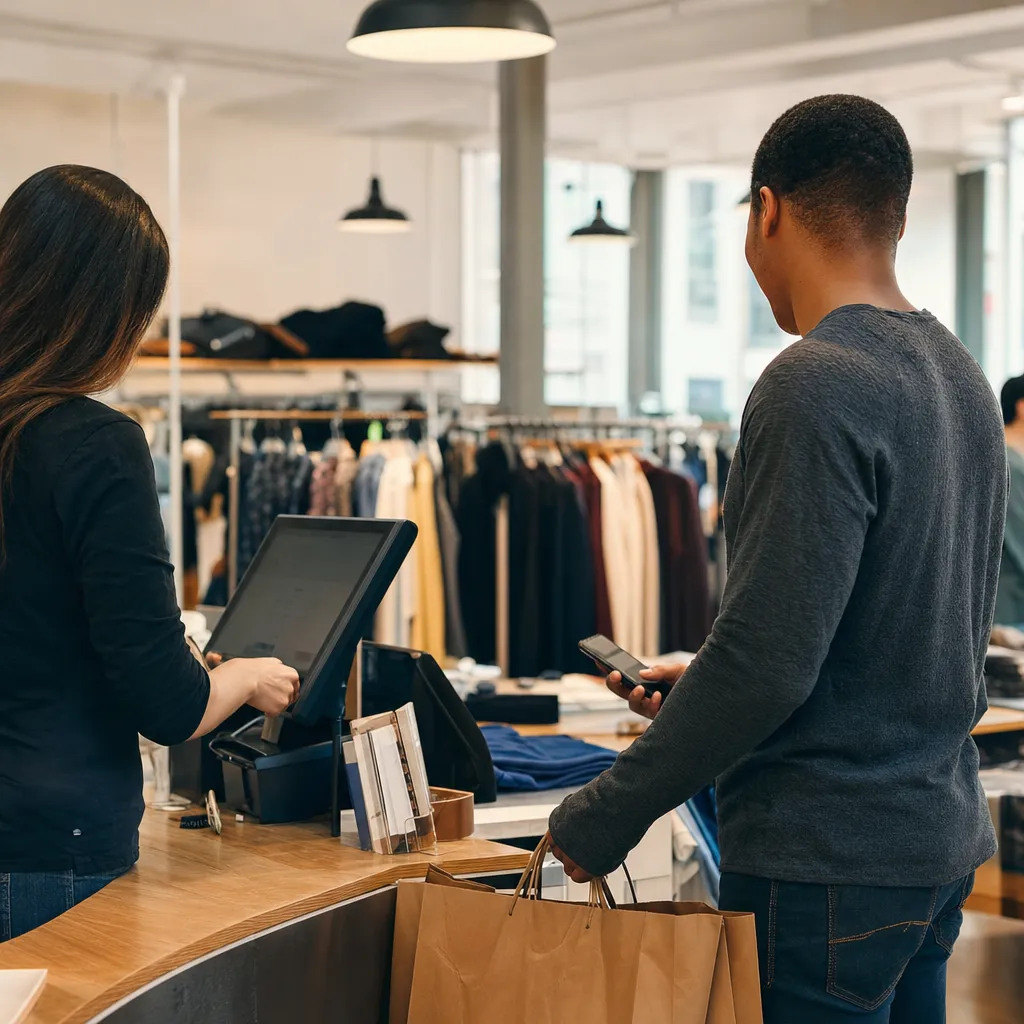
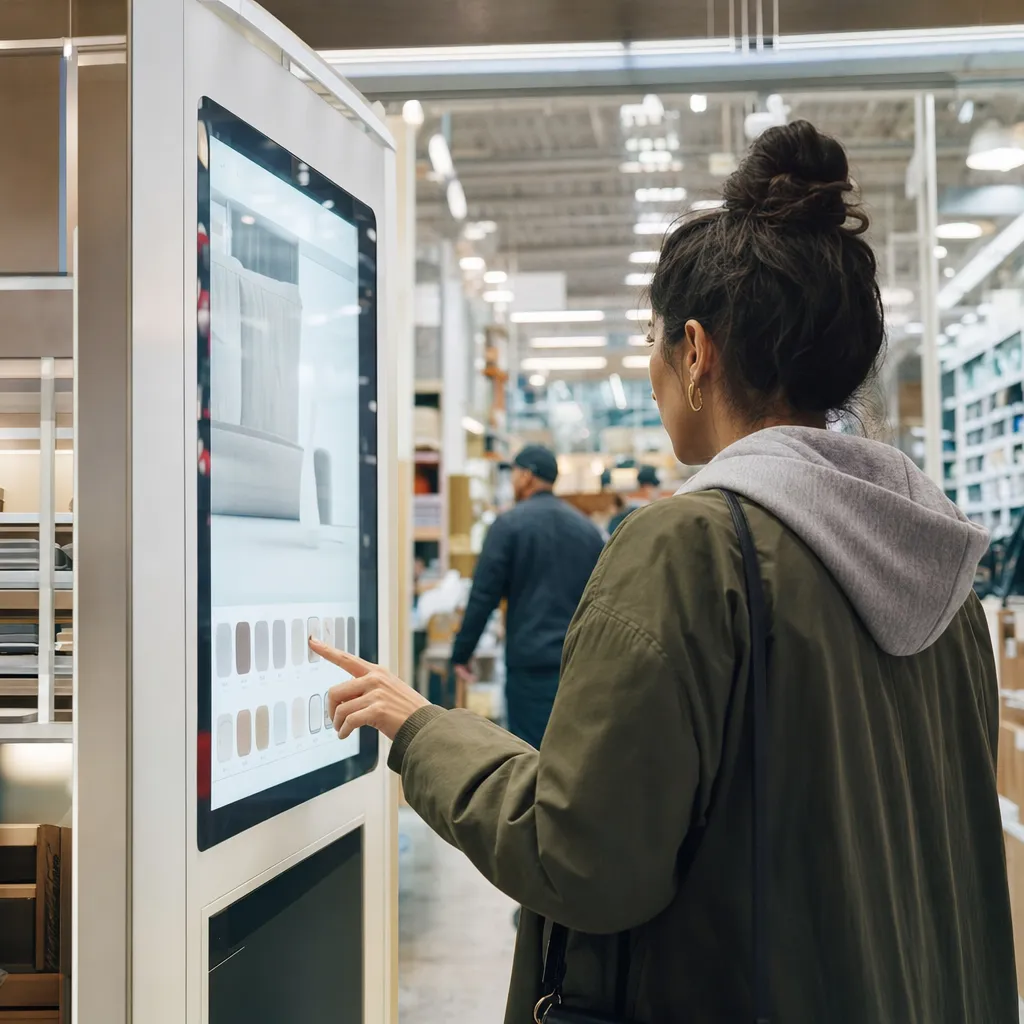
Salesforce predicts AI chat agents will drive 20% of all ecommerce traffic this holiday season, with one in three ecommerce sites having a live shopper agent by Cyber Week.
AI Agents Will Drive 20% of Holiday Ecommerce Traffic This Season, Salesforce Predicts
One in three ecommerce sites will have a live AI shopper agent by Cyber Week — and AI chat agents will drive 20% of all ecommerce traffic during the 2026 holiday season — according to Salesforce's annual holiday shopping forecast. That figure would represent a structural shift in how people arrive at ecommerce sites, from search engines and social media to autonomous AI agents browsing and comparing on their behalf.
From Chatbot to Shopping Agent
The distinction matters. A chatbot answers questions. A shopper agent acts.
This generation of AI shopping tools — built on agentic frameworks rather than simple retrieval systems — can browse a retailer's inventory, compare options, check price history, read reviews, apply available discounts, and present a ranked recommendation without the user navigating a single page. Some implementations go further: they can complete a purchase with a stored payment method once the user approves the cart.
Salesforce is tracking a bifurcation in how retailers are deploying these tools. The one-in-three prediction covers site-specific shopper agents — tools a retailer builds or licenses to guide customers through its own inventory. These are distinct from third-party AI shopping assistants (like those integrated into browsers and consumer AI apps) that crawl multiple retailers simultaneously and may route users away from sites that don't surface well in AI-generated recommendations.
Both types are accelerating. Both create new acquisition and abandonment dynamics that retailers are still learning to manage.
The .9 Billion Projection
Salesforce estimates AI platforms will generate $20.9 billion in retail spending in 2026 — nearly four times the 2025 figure. That growth comes from two sources: more AI-assisted purchase completions, and higher average order values when AI agents handle product discovery (they tend to match users to higher-confidence purchases rather than browsing-based impulse buys).
Get this in your inbox.
Daily AI intelligence. Free. No spam.
The holiday season is the most important proving ground. If AI agents deliver measurably higher conversion rates and customer satisfaction scores during the peak November-December window, retailer investment in shopper AI will accelerate heading into 2027. If they generate complaints — hallucinated inventory, incorrect pricing, failed checkout flows — the backlash will slow adoption.
Airship's On-Device Answer
Separately, Airship launched on-device AI decisioning for mobile retail personalization. Instead of sending user context to a server for processing and waiting for a response, Airship's system evaluates what the user is doing — time of day, current app state, recent behavior — directly on the device, then delivers personalized messages, offers, or prompts without the round-trip latency.
The practical difference for holiday retail: push notifications and in-app messages that fire at exactly the right behavioral moment rather than on a scheduled broadcast. A user who just placed an item in cart but hasn't checked out for 20 minutes gets a reminder or incentive faster and more precisely than a server-side system can execute.
On-device inference for personalization is a growing trend that addresses two problems simultaneously: latency (decisions happen in milliseconds, not hundreds of milliseconds) and privacy (user behavior data does not need to leave the device to trigger a personalized action). For retailers dealing with tightening data privacy rules in California and Europe, the privacy angle is increasingly as important as the speed advantage.
Who Benefits and Who Gets Left Behind
The Salesforce forecast contains an implicit warning that previous research made explicit: AI shopper tools primarily benefit retailers with clean, structured product data and well-implemented APIs. Retailers with messy catalogs, inconsistent product descriptions, missing inventory feeds, or checkout flows that don't support agentic completion will not see AI agents successfully route customers to them — because the agents can't reliably operate in their environments.
This creates a two-tier dynamic. Large retailers with the engineering resources to optimize for AI agent compatibility — Amazon, Walmart, Target, major specialty chains — are positioned to capture disproportionate share of AI-driven traffic. Smaller retailers without technical resources to maintain agent-friendly product infrastructure risk being systematically deprioritized by AI shopping tools, regardless of whether their prices or products are competitive.
The holiday season will reveal how pronounced that gap is. Retailers that invested in product data quality and agent-compatible checkout flows in Q3 are the ones most likely to see the 20% AI traffic figure apply to their numbers. Those that didn't should expect AI agents to route around them.
What to Watch
November 29 (Black Friday) and December 2 (Cyber Monday) will be the first data checkpoints. Salesforce, Adobe, and ComScore all publish daily holiday season ecommerce reports; the share of traffic attributed to AI agents will be one of the most-watched metrics. Any significant gap between Salesforce's 20% projection and the actual figures will be read as either a validation or a reality check for the agentic shopping narrative heading into 2027 retail planning cycles.
By Hector Herrera
Did this help you understand AI better?
Your feedback helps us write more useful content.
Get tomorrow's AI briefing
Join readers who start their day with NexChron. Free, daily, no spam.