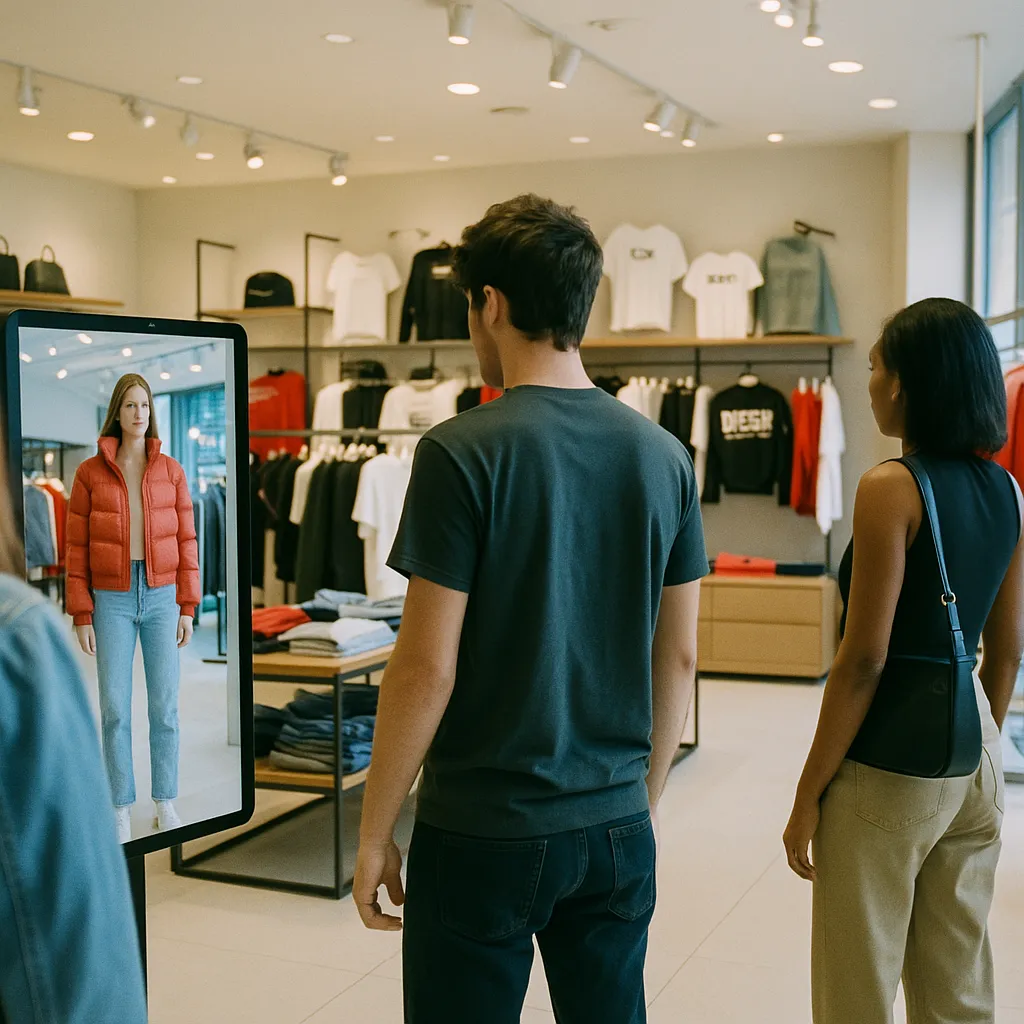
OTB Group — parent to Diesel, Maison Margiela, and Marni — has launched AI-powered virtual try-on using Google Cloud, becoming one of the most prominent luxury fashion deployments of generative AI personalization.
OTB Group Deploys AI Virtual Try-On Across Diesel, Maison Margiela, and More via Google Cloud
By Hector Herrera | May 16, 2026 | Vertical: Retail
OTB Group — the Italian fashion conglomerate behind Diesel, Maison Margiela, Marni, Jil Sander, and Viktor&Rolf — has launched AI-powered virtual try-on across its brands using Google Cloud's Virtual Try-On API. This is one of the most prominent luxury fashion deployments of generative AI personalization to date, and it sets a template that heritage brands worldwide are watching closely.
Virtual try-on has been promised in fashion e-commerce for years. Early versions were unconvincing — flat overlays on generic body shapes that showed how a garment looked in theory, not how it would actually fit and fall on a real person. The tools created more skepticism than conversion.
What changed is diffusion-model image generation (the same AI underlying tools like Stable Diffusion and Midjourney). Google's Virtual Try-On API uses these models to simulate how fabric actually moves, drapes, and fits across diverse body types. The results are convincing enough to serve as a genuine purchasing decision tool rather than a marketing gimmick.
What OTB Built
Under the Google Cloud partnership, shoppers can now:
- Place themselves inside brand campaigns and fashion event visuals using AI image editing — seeing how a Diesel jacket or Margiela coat looks in context, not on a white background
- Animate the results with video — adding motion to the try-on visualization
- Shop across five distinct brand identities — each preserved in the AI output, maintaining Maison Margiela's deconstructed aesthetic or Diesel's streetwear sensibility rather than flattening everything into a generic look
The integration required solving a specific challenge unique to luxury fashion: each brand has its own lighting aesthetic, styling language, and visual identity. The AI had to serve the brand, not override it.
Get this in your inbox.
Daily AI intelligence. Free. No spam.
The Business Case
For OTB, this is a direct conversion rate play. High-price-point fashion purchases are inherently high-uncertainty — a $600 Marni jacket is a meaningful financial commitment, and not being able to see how it fits on your body is a genuine barrier to clicking "buy." Virtual try-on reduces that uncertainty.
The ROI model is straightforward:
- Higher conversion on hesitant shoppers
- Lower return rates (returns cost luxury fashion brands significantly in logistics, re-inspection, and re-merchandising)
- Increased average order value as shoppers can more confidently build outfits
The metric OTB will watch most closely is return rate. If AI-assisted purchases generate fewer returns than standard e-commerce purchases, the ROI case becomes self-evident and justifies broader AI investment.
The Industry Signal
OTB's move matters beyond its own brands. Luxury fashion has been one of the most cautious segments in adopting generative AI, for legitimate reasons: brand dilution risk is high, and any AI-generated output that looks off can damage the meticulously maintained aesthetic identity of a heritage label.
OTB's willingness to deploy this publicly — across multiple premium brands simultaneously — signals that at least one major luxury group has concluded the tools are ready. Competitors including LVMH, Kering, and Tapestry are all running their own AI personalization experiments. The race is now about execution and scale, not whether to go.
For mid-market and fast fashion retailers who have already been more aggressive with AI try-on tools, this validates the direction and adds competitive pressure on luxury to close the gap.
What to Watch
Adoption data. OTB has not disclosed conversion rate or return rate numbers; those metrics, when they emerge, will either confirm the ROI model or reveal its limits. Also watch whether the AI maintains brand integrity at scale — luxury fashion's core asset is a controlled aesthetic, and generative AI running millions of personalized outputs creates real risk of off-brand visuals reaching consumers.
Hector Herrera covers AI in retail, commerce, and the systems shaping how consumers buy. He is the founder of Hex AI Systems.
Did this help you understand AI better?
Your feedback helps us write more useful content.
Get tomorrow's AI briefing
Join readers who start their day with NexChron. Free, daily, no spam.