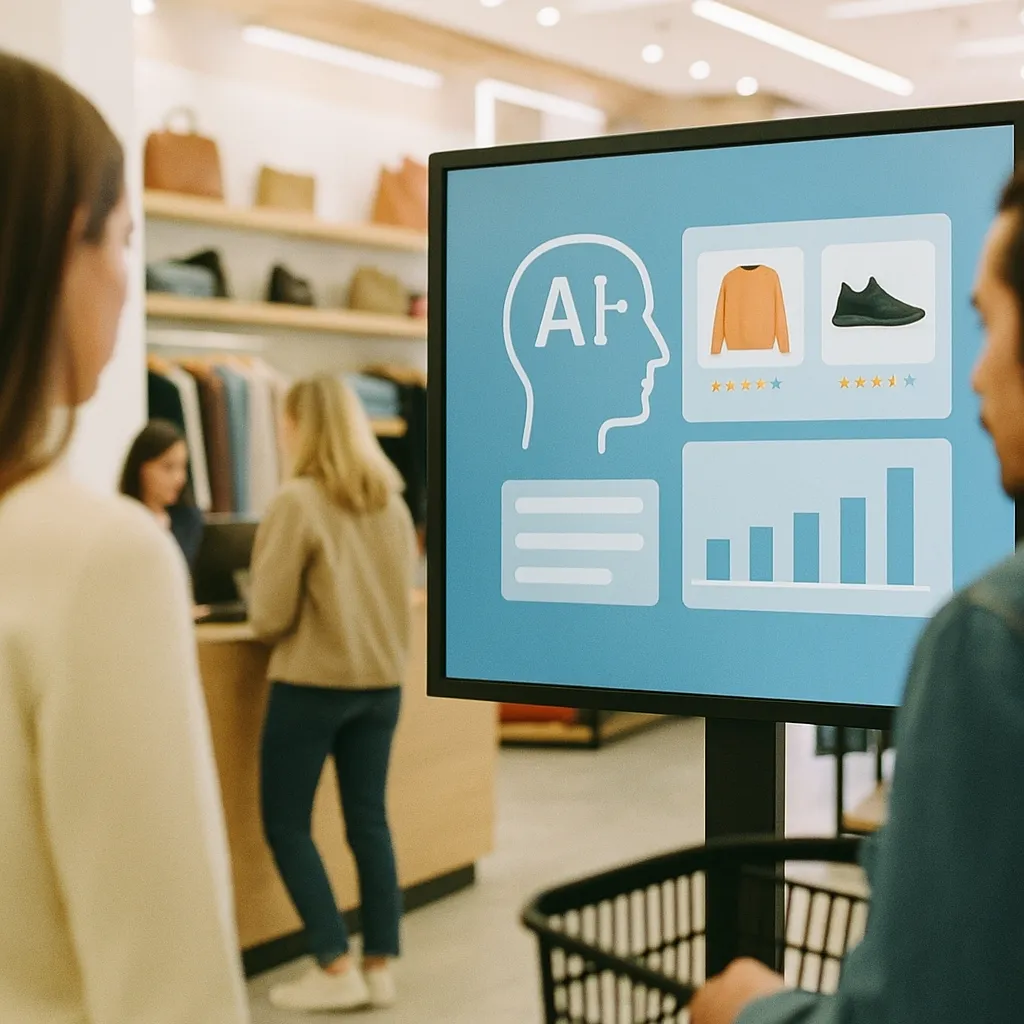
Almost every retailer is building toward AI-powered agentic commerce. Only half of consumers are comfortable with autonomous purchasing agents. That gap is retail's defining challenge in 2026.
97% of Retailers Have AI Plans. Only Half of Consumers Trust Autonomous Shopping Agents.
By Hector Herrera | May 11, 2026 | Retail
Almost every major retailer is building toward AI-powered commerce. The consumers they're building for haven't caught up. A new eMarketer analysis finds that while 97% of commerce organizations now have active AI implementation strategies, only 50% of consumers are comfortable with fully autonomous AI purchasing agents — systems that can browse, select, and buy on a shopper's behalf without human confirmation. That gap is the defining challenge for retail AI in 2026.
Agentic AI in retail — where an AI system takes actions autonomously rather than just providing recommendations — is no longer a concept. It's the dominant strategic architecture. The question is whether consumer trust can be built fast enough to justify the platforms being built.
The Numbers Behind the Deployment Wave
According to eMarketer's analysis, the retail AI landscape in 2026 breaks down as follows:
- 97% of commerce organizations have active AI implementation strategies — a near-universal adoption that signals AI has crossed from optional to essential in retail planning
- Agentic AI is the dominant 2026 architecture — systems capable of autonomous purchasing decisions on behalf of shoppers, not just recommendation engines that surface products for human review
- 50% of consumers are comfortable with fully autonomous AI purchasing agents — meaning half of the market is not ready for the product that the majority of retailers are building toward
- AI-powered personalized recommendations are already redefining discovery and search across major platforms
The 97% figure reflects planning intent, not deployment completion. Many of those AI strategies are in pilot or early rollout. The 50% consumer comfort number, however, reflects current sentiment — meaning consumer trust will need to grow substantially before agentic retail reaches its projected scale.
An agentic shopping system doesn't just show you products. It monitors your purchase history, household inventory, and stated preferences; identifies needs before you articulate them; browses across retailers; compares prices; and completes transactions — all without requiring you to log in, browse, or confirm each purchase.
The clearest early examples:
- Amazon's "Buy for Me" feature allows the AI to complete purchases from third-party retailers without leaving the Amazon app, using stored payment methods and shipping preferences.
- Instacart's AI cart rebuilds recurring grocery orders based on historical patterns and flags substitutions autonomously when items are out of stock.
- Shopify's AI checkout agents are in pilot with select merchants, allowing Shopify-native AI assistants to complete transactions through conversational interfaces.
These are early, constrained versions of agentic commerce. The full vision — where an AI agent manages a household's purchasing across categories without item-by-item human approval — is what half of consumers say they're not comfortable with yet.
Get this in your inbox.
Daily AI intelligence. Free. No spam.
Why the Trust Gap Exists
The 50% comfort figure isn't surprising if you understand the specific anxieties driving it:
Control. Autonomous purchasing means the AI can spend your money without asking. Even if the AI is accurate 95% of the time, the 5% of wrong purchases create friction — returns, disputes, frustration — that shapes perception more than the 95% of correct ones.
Data exposure. Agentic commerce requires the AI to hold detailed knowledge of your preferences, financial information, and household patterns. Many consumers haven't decided whether they trust any company with that profile, let alone an AI acting on it.
Error accountability. When a human clicks "buy," they own the decision. When an agent does it, the accountability structure is unclear — is it the AI, the retailer, the platform? The ambiguity makes people more cautious about handing over authority.
Hallucination awareness. Broad public awareness that AI systems can be confidently wrong has made consumers skeptical of high-autonomy AI applications generally. Autonomous purchasing is a high-autonomy application.
What This Means for Retail Strategy
For retailers, the trust gap presents a practical sequencing problem: the infrastructure is being built for a use case that half of potential users aren't ready to adopt. That's not necessarily a fatal problem — consumer comfort with new technologies typically grows with exposure and positive experience — but it does suggest that the timeline to agentic commerce at scale is longer than the investment pace implies.
Several strategic responses are emerging:
- Progressive autonomy models — platforms are launching agentic features with confirmation gates, letting consumers build trust incrementally rather than requiring full autonomy from the start. A system that executes routine reorders automatically but asks before trying anything new is more adoptable than one that operates without any check-in.
- Transparency tooling — showing consumers an audit log of what the AI did and why is becoming a standard feature request, not just a privacy accommodation.
- Opt-in architecture — the most trusted agentic deployments are those where consumers explicitly choose which categories the AI can act on autonomously, maintaining veto rights on others.
The 50% comfort ceiling also has a demographic dimension. Younger consumers — particularly those who grew up with algorithmic recommendation systems — are meaningfully more comfortable with autonomous AI purchasing than older demographics. The comfort number will likely rise over time, but the gap between retail infrastructure investment and consumer readiness is real today.
What to Watch
Watch Amazon's "Buy for Me" usage data. If autonomous purchasing volume climbs steadily without a spike in returns or consumer complaints, it will be the clearest evidence that the trust gap can be closed through positive experience rather than marketing. Conversely, a high-profile agentic commerce error — an AI making a wrong purchase at scale — could reset the trust trajectory across the category.
Also watch regulatory attention. The FTC has flagged agentic commerce practices as a potential consumer protection focus area. If autonomous purchasing becomes common before disclosure and control standards are established, expect enforcement action to define the rules retroactively.
Source: eMarketer
Did this help you understand AI better?
Your feedback helps us write more useful content.
Get tomorrow's AI briefing
Join readers who start their day with NexChron. Free, daily, no spam.