Toyota has mapped one of the most concrete physical AI capital commitments in automotive history: 400,000 robots and roughly $6.4 billion in annual spending, beginning in 2028.
Toyota Maps Path to 400,000 Robots and $6.4B Annual Spend Across Global Factory Network by 2028
By Hector Herrera | September 28, 2026 | Manufacturing
Toyota Motor has put a specific number on factory automation: 400,000 robots and roughly 1 trillion yen — approximately $6.4 billion — in annual spending beginning in 2028, covering its own plants, group companies, and major suppliers. The announcement is one of the most concrete capital commitment timelines in physical AI to date, and it signals that automotive OEMs are now treating factory intelligence as a core cost structure, not an R&D experiment.
What Toyota Is Actually Committing To
According to AI News, Toyota's estimate covers the full scope of automation across its manufacturing ecosystem:
- 400,000 robots total, including both replacements for aging machines and net-new installations
- 1 trillion yen (~$6.4 billion) annually beginning in 2028 — this is recurring spend, not a one-time capital outlay
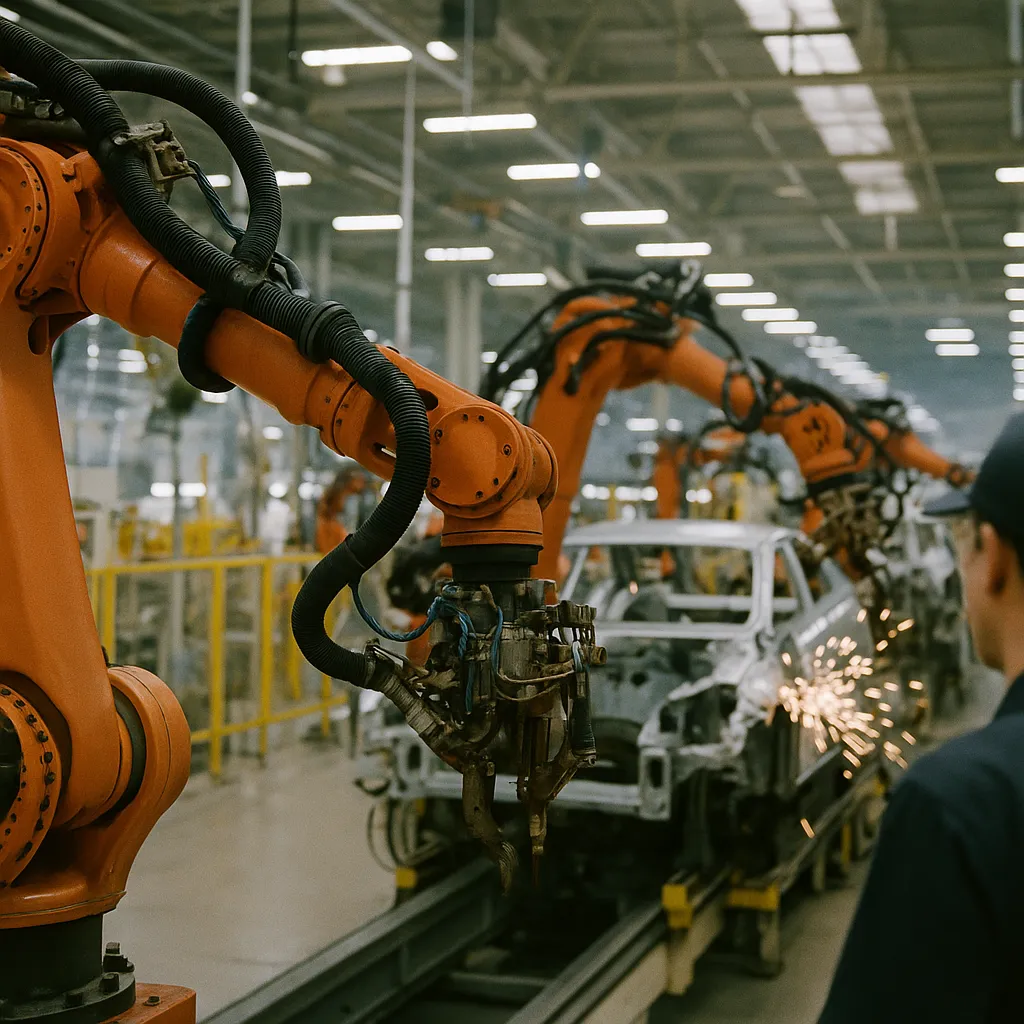
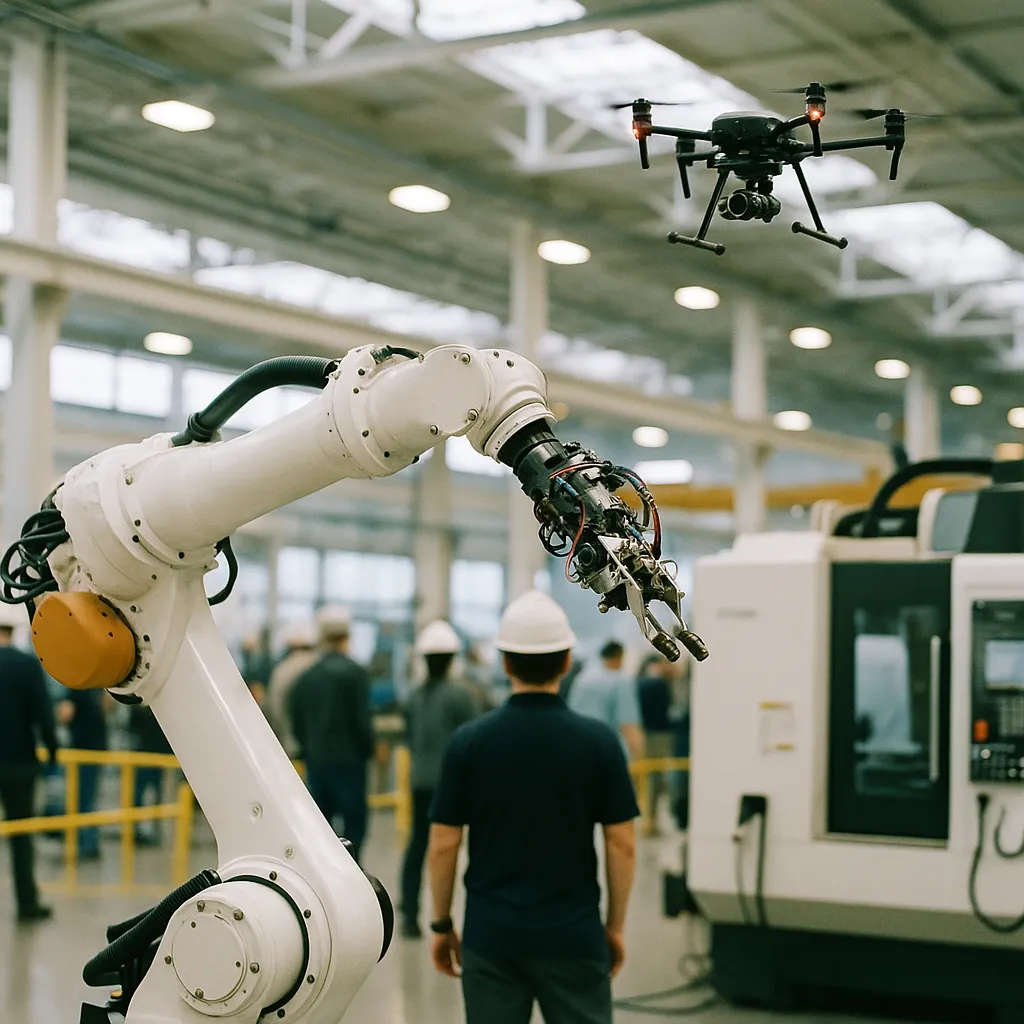
- Mixed system types: industrial robots (arms, welding, painting), automated logistics (autonomous guided vehicles, conveyor systems), and human-robot collaboration stations on assembly lines
- Scope: Toyota's own factories, Toyota Group companies (Denso, Aisin, Toyota Industries), and major tier-1 suppliers
The 2028 start date is important context. Toyota is not announcing a ten-year moonshot — it is setting a budget line that activates in less than two years.
The Physical AI Moment Toyota Is Responding To
Factory robotics has been a mature industry for 40 years. What changed is the intelligence layer. Earlier generations of industrial robots were highly specialized, required expensive custom programming, and could not adapt when a part tolerance shifted or a line reconfigured. They were reliable but rigid.
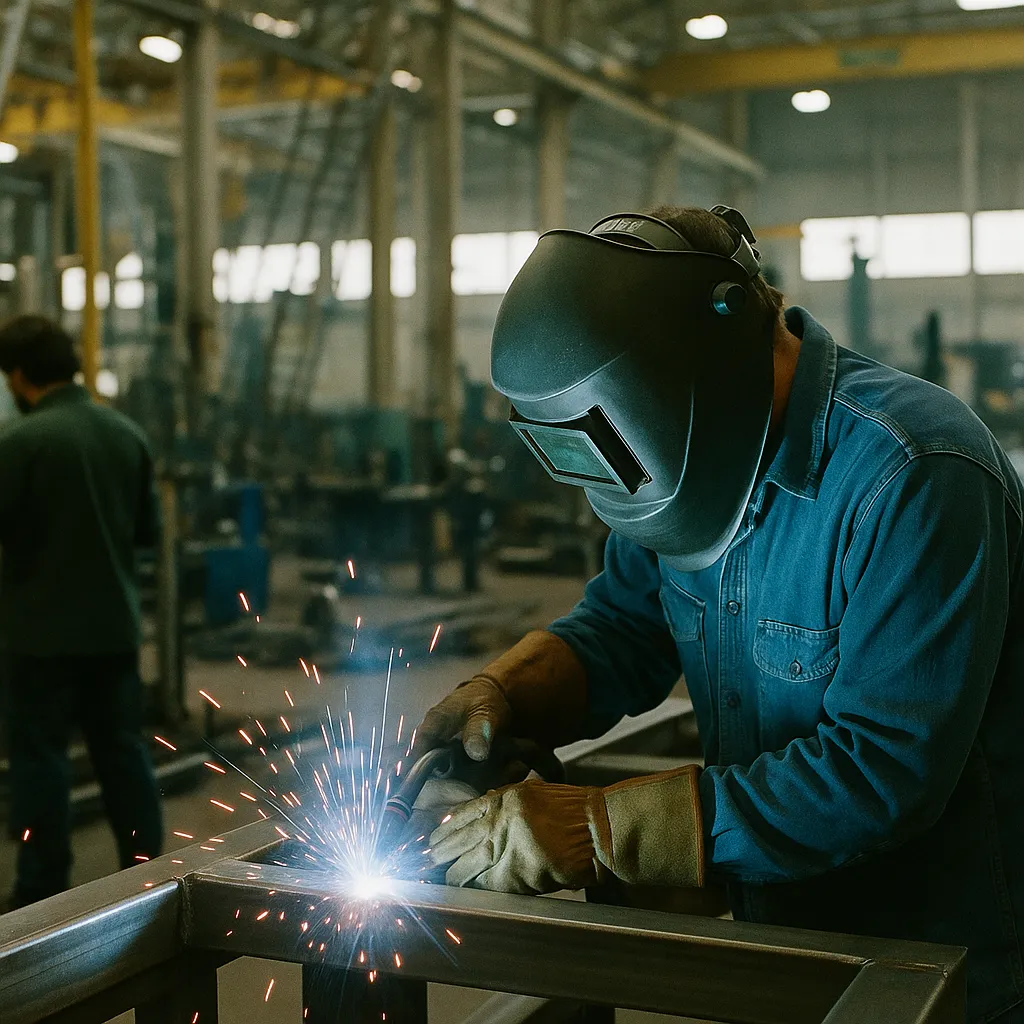
The current generation of physical AI — systems that combine vision, tactile sensing, and large language models trained on operational data — can handle variability that would have required human intervention on a traditional line. Toyota's own manufacturing engineering teams have been piloting these systems in welding and sub-assembly, and the 2028 commitment suggests the pilots cleared the company's threshold for broad deployment.
Get this in your inbox.
Daily AI intelligence. Free. No spam.
This is also a response to labor economics. Japan's manufacturing workforce is aging faster than replacement workers are entering. Toyota cannot staff 400,000 positions even if it wanted to — the demographic math does not work. Automation in this context is not a choice between workers and robots; it is a choice between automated production and reduced production capacity.
Scale Context: Why 400,000 Matters
Toyota builds approximately 10 million vehicles per year across roughly 50 manufacturing plants globally. Its supplier ecosystem includes hundreds of companies with their own production footprints. The 400,000 robot figure, spread across that network, is not transformative at any single facility — it is the aggregate of thousands of individual deployment decisions across a decade-long transition.
For comparison, the entire installed base of industrial robots worldwide was approximately 3.9 million units as of 2025, per the International Federation of Robotics. Toyota's 400,000 commitment alone represents roughly 10% of the global installed base, added over a few years of scaled procurement. That kind of demand signal reshapes robot supply chains and drives down unit costs for every manufacturer that follows.
What This Means for the Industry
For robot makers, Toyota's commitment is a volume signal that justifies accelerated R&D and manufacturing investment. Companies like Fanuc, Yaskawa, ABB, and Kawasaki — which supply Toyota's existing robot fleet — will be competing for the new orders. Newer entrants building humanoid platforms (Figure, 1X, Agility Robotics) will use Toyota's scale as a market-validation reference in their own fundraising.
For automotive peers, Toyota's specificity creates competitive pressure. Ford, GM, Volkswagen, and Hyundai will now be asked by analysts and investors to provide equivalent roadmaps. The days of vague "automation investment" commitments without unit counts or annual budgets are becoming harder to sustain as Toyota sets a concrete benchmark.
For tier-1 and tier-2 suppliers, the commitment extends beyond Toyota's own plants. The requirement that group companies and major suppliers are included in the 400,000 count means a Toyota supply chain relationship will increasingly come with automation expectations attached.
The Humanoid Question
Toyota's announcement covers both humanoid and non-humanoid systems. Humanoid robots — bipedal machines designed to work in environments built for humans — have attracted enormous venture capital in 2025–2026, with Figure AI, 1X, and Apptronik each raising hundreds of millions. Toyota's own research arm (Toyota Research Institute) has been developing the T-HR3 and successor platforms.
The 400,000 figure almost certainly skews heavily toward conventional industrial robots and AMRs (autonomous mobile robots for logistics) in the near term. Humanoid deployment at scale in 2028 would be an ambitious timeline given where the technology currently sits on assembly line tasks that require dexterous manipulation. But even if humanoids represent a small fraction of the total, Toyota's commitment gives humanoid suppliers a plausible path to large-volume purchase orders that did not exist a year ago.
What to Watch
The procurement timeline — when Toyota begins placing orders at scale — will be the first real test of whether the supply chain can meet demand. Robot lead times in a constrained market can stretch 12–18 months, which means Toyota needs to be placing 2028 deployment orders by early 2027. Watch for supply agreements with Fanuc and Yaskawa, and whether any humanoid companies appear in Toyota's vendor disclosures over the next six months.
Did this help you understand AI better?
Your feedback helps us write more useful content.
Get tomorrow's AI briefing
Join readers who start their day with NexChron. Free, daily, no spam.