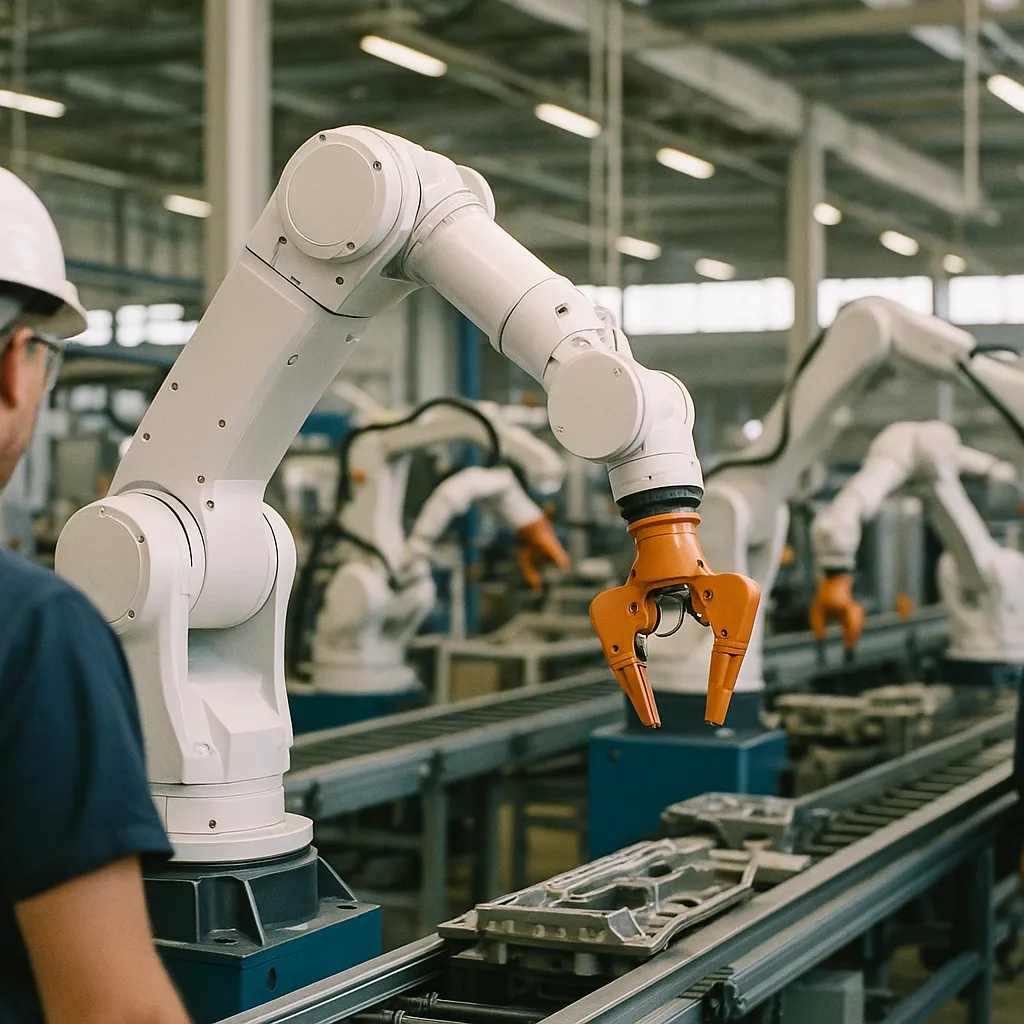
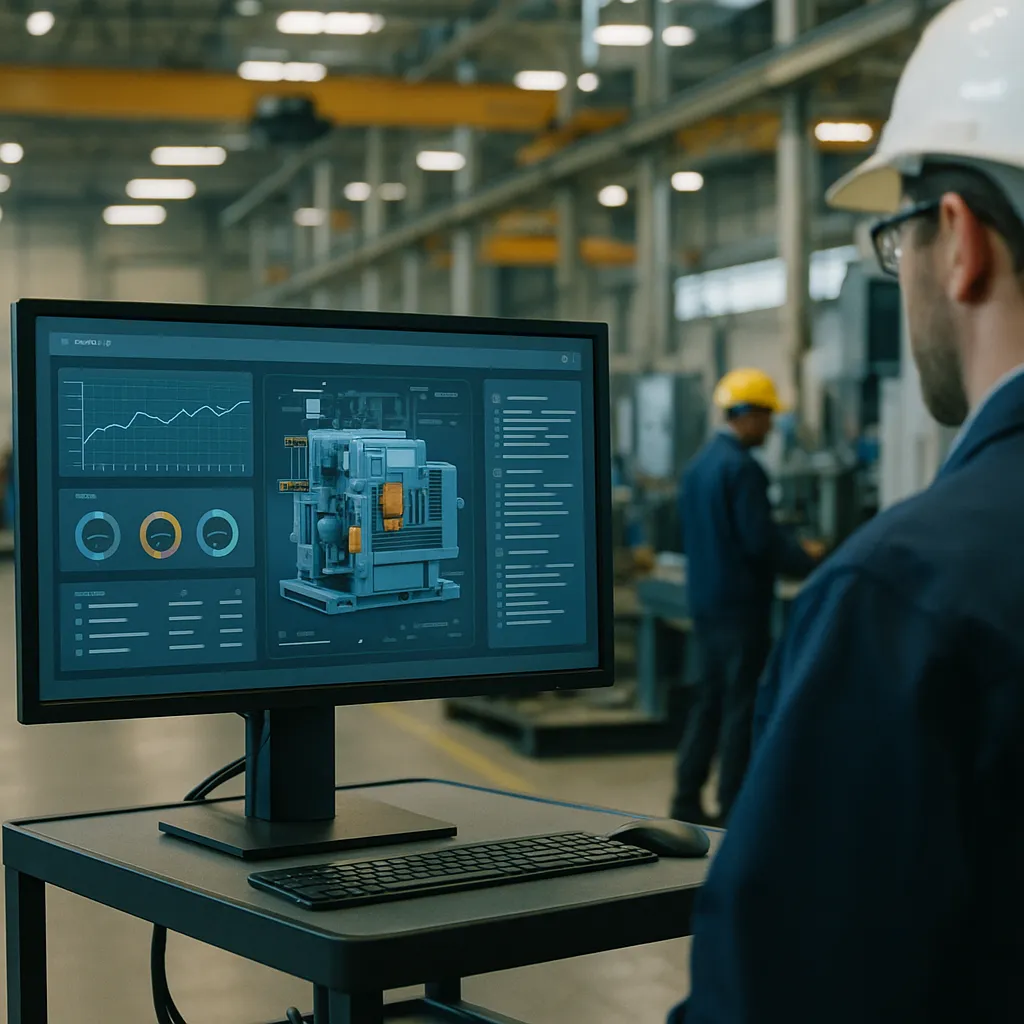
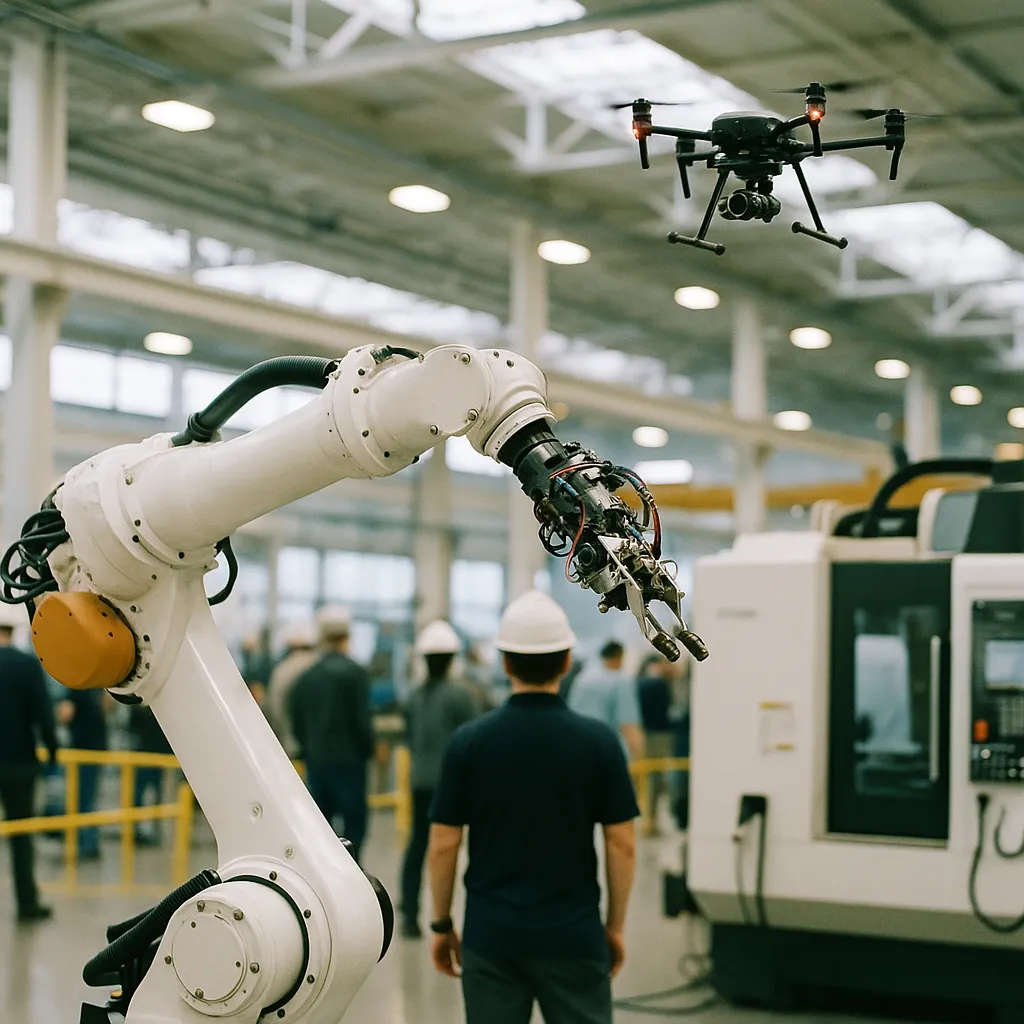
Large language model interest among manufacturers has jumped from 16% to 35% year-over-year, according to the 2026 Smart Factory Outlook — as operators shift AI from an analytics add-on to the central orchestration layer on the production floor.
LLM Adoption in Manufacturing Doubled in One Year, Smart Factory 2026 Report Shows
By Hector Herrera | June 16, 2026 | NexChron.com
Manufacturer interest in large language models has doubled in twelve months — from 16% to 35% of facilities — according to the 2026 Smart Factory Outlook, as factory operators pivot from viewing AI as an automation add-on to treating it as the primary orchestration layer on the production floor. The data mark a phase transition: not adoption accelerating, but adoption category-shifting.
The background: The Smart Factory Outlook is an annual benchmarking study tracking AI, robotics, and automation adoption across manufacturing facilities. For the past three years, it documented steady but incremental progress: connectivity improvements, predictive maintenance pilots, process control upgrades. The 2026 edition is the first to show a step-change rather than a trend — LLM interest nearly doubled year-over-year, and humanoid robot interest climbed 63%.
The Numbers
Key findings from the 2026 Smart Factory Outlook:
The humanoid figure deserves context. 13% of manufacturers expressing interest in humanoid robots is not the same as 13% deploying them — the report captures stated priorities and pilot commitments rather than production-ready deployments. But the directional shift from 8% to 13% in a single year, in a conservative industry that measures payback periods in years, is significant.
Why LLMs Specifically
Until recently, AI in manufacturing meant computer vision for quality inspection, digital twins for process simulation, and machine learning models for predictive maintenance. These are narrow, domain-specific AI applications that work without language — they pattern-match against sensor data and images.
LLMs change the interface. A factory floor operator who previously needed specialized software training to query production data can now ask a question in plain language and receive an answer synthesized from multiple data systems. That sounds like a convenience feature; in practice, it compresses the diagnostic cycle and extends AI-generated insight to workers who previously sat outside the system entirely.
The specific use cases driving LLM adoption in manufacturing:
Get this in your inbox.
Daily AI intelligence. Free. No spam.
Language-driven diagnostics. Technicians describe a machine behavior or failure mode in natural language, and an LLM cross-references maintenance manuals, historical fault data, and parts inventory to recommend a repair path. This is not a chatbot for factory workers — it is a diagnostic assistant that reduces mean time to repair (MTTR) by shortening the information retrieval step.
Workforce training. Manufacturing faces an acute skills shortage as experienced operators retire and vocational pipeline programs have not kept pace. LLMs are being deployed as interactive training systems — enabling new hires to learn complex equipment procedures through conversational guidance rather than static manuals. The advantage over video and written training is adaptability: the LLM can answer follow-up questions, explain alternative scenarios, and adjust explanation depth based on the user's demonstrated knowledge level.
Decision support. Production scheduling, supplier substitution decisions, and shift capacity allocation decisions are being augmented with LLM-powered analysis that synthesizes demand forecasts, inventory status, and operational constraints into plain-language recommendations for operations managers.
The Humanoid Robot Signal
The humanoid figure — 13% of facilities expressing interest — is the data point that most surprised the 2025 skeptics. Two years ago, humanoid robots were a research showcase item, useful for demonstrations and trade show floor traffic. BMW's Leipzig deployment of AEON units changed the narrative.
The Leipzig deployment matters because BMW is not a startup running a pilot. It is a high-volume automotive manufacturer deploying humanoid robots in a production environment where uptime, throughput, and safety metrics are non-negotiable. The deployment went operational earlier this year, and the absence of dramatic failure — combined with BMW's stated expansion plans — has given other manufacturers a reference case they could not previously cite.
The connection between LLMs and humanoid robots is not coincidental. LLMs are the natural language control interface for humanoid systems — giving human operators a way to direct, reprogram, and troubleshoot robots without specialized robotics programming expertise. The two trends are reinforcing.
What the Shift Means for the Workforce
The 2026 Smart Factory data carry a labor market implication that the report documents carefully: AI in manufacturing is simultaneously creating and eliminating roles, but not the same roles.
Roles declining in relative demand:
- Manual data entry and quality logging
- Routine machine setup and changeover (increasingly automated)
- Basic process monitoring (replaced by always-on sensor AI)
Roles growing or being newly created:
- AI system operators and floor-level AI trainers
- LLM prompt engineers embedded in operations teams
- Robotics commissioning and integration specialists
- Data analysts who can interpret AI-generated production insights
The critical issue is the training gap. The workers displaced by AI-driven automation in manufacturing often do not hold the credentials for the roles AI is creating. The SHRM data released this week show AI driving 25% of all [U.S. job cuts](/work/shrm-ai-job-displacement-report-2026) in March 2026; manufacturing is a meaningful contributor to that figure, and the LLM surge documented here will extend that displacement further.
What to Watch
The 2027 Smart Factory Outlook will be the decisive indicator. If humanoid robot interest converts from 13% intent to 8–10% active deployment, and LLM adoption crosses 50% of facilities, manufacturing will have definitively crossed the threshold from AI-assisted to AI-orchestrated operations. Watch also for whether LLM-based training programs begin generating documented outcomes data — reduced new-hire ramp time, lower error rates in the first 90 days — which would accelerate adoption significantly by giving procurement teams a specific ROI number to attach to the budget line.
Sources: IIoT World — 2026 Smart Factory Outlook | BMW AEON Leipzig deployment | SHRM AI job displacement report
Did this help you understand AI better?
Your feedback helps us write more useful content.
Get tomorrow's AI briefing
Join readers who start their day with NexChron. Free, daily, no spam.