Dream Labs closed a $90 million round for Dream-1, a foundation model that transfers learned skills between robots from different manufacturers — targeting the hardware lock-in that has slowed enterprise robotics adoption for years.
Dream Labs Raises $90M for AI That Lets Robots From Any Manufacturer Share Learned Skills
By Hector Herrera | October 26, 2026 | vertical: manufacturing | type: company-news
Dream Labs closed a $90 million funding round for Dream-1, a foundation model that does something no commercial robotics platform has managed at scale: let a skill learned on one manufacturer's hardware run on a completely different machine. The company is targeting the single biggest friction point in enterprise robotics adoption — hardware lock-in.
The Problem It's Solving
Industrial robots have historically been islands. A skill — how to grip a specific part, how to navigate around other equipment, how to handle fragile materials — is tied to the hardware it was trained on. When a manufacturer swaps vendors, upgrades a robot line, or adds equipment from a different maker, the AI has to start over from scratch. This lock-in has kept deployment costs high and line changeover times measured in weeks rather than hours.
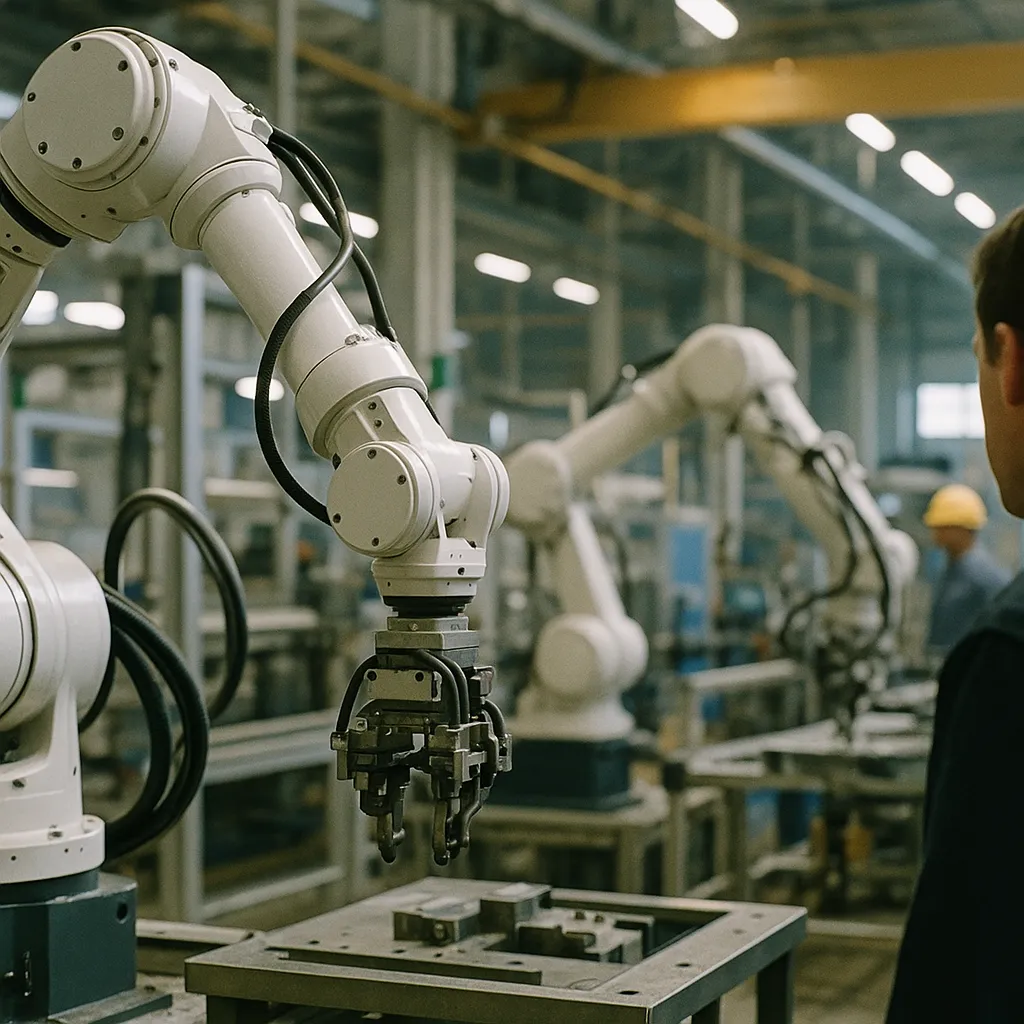
Dream-1 is designed to run across heterogeneous fleets — meaning a Fanuc arm, a Universal Robots cobot, and an autonomous mobile robot from a third vendor can all draw on the same learned behavior library. The model achieves this through a hardware-agnostic representation layer that abstracts away motor configurations and sensor inputs, leaving the skill logic portable across platforms.
The BMW Connection
In the same week as the Dream Labs announcement, Industrial Next disclosed a partnership with BMW Group Technology Office to evaluate AI-powered dexterous manipulation that can retool a production line in minutes rather than weeks. BMW's interest is a meaningful signal: Tier 1 automotive manufacturers are treating cross-manufacturer AI portability as a supply chain priority, not a research project.
Get this in your inbox.
Daily AI intelligence. Free. No spam.
BMW's factories run robots from multiple vendors. The cost of retraining AI for each platform when a line changes for a new vehicle model is a meaningful constraint on production flexibility. If Dream-1 can deliver what it claims, it solves a problem with direct P&L impact for every manufacturer running a mixed-vendor robot fleet.
What Million Funds
The round puts Dream Labs in the same capitalization tier as well-funded robotics AI players. The capital is targeted at:
- Expanding the skill library across more hardware types and manufacturers
- Building the certification and testing infrastructure enterprises need before deploying shared AI models in safety-critical environments
- Scaling engineering to support enterprise integrations and customization
Why This Moment
The industrial robotics AI market is in the same position language AI was in around 2021: most deployments use narrow, single-vendor AI that handles one task category. The shift to foundation models that span tasks and hardware is a structural change — but with higher stakes than language AI, because physical errors cause downtime and safety incidents, not just wrong answers.
The qualification bar is correspondingly higher. A foundation model that controls robot arms near human workers needs to pass safety certifications that can take 6–18 months. The $90 million buys Dream Labs the runway to clear those gates before competitors.
Impact for Manufacturers
For procurement teams, a hardware-agnostic AI layer creates the possibility of negotiating robot hardware independently of AI software — buying the best arm from Fanuc and the best cobot from Universal Robots and running a single AI layer across both. That breaks the current dynamic where vendors bundle hardware and AI and extract margin from the combination.
For system integrators — the companies that install and configure factory robots — portability cuts retraining costs but also compresses one of their primary revenue streams. Expect resistance from that channel during the adoption cycle.
What to Watch
Whether Dream Labs can demonstrate real-world performance in enterprise deployments outside controlled conditions, and whether additional Tier 1 automotive and industrial manufacturers commit to pilots before Q2 2027.
Did this help you understand AI better?
Your feedback helps us write more useful content.
Get tomorrow's AI briefing
Join readers who start their day with NexChron. Free, daily, no spam.