Local AI processing and open standards are replacing cloud-dependent architectures as the organizing principle of next-gen smart home products, driven by consumer privacy fatigue and better edge hardware. Manufacturers are already shipping hubs that run AI-powered automation entirely on-device.
The smart home industry's next defining shift is happening without much fanfare. A November 2 analysis from Forbes argues that local AI processing and open standards are replacing cloud-dependent architectures as the organizing principle of next-generation smart home products — driven by consumer privacy fatigue and a new generation of edge AI hardware that makes on-device intelligence practical at consumer price points.
Manufacturers are already shipping hubs capable of running AI-powered automation entirely on-device, without sending data to remote servers. The convergence of better edge chipsets, mature interoperability protocols, and eroding consumer trust in cloud-connected home devices has created the conditions for a genuine generational inflection — one that separates next-gen smart home products from their cloud-tethered predecessors in ways that matter architecturally, not just on spec sheets.
What "local AI" actually means
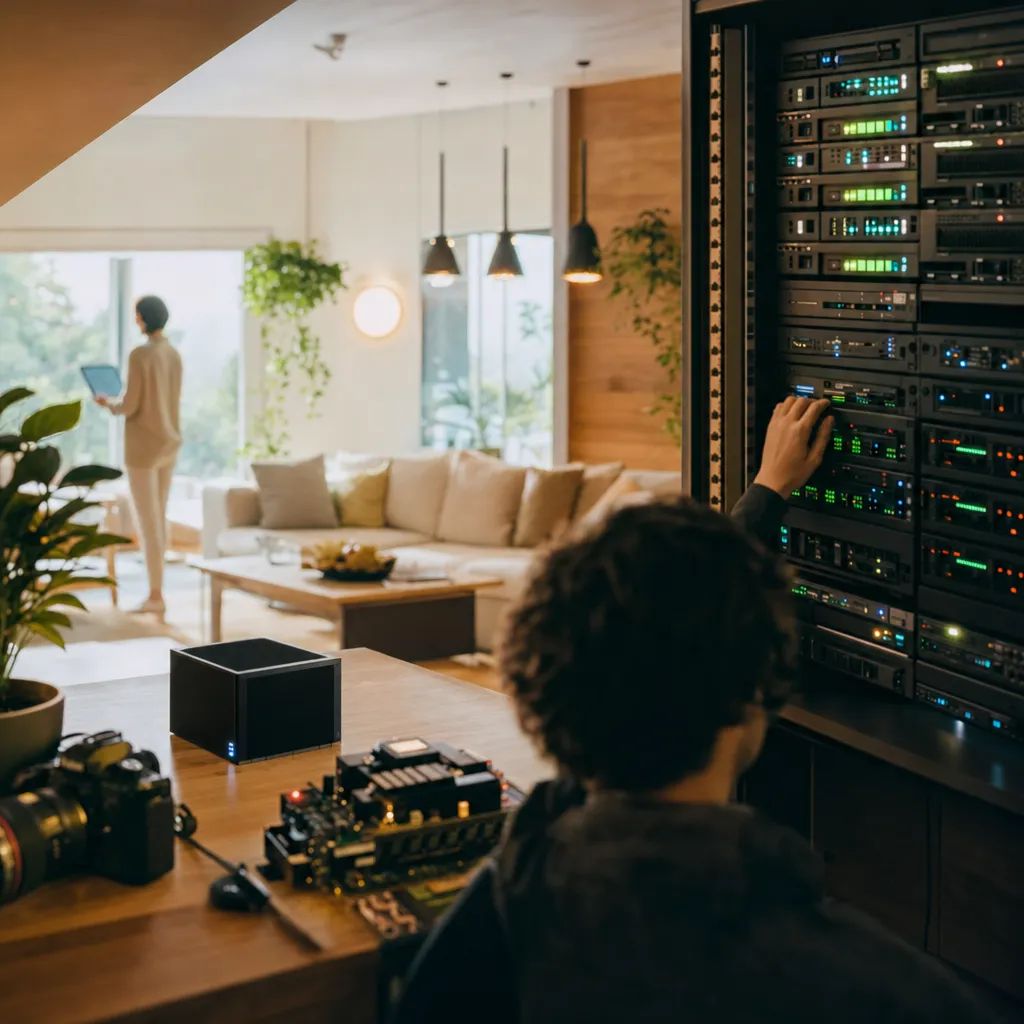
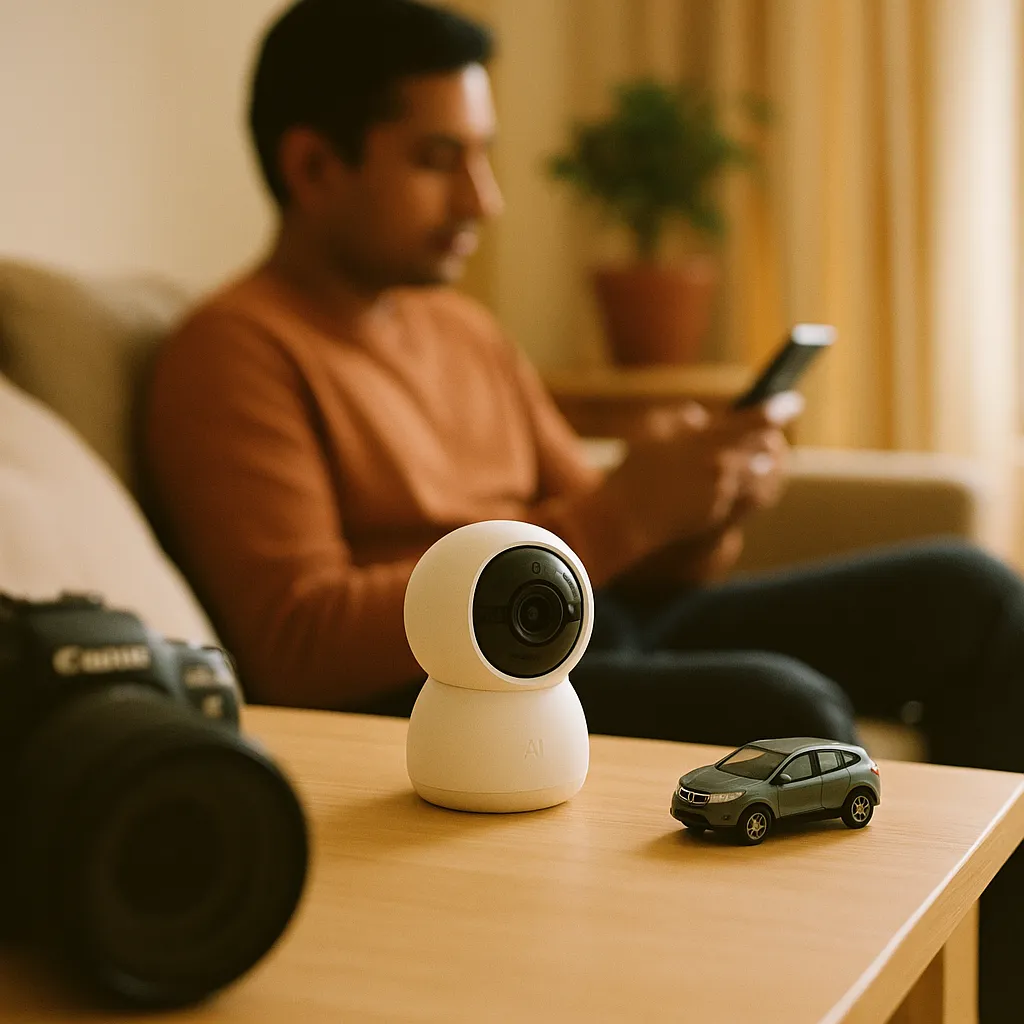
Local AI in a smart home context means the device — a hub, a camera, a thermostat controller, a doorbell — processes data and makes decisions on-chip. Motion detection, familiar-face recognition, voice command interpretation, and automation logic all happen inside a box on your wall or in your utility closet. No cloud required. No subscription fees for basic functionality. No exposure when the vendor's servers go down, get acquired, or get deprecated.
Until recently, on-device AI of meaningful capability required either premium hardware or significant trade-offs in latency and accuracy. That's changed. Qualcomm's IoT AI chip lines, purpose-built AI accelerators from MediaTek and Amlogic, and the proliferation of efficient, small inference models have made on-device processing practical for the product categories — cameras, voice assistants, climate control — that matter most to consumers.
The privacy argument is increasingly practical rather than ideological. Security researchers have spent years demonstrating that smart home devices are among the most exploitable in consumer environments, partly because cloud connectivity creates attack surfaces that simply don't exist in fully local architectures. A camera that runs inference on-device and stores nothing remotely isn't just more private — it's harder to compromise.
The open standards piece
The second leg of this shift is interoperability. The smart home has historically been a fragmented, incompatible mess: one brand's lock doesn't talk to another brand's light switch unless both happen to support the same proprietary hub. Matter — the connectivity standard launched in 2022 and backed by Apple, Google, Amazon, and Samsung — was designed to fix this. Its adoption has been real but uneven; support is broad on paper and narrower in practice.
Get this in your inbox.
Daily AI intelligence. Free. No spam.
What local AI does is raise the stakes for open standards considerably. A hub that processes locally but is locked to a single ecosystem still binds you to that vendor's infrastructure decisions. A hub that processes locally and communicates via open standards is genuinely platform-independent — your automation logic doesn't care whether Alexa or Google Home is still interested in your product category in three years.
The Forbes analysis frames this convergence as the generational boundary: products that run AI locally on open standards are architecturally different from their predecessors, not just incrementally improved versions of the same approach.
What this means for buyers
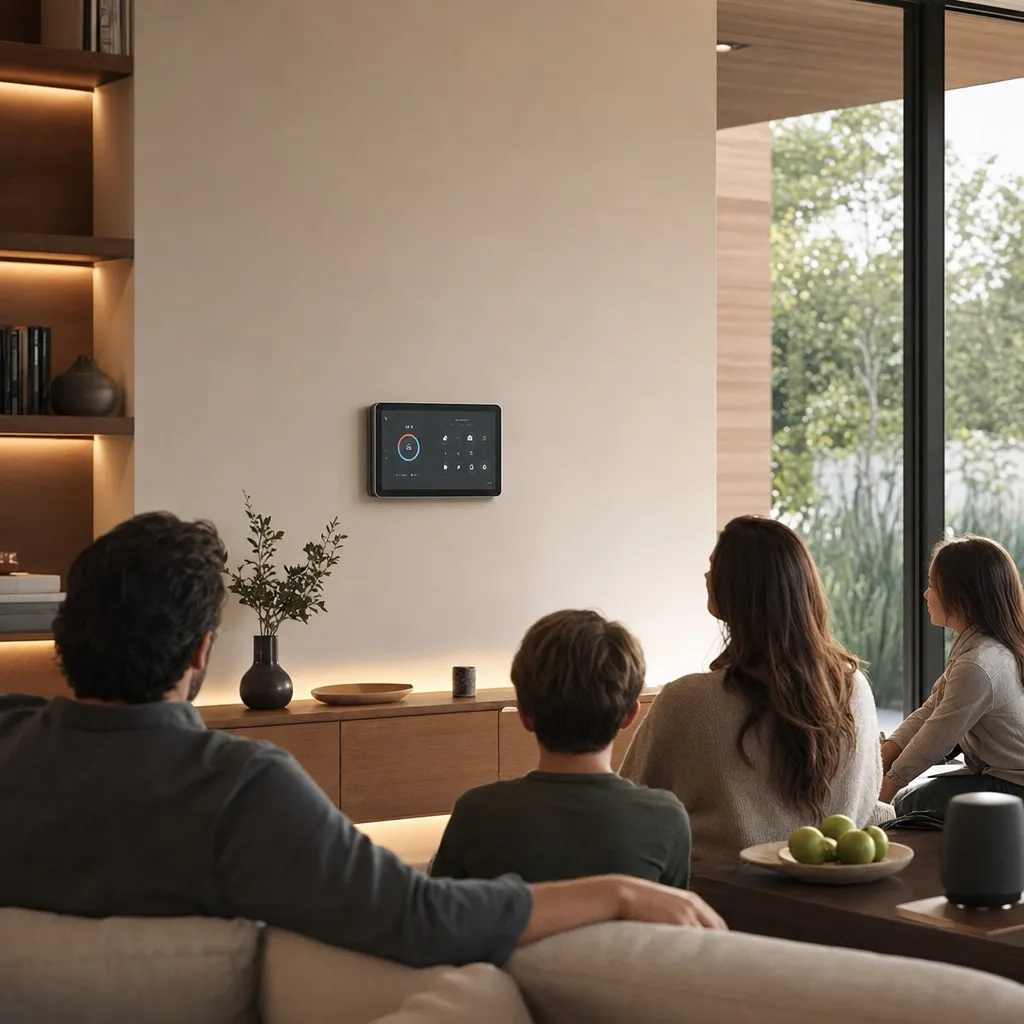
For consumers, the immediate implication is autonomy. A camera that detects your dog locally and unlocks the pet door doesn't need to phone home. A thermostat that learns your schedule on-device can't be broken by an API deprecation. A hub running on Matter can be replaced by any other Matter-compatible hub without rebuilding your automations from scratch.
For early smart home adopters who've lived through multiple platform discontinuations — Wink, Iris, SmartThings's various pivots — the local-first, open-standard architecture addresses a practical frustration that no amount of cloud AI capability has resolved.
What this means for the industry
For product teams, the pressure runs in both directions. Devices that still depend on cloud-side AI processing will face growing resistance from privacy-conscious buyers — particularly in Europe, where AI data processing location is increasingly a regulatory concern, and in the U.S., where consumer AI anxiety is running high after years of data breach headlines.
But local AI also raises the technical bar: you can't blame latency when inference is happening six feet away. Response time expectations are higher. The model needs to be genuinely capable, not "good enough given the network call."
For the large tech platforms — Amazon, Google, Apple — the shift is a competitive pressure on their data advantage. Smart home products have been valuable partly because they generate behavioral data at scale. A generation of devices that processes locally and communicates via open standards reduces that data moat substantially. The lock-in advantage that cloud processing provided erodes when the hub can run competently without phoning home.
What to watch
The outstanding question is voice. Cloud-based voice assistants have maintained a meaningful quality advantage over on-device alternatives — larger models, richer context, better accuracy on ambiguous queries. If local AI voice interfaces close that gap in 2027, the cloud-first smart home starts to look genuinely legacy. CES 2027 will be the first major venue where the on-device generation makes its case side by side with the cloud generation. The product comparisons coming out of that show will be telling.
Did this help you understand AI better?
Your feedback helps us write more useful content.
Get tomorrow's AI briefing
Join readers who start their day with NexChron. Free, daily, no spam.