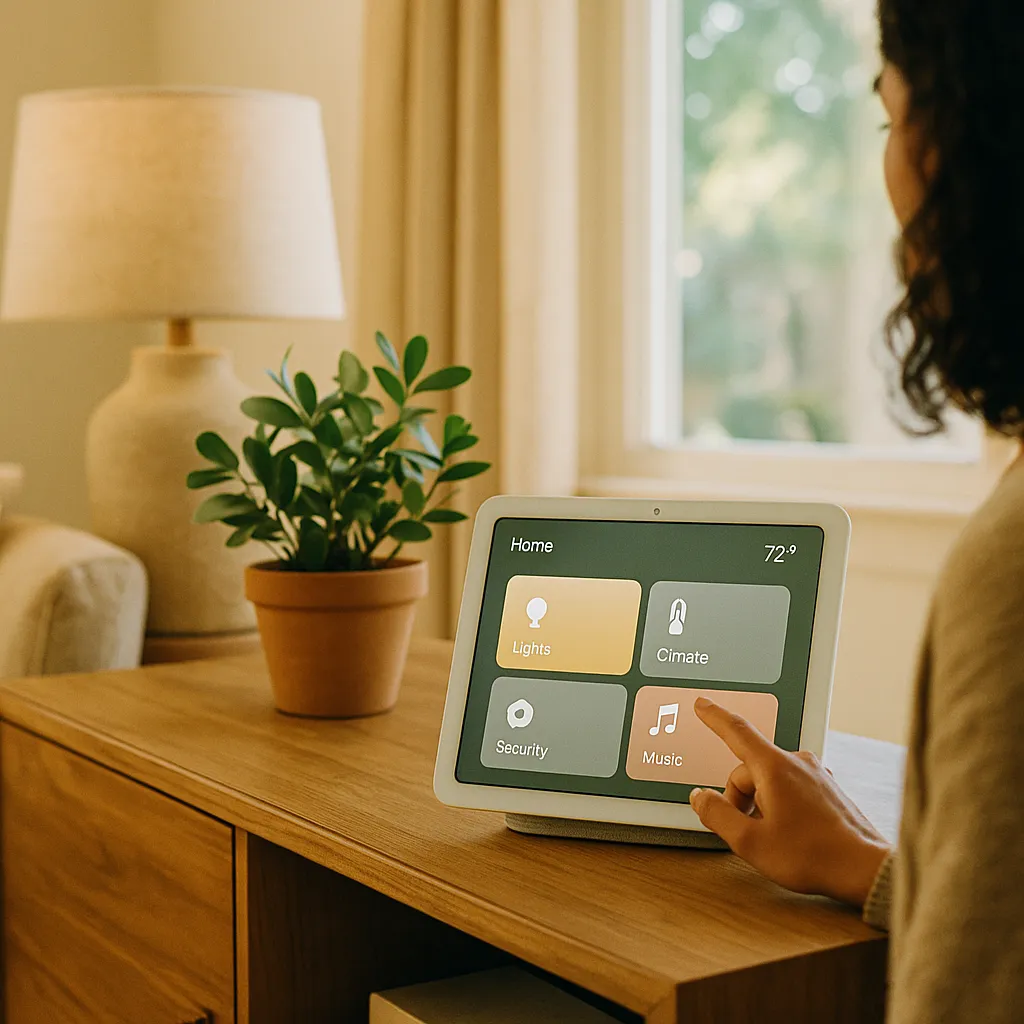
AI-generated code is now embedded throughout the firmware and apps running your smart home devices, and there is currently no mechanism for you to know it, let alone opt out.
AI-generated code is now embedded throughout the firmware and apps running your smart home devices — and there is currently no mechanism for you to know it, let alone opt out. A How-To Geek analysis published this week examines how the industry-wide shift to AI-assisted software development has quietly changed the risk profile of every connected device in your home, from smart thermostats to security cameras to robotic vacuums.
The shift happened gradually and without announcement. Device makers adopted AI coding tools — GitHub Copilot, Claude, GPT-4o, and similar assistants — to accelerate development timelines and reduce engineering costs. The AI-generated code went into production, into firmware updates pushed silently to devices already in your home, and into the mobile apps that control them. None of that required consumer disclosure, and no regulatory framework currently requires it.
Why This Is Different From "Normal" Software Bugs
All software has bugs. What changes with AI-generated code is traceability and predictability.
When a human engineer writes a function, the logic is documented in commit history, code comments, and the developer's institutional memory. When a bug surfaces, engineers can often trace it back to a specific decision and understand why the code behaves a certain way.
AI-generated code doesn't carry that same paper trail. The output is often syntactically correct and passes automated tests while containing edge-case behaviors that weren't anticipated — and that no individual engineer specifically chose. When a bug appears in AI-generated code months after deployment, diagnosing it can require significantly more reverse engineering because the "author" had no intent to document.
For smart home devices specifically, this creates three concrete risks:
Get this in your inbox.
Daily AI intelligence. Free. No spam.
- Update unpredictability. Manufacturers push firmware updates to connected devices automatically. If an AI-generated update introduces a regression, it may affect thousands of devices before the manufacturer identifies the issue.
- Reduced traceability. When a security vulnerability surfaces in a smart lock or camera, the forensic path from vulnerability to root cause gets longer when the originating code has no human-authored decision trail.
- Compounding interactions. Smart home ecosystems route data between devices — a thermostat talks to a hub that talks to an app. AI-generated code across multiple layers of that stack creates a combinatorial problem: each component may behave correctly in isolation, but their interactions may not have been tested against AI-generated outputs at adjacent layers.
The Consumer Has No Visibility
Unlike food labels or financial disclosures, there is no current industry standard — and no regulation — requiring a connected device manufacturer to disclose what percentage of its codebase was AI-generated. A consumer buying a smart doorbell in 2026 has no way to know whether the firmware was written primarily by engineers, primarily by AI tools, or by some combination that no one at the company has explicitly quantified.
This is not a hypothetical concern. GitHub's own 2023 developer survey found that more than 46% of code was already being written with AI assistance at that time — a figure that has almost certainly grown since. Consumer IoT makers, many of which are smaller manufacturers with limited engineering teams, have strong economic incentives to lean heavily on AI code generation.
The disclosure gap is significant. In categories like pharmaceuticals, the manufacturing process is tightly regulated because the process affects the product's safety. Smart home devices affect physical security — who can unlock your door, whether your camera footage is properly encrypted, whether a firmware update can brick a device that controls your HVAC. The process by which that code was written arguably should carry some transparency.
What the Industry Is Doing (and Not Doing)
The major platform players — Apple HomeKit, Google Home, Amazon Alexa, and Samsung SmartThings — set baseline security certifications that devices must pass to earn their logo. Those certifications test behavior: does the device encrypt traffic, does it use proper authentication, does it handle edge cases correctly.
What they do not test is provenance: how the code was written, whether it was reviewed by a human engineer, or whether AI-generated components were subject to additional scrutiny. The certification frameworks predate the mass adoption of AI coding tools and haven't been updated to account for it.
The Consumer Technology Association (CTA), which runs the Connected Home over IP (Matter) standard, has not yet proposed AI code disclosure requirements. The EU's Cyber Resilience Act, which takes full effect in late 2027, imposes vulnerability handling and update transparency requirements on connected devices — but similarly does not address AI code generation as a category.
What to Do About It Right Now
Consumers can't audit firmware. But there are practical steps that reduce exposure:
- Enable automatic updates, but monitor changelogs. If a manufacturer publishes release notes for firmware updates, read them. Unexplained behavioral changes after an update are a signal worth investigating.
- Prefer devices from manufacturers with clear security response programs. Companies that publish CVE disclosures and have a defined security contact treat vulnerabilities as something to address publicly — a proxy for engineering accountability.
- Audit what's on your network. Tools like Fing or your router's admin console show every connected device. Devices you've forgotten about and stopped updating are the highest-risk nodes.
- Consider Matter-certified devices for high-security applications. Matter's certification process, while not addressing AI code specifically, does enforce interoperability and security standards that filter out the lowest-quality manufacturers.
What to Watch
The pressure for disclosure will likely come from a security incident — a widely deployed smart home device with a critical vulnerability traceable to AI-generated code — rather than from proactive regulation. When that happens, the question of whether manufacturers should have disclosed AI-generated code will become a live liability question, not just a consumer transparency one. The EU Cyber Resilience Act's 2027 implementation deadline is the most likely near-term forcing function for any formal policy response.
Did this help you understand AI better?
Your feedback helps us write more useful content.
Get tomorrow's AI briefing
Join readers who start their day with NexChron. Free, daily, no spam.