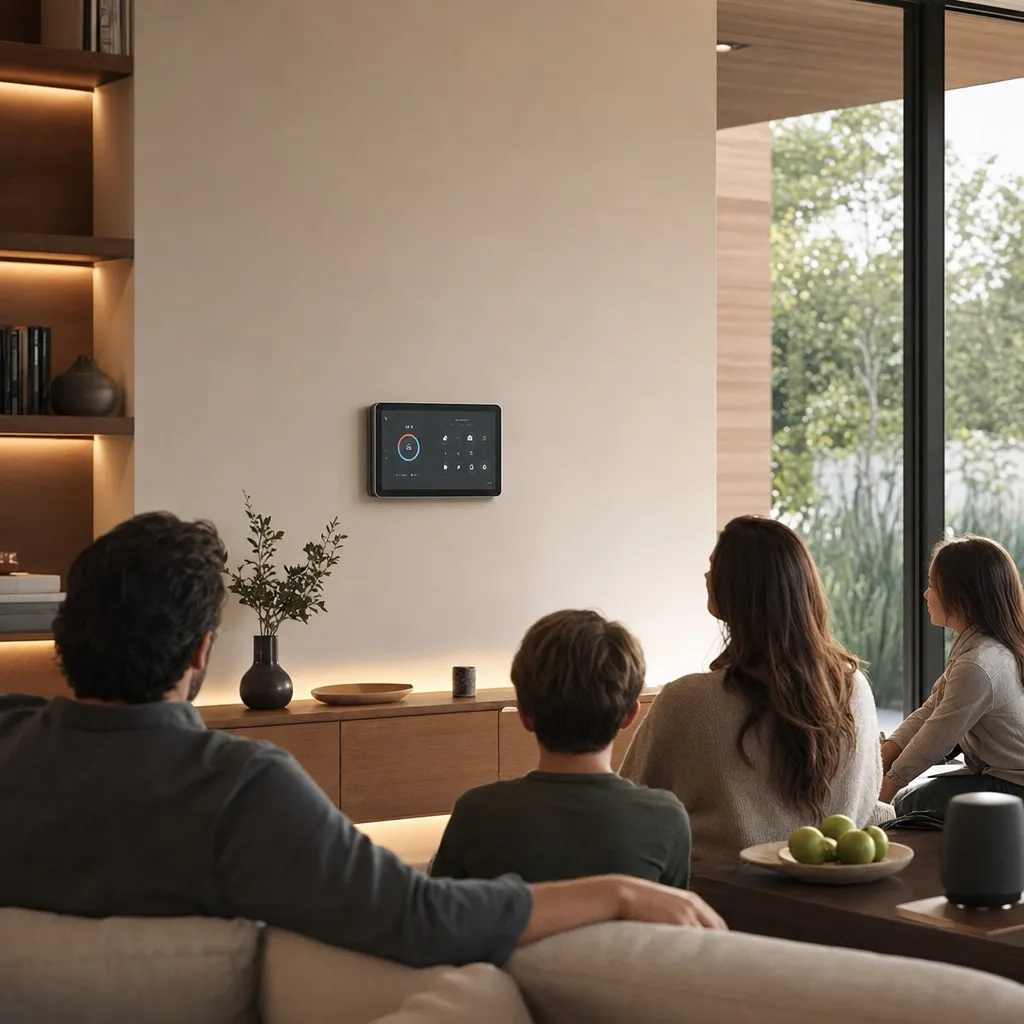
Apple's HomeView smart home hub — featuring an A18 chip, Siri AI, and six-person household recognition — goes on sale November 13 at $299, taking direct aim at Amazon's Echo Show lineup.
Apple's HomeView goes on sale November 13 at $299 — a 7-inch touchscreen smart home hub powered by an A18 chip and Siri, Apple's most significant push into the connected home in nearly a decade. It launches directly against Amazon's revamped Echo Show lineup, making the smart home display the most contested hardware category in the 2026 holiday season.
Apple has controlled the premium smartphone and laptop markets for years. The smart home has been Amazon and Google's territory. HomeView is the company's direct move to change that.
What HomeView Is
HomeView is a wall-mountable or tabletop smart home hub with a 7-inch display. It runs an A18 chip — the same chip family as iPhone 16 Pro — giving it substantially more local compute than any competing smart home hub. Siri is the primary interface, powered by Apple Intelligence, Apple's on-device AI platform.
Key specifications:
- Price: $299
- Launch date: November 13, 2026
- Chip: A18
- Display: 7-inch touchscreen
- AI: Siri with Apple Intelligence
- Household recognition: Six-person face recognition — HomeView identifies individual household members and personalizes responses accordingly
- Smart home control: Full HomeKit accessory management
- App ecosystem: Curated third-party apps (details not fully disclosed at announcement)
The six-person household recognition is the differentiating feature. No competing hub at this price point offers personalization at the individual household-member level. When a specific person approaches HomeView, it knows who they are and adapts — adjusting which smart home scenes to surface, which calendar to show, which preferences to apply.
Get this in your inbox.
Daily AI intelligence. Free. No spam.
The Competition
Amazon's response is its revamped Echo Show lineup, which includes:
- A sleep-tracking alarm clock with AI health monitoring
- An AI-powered digital picture frame
- A home-mapping display that uses ultrasound sensors and Ring camera integration to build a 3D model of the home for contextual awareness
Amazon has had years of HomeKit irrelevance to prepare for Apple's entry, and the Echo Show refresh represents Amazon's most sophisticated hardware push in years. Google's Nest Hub exists but has lost ground. Apple and Amazon are the primary competition in this product category heading into 2027.
Why This Is Apple's Platform Play
The smart home hub is not primarily a device business — it's a distribution play. The company that controls the hub controls the default purchasing funnel for every connected device in the home. When a consumer asks their hub which smart bulb to buy, which thermostat to install, which lock to add, the hub's ecosystem defaults set the outcome.
Apple's HomeKit has been strong software on weak hardware. An iPhone was fine for controlling HomeKit accessories but was not permanently installed in a central location. HomeView changes that: it gives HomeKit a persistent physical presence in the home, changing how consumers discover, manage, and expand their connected home ecosystems.
For HomeKit accessory makers — Philips Hue, Ecobee, Schlage, and others — HomeView is a distribution channel improvement. Their products now have a dedicated showcase in the primary living space of every household that buys one.
The Privacy Angle
Apple will lean hard on privacy as a differentiator. Apple Intelligence processes data on-device using the A18 chip rather than routing requests to cloud servers. In a category where Amazon has faced repeated criticism for Alexa conversations being stored and reviewed, Apple's on-device processing is a genuine competitive advantage for privacy-conscious consumers.
Whether that advantage matters to mass-market buyers who have already accepted Amazon's data practices remains to be seen.
What to Watch
- Whether Apple Intelligence features in HomeView are fully available at launch or roll out in subsequent updates (Apple has a history of announcing features before they're fully shipping)
- How the six-person recognition performs in real-world household conditions — large families, changing appearance, frequent visitors
- Whether $299 clears the "just good enough to switch" bar for households currently running Amazon or Google ecosystems, or primarily captures new smart home entrants
Source: CNN
Did this help you understand AI better?
Your feedback helps us write more useful content.
Get tomorrow's AI briefing
Join readers who start their day with NexChron. Free, daily, no spam.