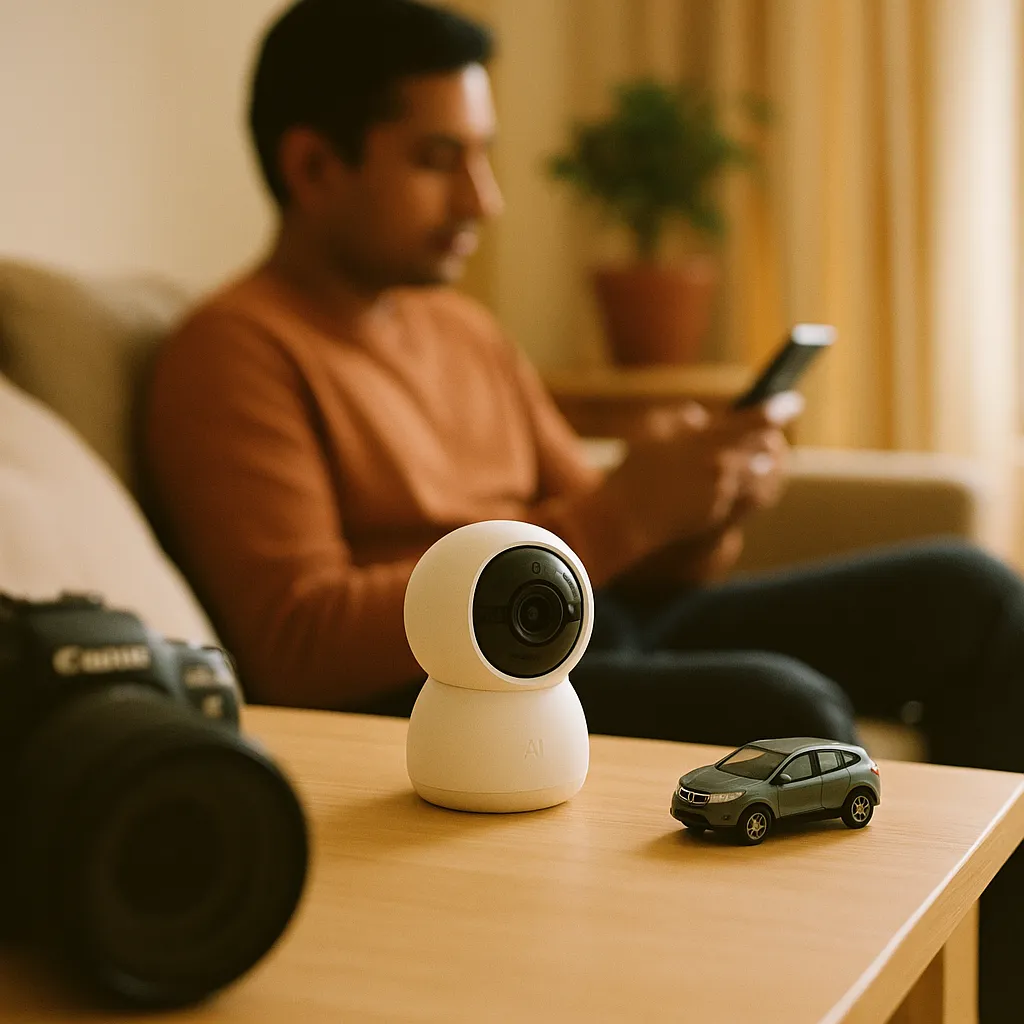
Apple, Amazon, and Microsoft each unveiled AI home hardware within two weeks of each other — the first time all three have simultaneously targeted the living room with AI-first devices.
Apple, Amazon, and Microsoft Race to Put AI Into Every Room as Home Device Launches Converge
In the span of two weeks, Apple, Amazon, and Microsoft each announced new AI-first home hardware — the first time all three consumer tech giants have simultaneously targeted the living room with purpose-built AI assistant devices. According to Semafor's analysis, the convergence is not a coincidence: nearly four years after ChatGPT's public launch, the AI industry is betting that mass consumer adoption will happen at home, not at the office.
The holiday 2026 window creates a direct three-way market test. The product that earns consumer trust in the living room this quarter may establish the dominant AI home platform for the next decade.
The Three Launches
Apple HomeView ($299) is Apple's first dedicated home display device — a wall-mountable panel running a new HomeOS layer built around a more capable version of Siri. It handles home automation, video calls, and household scheduling, and it integrates with Apple's existing HomeKit ecosystem. Apple positioned it explicitly against Amazon's Echo Show line, with a tighter privacy posture: by default, HomeView processes voice and image data on-device rather than sending it to Apple's servers.
Amazon's Echo refresh is the most comprehensive product update the line has seen since 2021. Amazon unveiled two new devices: a reimagined Echo Show with a larger display and Alexa+ integration, and a standalone AI photo frame — essentially a smart display disguised as home decor — that shows personalized content and responds to ambient voice commands without requiring a wake word in certain contexts. The photo frame targets rooms where a dedicated smart display feels too utilitarian.
Microsoft's home hardware represents a significant strategic pivot. Microsoft, which has been an enterprise-first AI company since its OpenAI partnership began, announced home-facing AI hardware in the same two-week window — details remain limited at press time, but the announcement confirms that Microsoft is no longer treating the home as out of scope.
Why Now
The timing reflects a maturation of AI assistant capability rather than a marketing calendar coincidence.
Get this in your inbox.
Daily AI intelligence. Free. No spam.
First-generation voice assistants — Alexa, Siri, Google Assistant circa 2017–2022 — could answer trivia questions and control smart plugs. They were not capable of sustaining a conversation, managing a household's complex scheduling, or acting as genuine AI agents that took multi-step actions on behalf of users. The fundamental limitation was model capability, not hardware.
That limitation has changed. The same foundation models that power workplace AI tools are now small enough and fast enough to run on home appliances — or to be accessed from home appliances over low-latency connections without perceptible delay. A home AI assistant in 2026 can reschedule your week, order groceries when it detects you're running low, brief you on your calendar while you make coffee, and flag that your energy bill is unusually high this month.
The behavioral shift among consumers is measurable. According to a Semafor survey cited in their analysis, 67% of U.S. households report using AI assistants daily or more in October 2026, up from 31% in late 2023. The usage pattern has shifted from query-response (asking a question and getting an answer) toward ambient assistance — AI that monitors context and surfaces information proactively.
What the Competition Actually Is
On the surface, this looks like a smart speaker/display competition. At a deeper level, it is a competition for the home AI platform layer — the system through which all other smart home devices, services, and data flows.
The company that wins the home AI platform earns several durable advantages:
- Data at household scale — purchase patterns, daily routines, energy usage, health habits
- Commerce intent signals — the ability to capture purchase decisions at the moment of need before the consumer opens a browser
- Ecosystem lock-in — if your lights, thermostat, cameras, and appliances all route through one AI coordinator, switching costs are high
- Subscription upside — premium AI features (advanced memory, proactive planning, personalized recommendations) are natural subscription add-ons
Amazon has a meaningful head start: Alexa is already present in more than 500 million devices globally. But Alexa's reputation has suffered from years of clunky responses and privacy controversies. Alexa+ — Amazon's rebuilt, LLM-powered version — addresses the capability gap but has not fully resolved consumer trust concerns around data handling.
Apple's HomeView strategy leans into that trust deficit. The on-device processing posture is a direct message to privacy-conscious consumers that Apple's approach is fundamentally different from Amazon's. Whether that differentiation survives contact with market reality depends on whether consumers actually care enough about privacy to pay $299 for HomeView versus $199 for an Echo Show.
What to Watch
The meaningful signal will not be initial holiday sales — those will be distorted by novelty demand and promotional pricing. The indicators to track are 30-day active usage rates and third-party device integrations: which platform are smart appliance manufacturers, automotive integrators, and home services companies choosing to build into their products first. Platform momentum is a lagging indicator, but it's the one that determines who wins this decade.
Google, notably absent from this three-way race, is not out of the home AI market — it still ships Nest hardware and has deep Android integration. But its home device strategy has been inconsistent since the Pixel line's redirection toward enterprise features. The question of whether Google re-enters the home AI hardware race in 2027 may be the most important strategic decision in consumer AI for the next 12 months.
Did this help you understand AI better?
Your feedback helps us write more useful content.
Get tomorrow's AI briefing
Join readers who start their day with NexChron. Free, daily, no spam.