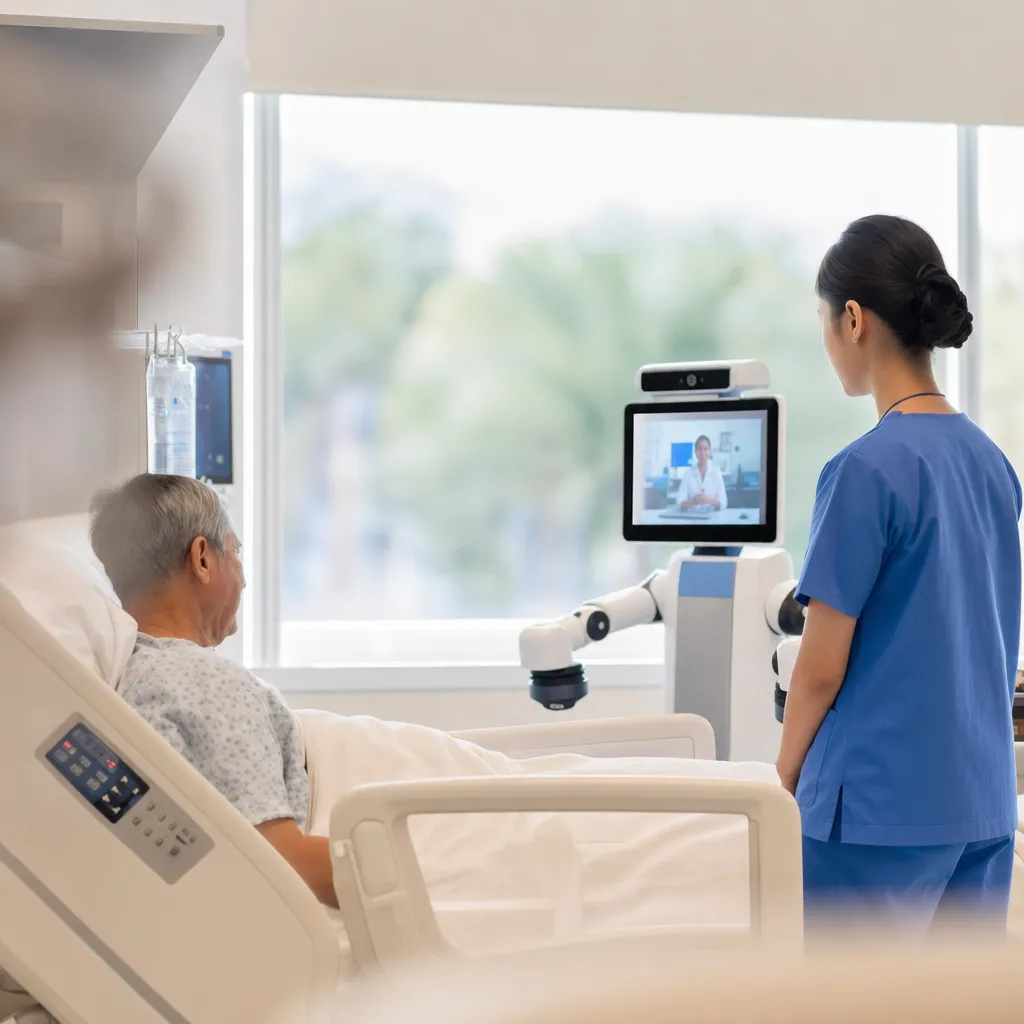
OpenAI connected ChatGPT to Epic—the EHR platform used by 40% of U.S. hospitals—on September 1, giving clinicians a HIPAA-compliant way to pull patient records directly into AI-assisted care.
OpenAI Connects ChatGPT to Epic EHRs, Putting AI Inside 40% of U.S. Hospital Charts
OpenAI connected ChatGPT directly to Epic—the electronic health record (EHR) platform running charts for roughly 40% of U.S. hospitals—on September 1, creating a HIPAA-compliant pathway for clinicians to pull patient data into AI-assisted care. It is the most significant expansion of conversational AI into the clinical workflow layer since the EHR became a mandatory part of American medicine.
The integration matters because EHR connectivity has been the hard problem in clinical AI. Most tools have required clinicians to re-enter patient information manually or work in isolation from the official record. That friction has been the single biggest barrier to adoption. By wiring directly into Epic, OpenAI eliminates the gap between the AI tool and the patient chart.
What Launched September 1
According to TechCrunch, the integration operates in two modes:
- Pull mode: Clinicians import structured patient data—labs, medications, appointment notes, and care history—from Epic into a ChatGPT for Healthcare session. The AI analyzes the imported record in that session context.
- Embedded mode: ChatGPT surfaces inside Epic's interface as a sidebar or integrated panel, so clinicians interact with the AI without leaving the EHR at all.
UCSF Health is the launch partner, giving the rollout a high-credibility anchor in academic medicine. The integration also connects to nine public health databases—including Medicare claims data and active clinical trial registries—that clinicians can query alongside individual patient records.
One firm constraint: ChatGPT cannot write back to the Epic record. Any AI-generated content that enters the official chart must be reviewed and manually entered by the clinician. This boundary limits automation potential but significantly reduces liability exposure for both OpenAI and hospital partners.
Why Epic's Scale Changes the Equation
Epic is not one hospital's system. It runs EHR infrastructure for major academic medical centers, large regional health networks, and community hospital systems across the United States. The 40% figure represents hundreds of millions of patient records under a single software architecture.
Any AI layer that integrates with Epic at scale gains access to a breadth of clinical data that fragmented or smaller EHR deployments cannot offer—and gains the distribution advantage of being embedded in the workflow clinicians use for every patient encounter, every day.
Get this in your inbox.
Daily AI intelligence. Free. No spam.
OpenAI is not the first to attempt Epic integration. Microsoft's Nuance Dragon Ambient eXperience, Google's MedPaLM-based clinical tools, and specialized EHR AI products have all built connections to Epic's infrastructure. But ChatGPT's recognition among clinicians who already use it personally—combined with GPT-6-era reasoning capability—creates a different market entry dynamic than the purpose-built clinical tools that preceded it.
HIPAA Compliance and Data Protections
The integration is HIPAA-compliant, meaning Epic data imported into ChatGPT sessions is treated as protected health information (PHI) under federal law. OpenAI has confirmed that data from healthcare sessions is not used to train AI models by default—the same standard assurance the company extended to its ChatGPT for Financial Services product, also launched this week.
The no-write-back constraint means there is no direct path for AI-generated content to enter the official medical record without human review. That is simultaneously a patient safety feature and a capability ceiling. Every output a clinician wants in the chart requires copy, review, and manual entry.
What Clinicians Can Do with It
The practical use cases center on two known pain points: administrative burden and diagnostic support.
- Discharge summaries: Draft from imported chart data in seconds rather than minutes
- Prior authorization letters: Generate appeals using the patient's actual lab values and clinical notes instead of starting from a blank template
- Medication reconciliation: Cross-reference the current medication list against the full prescription history to surface interactions or gaps
- Differential diagnosis support: Query possible diagnoses against the patient's real labs, vitals, and history rather than a manually described case
If adoption reaches even a meaningful fraction of Epic's network, AI-assisted documentation could become standard infrastructure for hundreds of thousands of providers within two to three years—reducing the clerical load that has driven physician burnout rates to historic highs.
The Accountability Questions That Come with It
Embedding AI in clinical workflows does not resolve the accountability questions regulators and medical ethicists have been raising for years. Who is liable when a ChatGPT-assisted summary contains an error that affects a post-discharge care decision? How do health systems audit AI-generated content that enters the record through clinician copy-paste? What protocol exists when a clinician trusts the AI's synthesis over their own reading of the full chart?
These are live questions. The Joint Commission finalized AI certification standards for hospitals in June 2026, and federal health regulators are watching EHR-embedded AI integrations for patient safety implications. Health systems adopting the Epic-ChatGPT integration need governance frameworks for AI-generated clinical content—training protocols, audit mechanisms, escalation pathways—not just technical implementation plans. The technology is available; the institutional infrastructure is still being assembled.
What to Watch
UCSF Health's early implementation data is the most consequential near-term signal. High clinician adoption and stable patient safety metrics would give Epic the commercial reference case to expand the ChatGPT integration broadly across its network. If accuracy issues or adverse events emerge, health systems will slow-roll adoption regardless of the technology's capability.
The longer structural question: whether Oracle Health, Meditech, and other EHR competitors move to match Epic's AI partner strategy—or whether OpenAI's first-mover position inside the dominant U.S. EHR platform becomes a durable distribution moat in healthcare AI.
By Hector Herrera
Did this help you understand AI better?
Your feedback helps us write more useful content.
Get tomorrow's AI briefing
Join readers who start their day with NexChron. Free, daily, no spam.