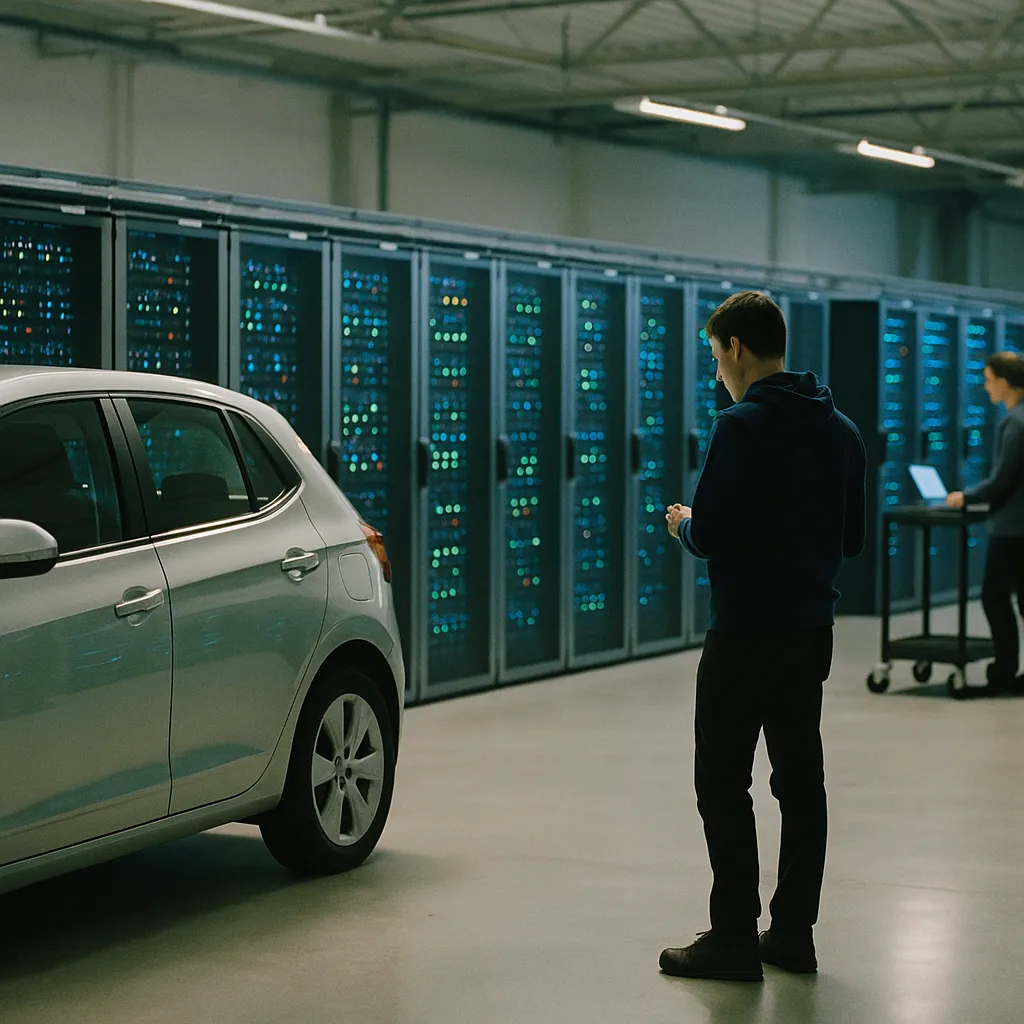
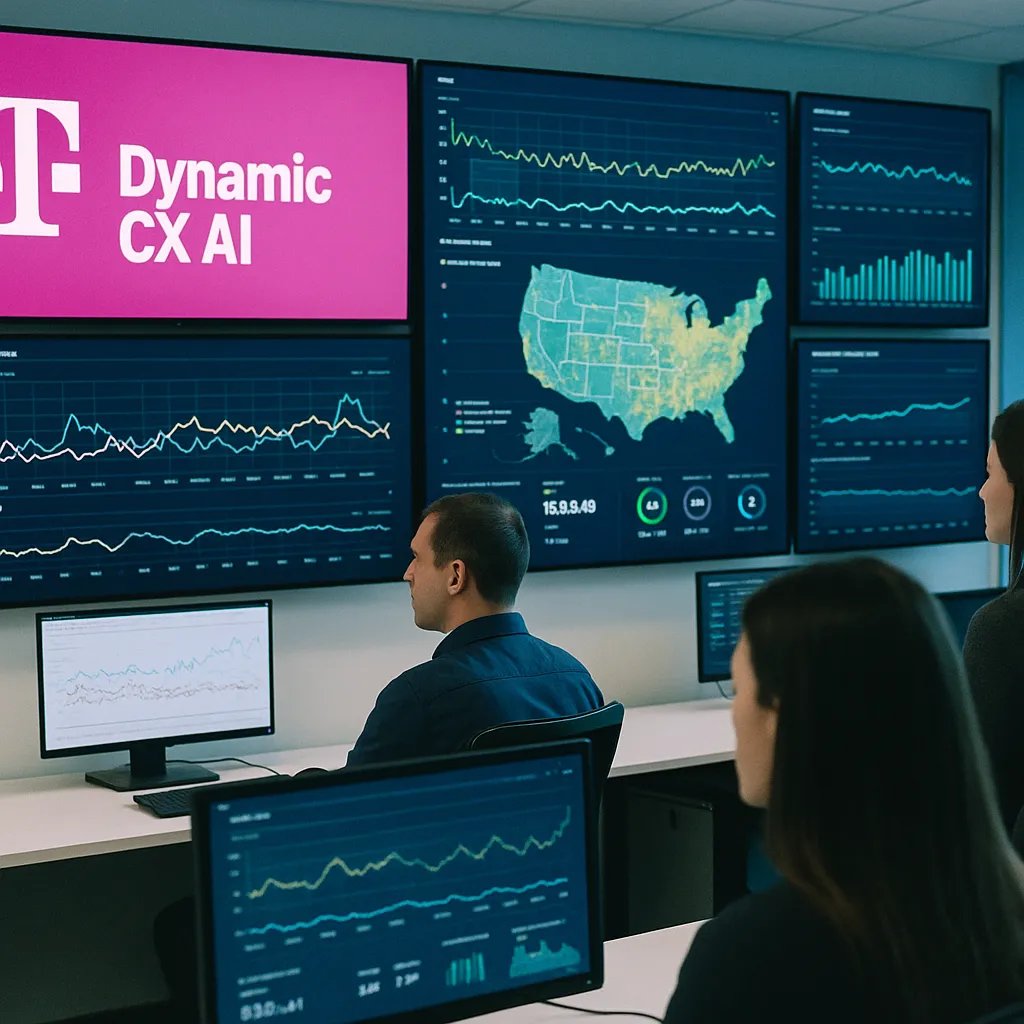
Ericsson's June 2026 Mobility Report projects AI-driven mobile uplink traffic could triple by 2031 as physical AI spreads from the cloud into vehicles, sensors, and connected environments.
Ericsson's June 2026 Mobility Report: Agentic AI Could Triple Mobile Uplink Traffic by 2031
By Hector Herrera | June 18, 2026 | Telecom
Agentic AI is about to hit mobile networks in ways the industry's current infrastructure is not fully built to handle. Ericsson's June 2026 Mobility Report—published June 16—projects that cumulative AI-driven uplink traffic could triple by 2031 compared to 2025 baselines, driven by the rapid expansion of physical AI into vehicles, industrial sensors, connected equipment, and other devices that actively upload data rather than passively consume it.
The shift from download-heavy to upload-intensive network use represents a structural change in how mobile infrastructure is designed and funded—and a direct consequence of AI leaving the cloud and moving into physical environments.
What the Report Found
According to IEEE ComSoc's coverage of Ericsson's June 2026 Mobility Report, the key findings include:
- Uplink traffic projection — Cumulative AI-driven uplink traffic could increase threefold by 2031 versus 2025 baselines as physical AI expands into real-world environments
- 5G subscription milestone — Global 5G subscriptions have crossed 3.1 billion
- Network slicing deployment — 84 commercial network slicing services are now live globally
- Physical AI as the primary driver — The uplink surge is attributed to AI expanding beyond data center inference into vehicles, sensors, and real-world environments that generate and transmit data continuously
The uplink projection is the headline number because it contradicts the historical traffic pattern that mobile networks have been built around. For most of the smartphone era, mobile networks were engineered primarily to serve downlink traffic—content and data flowing from the internet to devices. Users downloaded far more than they uploaded. Infrastructure investment, spectrum planning, and capacity modeling all reflect that asymmetry. The Ericsson projections suggest that asymmetry is about to shrink substantially.
Why Physical AI Changes the Equation
A smartphone user scrolling social media is primarily a consumer of network bandwidth. A connected vehicle running an autonomous driving stack, an agricultural sensor array monitoring crop conditions in real time, or an industrial robot transmitting continuous telemetry to a management system are all continuous, high-volume uploaders.
Physical AI refers to AI systems embedded in the physical world—in machines, vehicles, robots, and infrastructure—rather than AI running in cloud servers responding to human queries. Physical AI systems don't wait for a human to initiate a request before using the network. They transmit data continuously as part of their operating loop: sensor readings, camera feeds, status updates, anomaly alerts.
Get this in your inbox.
Daily AI intelligence. Free. No spam.
As these systems proliferate—Ericsson's report cites vehicles, sensors, and connected environments as the primary drivers—the aggregate uplink load on mobile networks rises in ways that downlink-optimized infrastructure was not designed to handle efficiently. The 3x projection by 2031 reflects an assumption that physical AI deployment continues at something close to its current pace. If deployment accelerates—as investment levels and announced deployment timelines suggest it will—the actual figure could exceed the projection.
What Network Slicing Has to Do With It
Network slicing—the ability to partition a 5G network into dedicated virtual channels with guaranteed performance characteristics—is one of the primary tools carriers are deploying to manage differentiated traffic demands. A self-driving vehicle's uplink traffic has different latency and reliability requirements than a consumer streaming music. Network slicing allows carriers to serve both on the same physical infrastructure without one degrading the other.
The 84 commercial network slicing services now live globally represent meaningful progress in deploying this capability. But 84 services, spread across dozens of carriers and markets, is still an early-stage deployment relative to the traffic volumes the Ericsson report projects. The implication is that carriers need to accelerate slicing deployment significantly over the next five years—not as a technical experiment, but as a core infrastructure requirement.
What This Means for Carriers and Enterprises
For mobile network operators, the implication is significant capital expenditure planning pressure. Uplink capacity expansion requires different investment than downlink—different antenna configurations, different spectrum management strategies, different backhaul requirements. Carriers that planned infrastructure investment based on historical traffic ratios need to revise those models now, not in 2030 when the traffic is already on the network.
For enterprises deploying physical AI—manufacturers, logistics operators, agricultural companies, construction firms—the Ericsson projections translate to a real question about connectivity costs. As uplink traffic volumes grow, the cost of connectivity required to run physical AI systems at scale becomes a significant operating expense line item. Enterprises that are modeling the economics of physical AI deployment need to include connectivity cost explicitly, not as a footnote assumption.
For regulators and spectrum authorities, the report is a prompt to accelerate spectrum allocation decisions. Uplink capacity is constrained partly by spectrum policy, and regulatory timelines for spectrum allocation have consistently lagged commercial deployment needs.
The 5G Subscription Context
The 3.1 billion global 5G subscriptions figure provides important context. When Ericsson published its first 5G mobility projections in 2019, the forecasts for this level of adoption were set for 2026–2027. The fact that 5G has reached 3.1 billion subscriptions confirms the infrastructure foundation that physical AI will rely on is being built. But physical AI's traffic demands are arriving alongside that buildout, not after it has matured—which means the industry is running a concurrent race rather than building the road before the cars show up.
What to Watch
The key figure to track in the next Ericsson mobility report—typically published in December—is whether AI-driven uplink traffic acceleration is already visible in measured network data, not just projected. If physical AI deployment is proceeding as fast as investment levels suggest, early signals of the uplink shift should be measurable in 2026 traffic data.
Also watch carrier capital expenditure announcements through the rest of 2026. If major carriers are revising uplink infrastructure investment upward in their guidance, that is the earliest external confirmation that the industry is taking the Ericsson projections seriously enough to act on them.
Hector Herrera covers AI in technology, infrastructure, and telecommunications for NexChron.
Did this help you understand AI better?
Your feedback helps us write more useful content.
Get tomorrow's AI briefing
Join readers who start their day with NexChron. Free, daily, no spam.