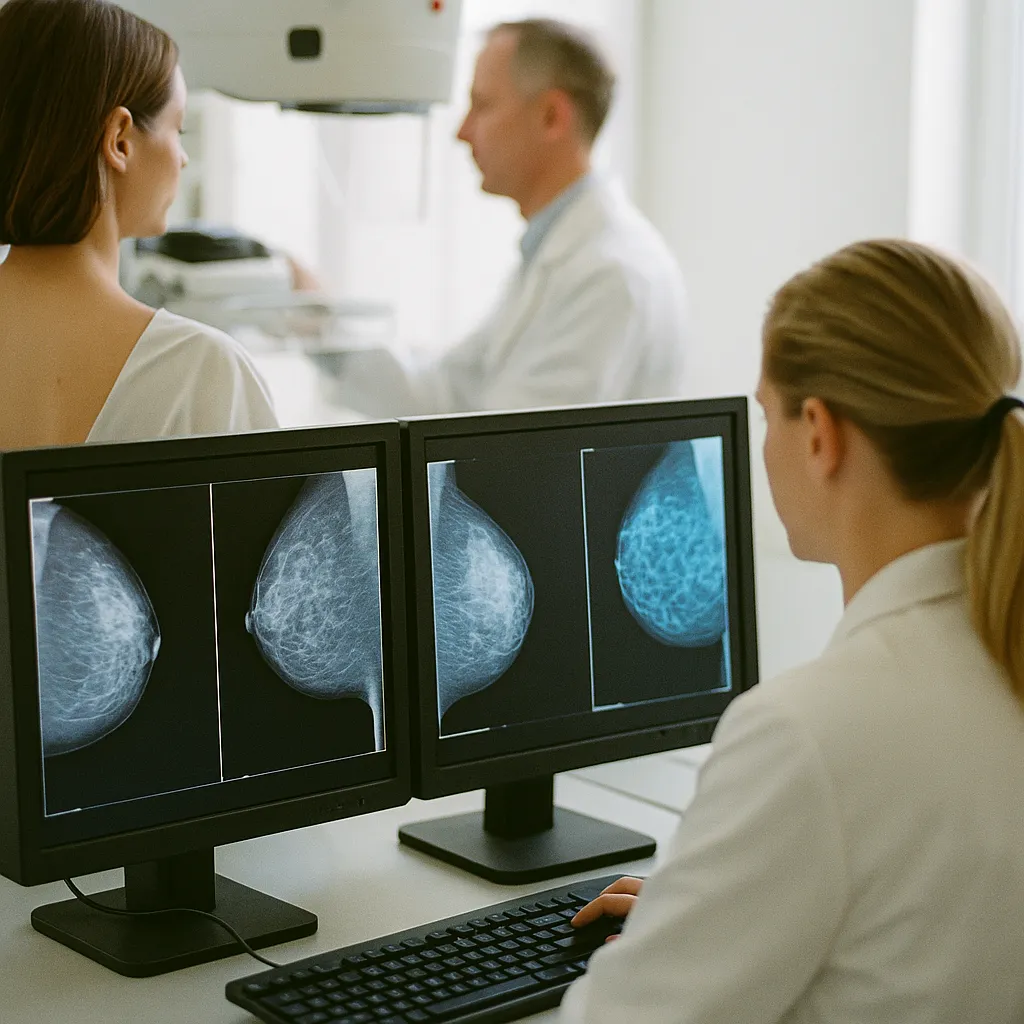
Czech medtech startup Carebot has secured €1.5 million — the largest investment in its history — to expand its AI mammogram analysis tool across Central Europe, where radiologist shortages delay breast cancer detection.
Czech Startup Carebot Raises €1.5M to Expand AI Mammogram Analysis Across Central Europe
Czech medtech startup Carebot has secured the largest investment in its history — more than €1.5 million — and simultaneously launched an AI tool for mammogram analysis, according to Around Prague. The funding expands Carebot's certified product portfolio to three diagnostic AI tools and sets up market expansion across Central Europe, where radiologist shortages make AI-assisted screening especially consequential.
Breast cancer is among the most treatable cancers when caught early. The bottleneck in many Central and Eastern European healthcare systems is not screening access — it is the availability of trained radiologists to review the volume of mammograms that screening programs generate. AI tools that can flag suspicious lesions before a radiologist reviews them reduce that bottleneck without replacing the clinician.
What Carebot Built
Carebot's mammogram AI operates as a pre-screening layer: it analyzes mammogram images for suspicious lesions and flags high-priority cases for human radiologist review. The company says the tool reduces radiologist read time by an estimated 40 percent by front-loading radiologist attention to the cases most likely to require intervention — allowing the same number of radiologists to handle higher case volumes without sacrificing diagnostic quality.
The product joins two existing certified tools in Carebot's portfolio. All three have received clinical certification, which in Central European markets requires CE marking under the EU Medical Device Regulation (EU MDR) — a rigorous pathway that includes clinical evidence requirements and post-market surveillance obligations. That regulatory clearance is a meaningful competitive differentiator: many diagnostic AI startups have products in development that have not yet cleared clinical certification.
The €1.5 million round (approximately 36 million Czech crowns) is notable for the regional medtech market, where early-stage raises of this size are uncommon. The funding will be used to grow sales and partnerships in Hungary, Slovakia, Poland, and Austria — markets that share the Central European radiologist shortage profile.
Get this in your inbox.
Daily AI intelligence. Free. No spam.
The Radiology Gap in Central Europe
The radiologist shortage in Central and Eastern Europe is structural, not cyclical. Healthcare systems in former Eastern Bloc countries have faced physician emigration to higher-paying Western European markets since EU accession — a persistent brain drain that has not reversed as wages have risen. The result is screening programs that generate more images than available radiologists can read in a timely way, creating diagnostic delays that undercut the clinical benefit of early screening.
Poland, for instance, runs a national breast cancer screening program but has documented waiting times for mammogram reads that can extend weeks. Slovakia and Hungary face similar dynamics. AI pre-screening tools address this directly by allowing a radiologist who reviews 100 cases per day to maintain diagnostic quality at higher volume, because AI has already triaged the queue and surfaced the 15 to 20 cases warranting the most careful attention.
Regulatory and Competitive Context
Carebot's certifications — CE marking under EU MDR for AI as a medical device — place it in a relatively small category of diagnostic AI companies that have completed the full regulatory pathway rather than operating in clinical trial or early-access frameworks.
The competitive risk is from enterprise medical imaging vendors. Siemens Healthineers, GE HealthCare, and Philips all have AI analysis modules for their mammography hardware, and they sell direct to hospital radiology departments that already purchase their equipment. A standalone AI reading tool from an independent startup competes against those embedded solutions.
Carebot's positioning in Central Europe, where the large imaging vendors have historically focused less sales and partnership attention, gives it a geographic window. The strategy appears to be: build deep integrations with radiology networks in under-served Central European markets before the enterprise imaging vendors fully prioritize the region.
What to Watch
Carebot is a relatively small team navigating a capital-intensive regulatory environment while competing against companies with far larger balance sheets. Watch for partnership announcements with regional radiology networks or national health insurance programs, which would provide the volume and institutional validation needed to build toward a sustainable commercial model.
Sources: Around Prague
Did this help you understand AI better?
Your feedback helps us write more useful content.
Get tomorrow's AI briefing
Join readers who start their day with NexChron. Free, daily, no spam.