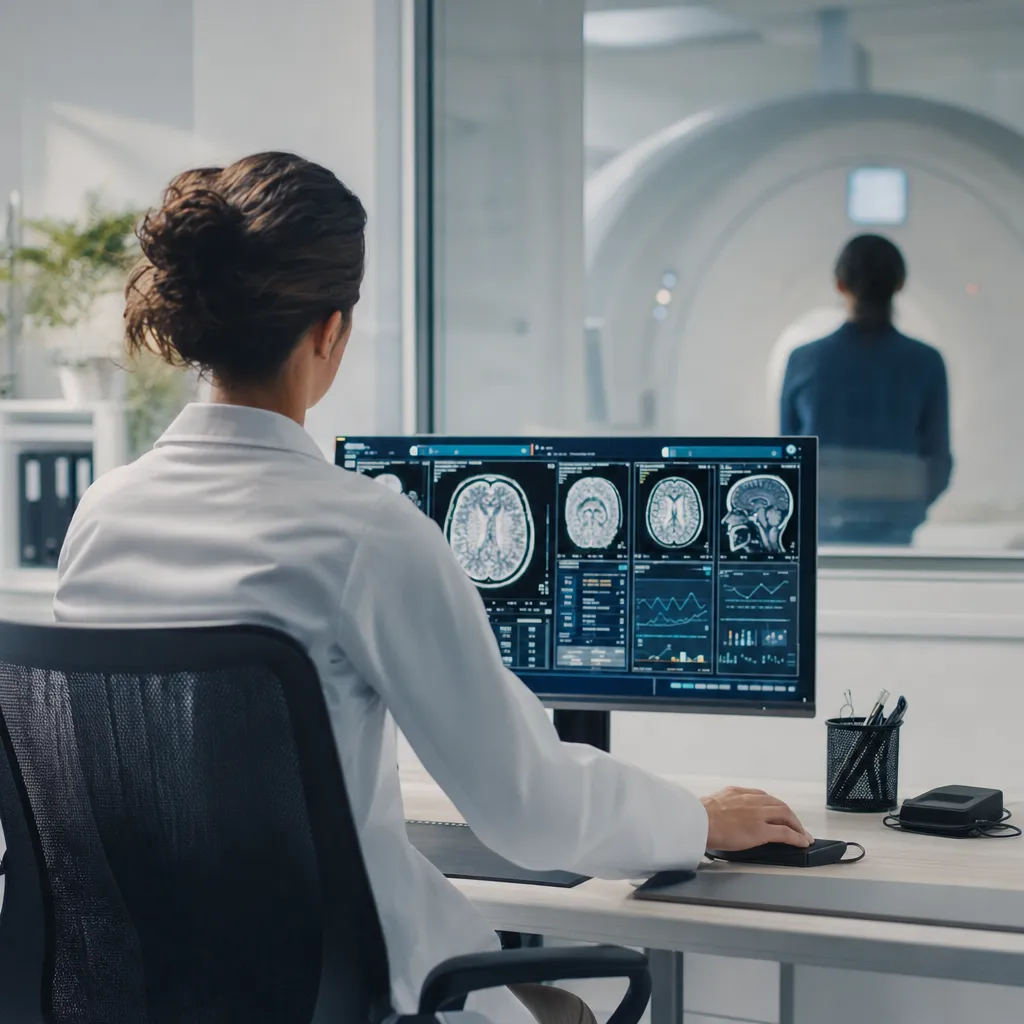
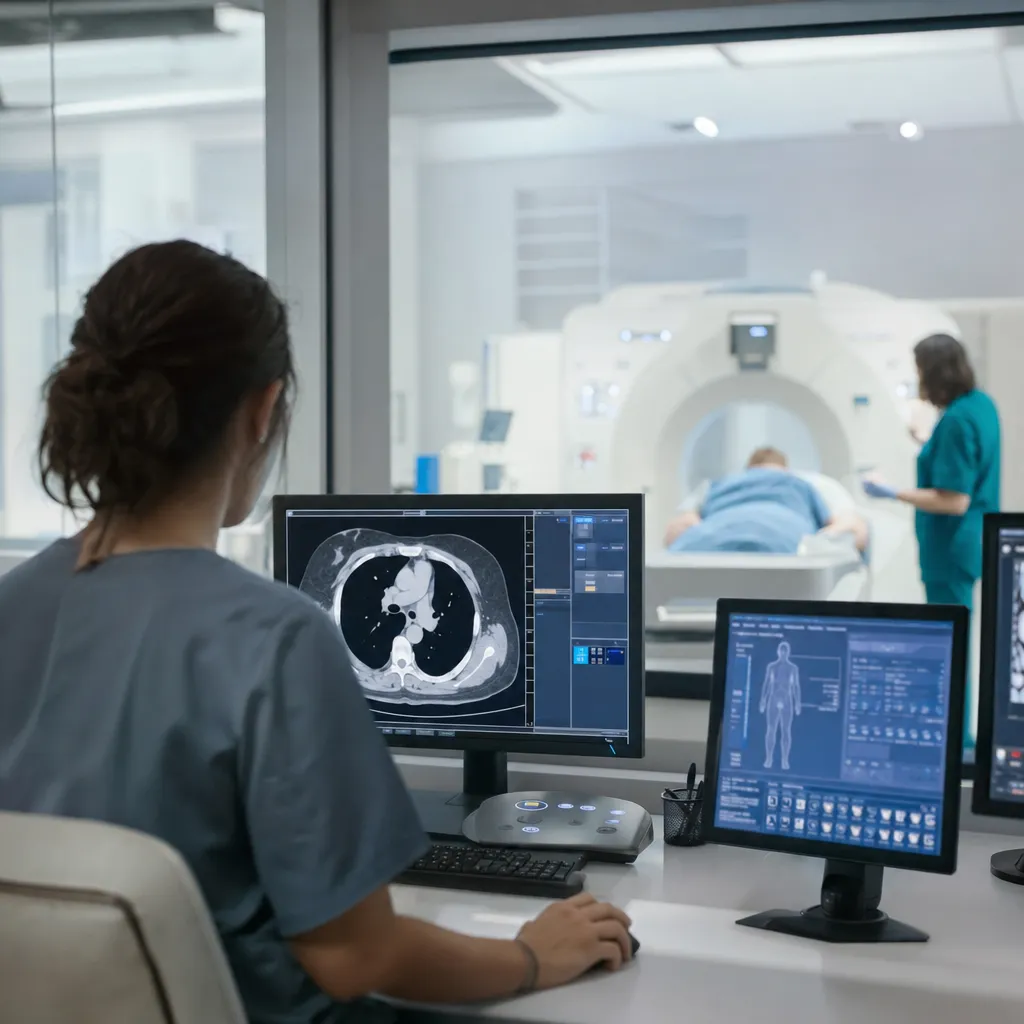
Twelve major U.S. hospital systems have partnered with Aidoc to form the Diagnostic AI Consortium, targeting full operationalization of diagnostic imaging AI across radiology, cardiology, and emergency departments.
Twelve Hospital Systems Form Diagnostic AI Consortium With Aidoc to Scale Imaging AI
By Hector Herrera | November 16, 2026 | Health
Twelve major U.S. hospital systems have joined forces with Aidoc to form the Diagnostic AI Consortium, a formal collaboration designed to move diagnostic imaging AI from isolated pilots into full operational deployment. The announcement matters because it directly addresses the main reason most hospital AI deployments stall — the gap between a working model and a tool that actually runs in clinical workflows at scale.
For years, healthcare AI faced a credibility problem: vendors promised transformed radiology workflows; hospitals ran pilots, saw modest gains, and quietly shelved the tools when they proved too cumbersome to integrate. The Consortium model is a direct response to that failure pattern. By pooling implementation expertise, operational data, and workflow integration resources across twelve institutions, the group aims to solve the transition problem that stops most AI tools from reaching clinical scale.
What the Consortium Is Building
The collaboration covers three core clinical areas: radiology, cardiology, and emergency departments — the highest-volume, highest-acuity imaging environments in a modern hospital. Aidoc, which has built one of the largest deployed networks of radiological AI tools in the United States, provides the infrastructure backbone. The participating health systems contribute real-world implementation experience and clinical governance.
A parallel study cited in the consortium announcement adds urgency to the initiative. Microsoft's diagnostic AI correctly identified 83.2% of complex clinical cases, compared to 36.1% for generalist physicians reviewing the same cases. That nearly 50-percentage-point gap is not a headline number to be skeptical of — it reflects what AI-assisted diagnostics consistently shows in controlled comparisons when models are trained on sufficiently large and diverse datasets.
What "operationalization" means in this context, specifically:
Get this in your inbox.
Daily AI intelligence. Free. No spam.
- Embedding AI tools into standard clinical workflows rather than running them as optional add-ons
- Building governance frameworks that allow radiologists to act on AI findings without manual review loops that add time without adding value
- Creating shared quality standards and outcome metrics across all twelve systems
- Enabling federated learning — allowing AI models to improve from anonymized cross-system data without centralizing patient records
Why Previous Attempts Fell Short
The Consortium is not the first attempt at health system AI collaboration. What distinguishes it from earlier academic consortia is its explicit focus on workflow integration rather than model development. Most previous multi-hospital AI partnerships focused on training data and model accuracy; this one is targeting the operational gap between a validated model and a tool clinicians actually use consistently.
That gap is where most healthcare AI dies. A tool that runs alongside the workflow but requires radiologists to open a separate interface rarely achieves consistent utilization. Low utilization means low ROI. Low ROI means the tool gets deprioritized when the vendor contract comes up for renewal. The Consortium's operational focus is designed to close that utilization gap before it opens.
What This Means for Health Systems
The economics of diagnostic AI only close when utilization is high. For health systems not in the Consortium, the announcement creates competitive pressure on two fronts.
First, talent competition: radiologists and cardiologists increasingly expect AI-assisted workflows. Health systems still running fully manual review pipelines will find themselves at a disadvantage recruiting specialists who have trained with AI tools and prefer to work alongside them.
Second, payer negotiations: value-based care contracts are beginning to price AI-enhanced diagnostic accuracy into performance targets. Health systems that can demonstrate systematic AI deployment — not just occasional use — will have an advantage in those negotiations.
For hospital administrators evaluating AI investments, the Consortium structure also offers a path that reduces individual institutional risk. Shared implementation frameworks mean the first system to deploy a workflow doesn't bear the full cost of figuring it out alone.
What to Watch
Whether the Consortium publishes formal outcome data — reduction in missed diagnoses, time to treatment, radiologist throughput — will determine whether this becomes a model others replicate or another press release that doesn't move the field. Aidoc has signaled an intent to publish results, but no timeline has been confirmed as of this writing. Watch for data at major radiology conferences in 2027, particularly RSNA and SIIM.
Source: Chief Healthcare Executive
Did this help you understand AI better?
Your feedback helps us write more useful content.
Get tomorrow's AI briefing
Join readers who start their day with NexChron. Free, daily, no spam.