NVIDIA and Siemens showed a wheeled humanoid robot completing real logistics tasks inside a working electronics factory at Hannover Messe 2026 — compressing two years of development into seven months via simulation-first training.
NVIDIA and Siemens Put a Humanoid Robot to Work in a Live Factory at Hannover Messe
By Hector Herrera | April 24, 2026 | Manufacturing
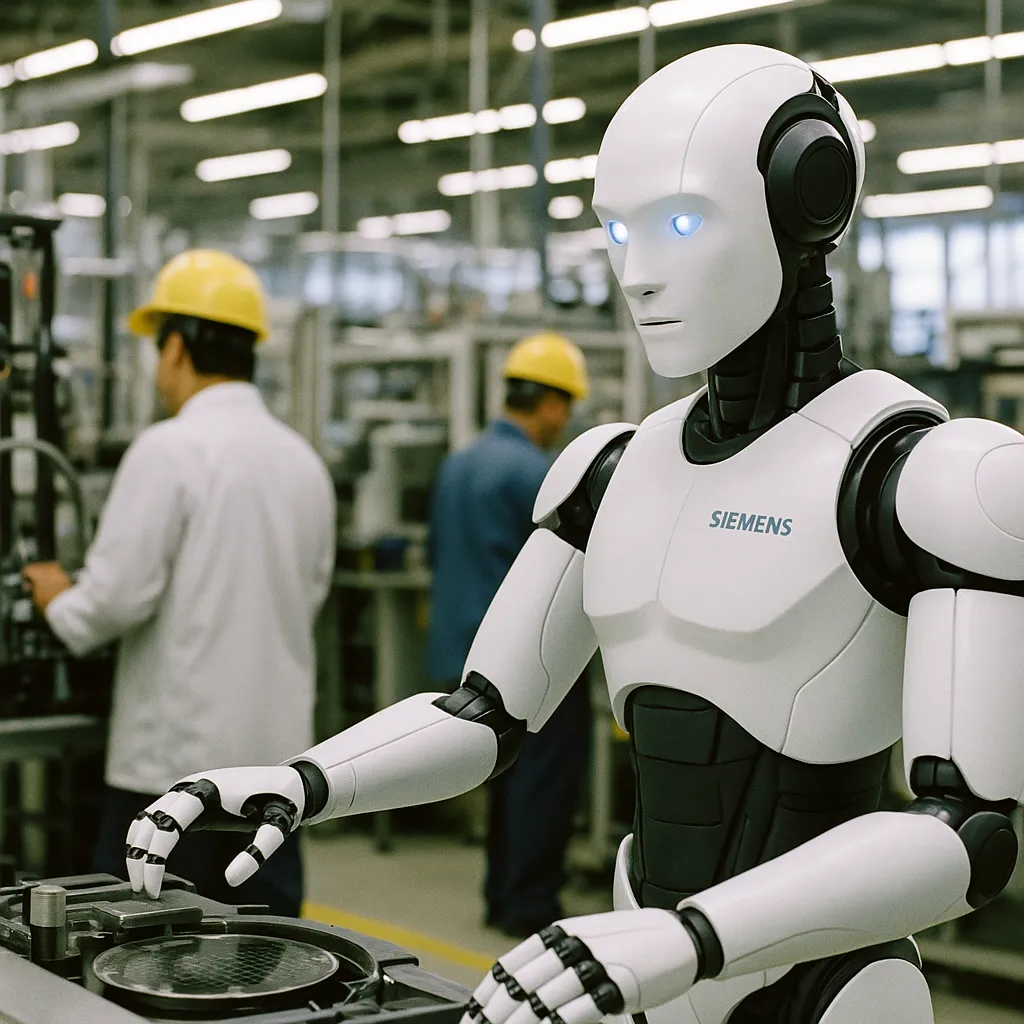
NVIDIA and Siemens demonstrated a wheeled humanoid robot completing real logistics tasks inside a working electronics factory at Hannover Messe 2026, running this week through April 24. The robot navigated autonomously, handled materials, and operated without a scripted route — in a live production environment, not a demo lab. That distinction matters: dozens of companies have shown robots doing things in controlled settings; far fewer have shown them doing useful work where breakdowns have real production consequences.
What Happened at Hannover Messe
Hannover Messe is the world's largest industrial trade show, drawing manufacturers, automation vendors, and factory operators from across Europe and beyond. The NVIDIA-Siemens showcase was not a keynote demo — it was a live deployment at a partner electronics manufacturer, with the robot executing dock-to-floor logistics operations as the factory ran normal production.
The robot in question is a wheeled humanoid — bipedal design from the waist up, wheeled base for floor mobility. It was developed using a simulation-first approach in NVIDIA Isaac Sim, a physics-based simulation environment that lets robotics teams run thousands of virtual training cycles before deploying hardware. According to NVIDIA, this compressed a two-year hardware development timeline to seven months.
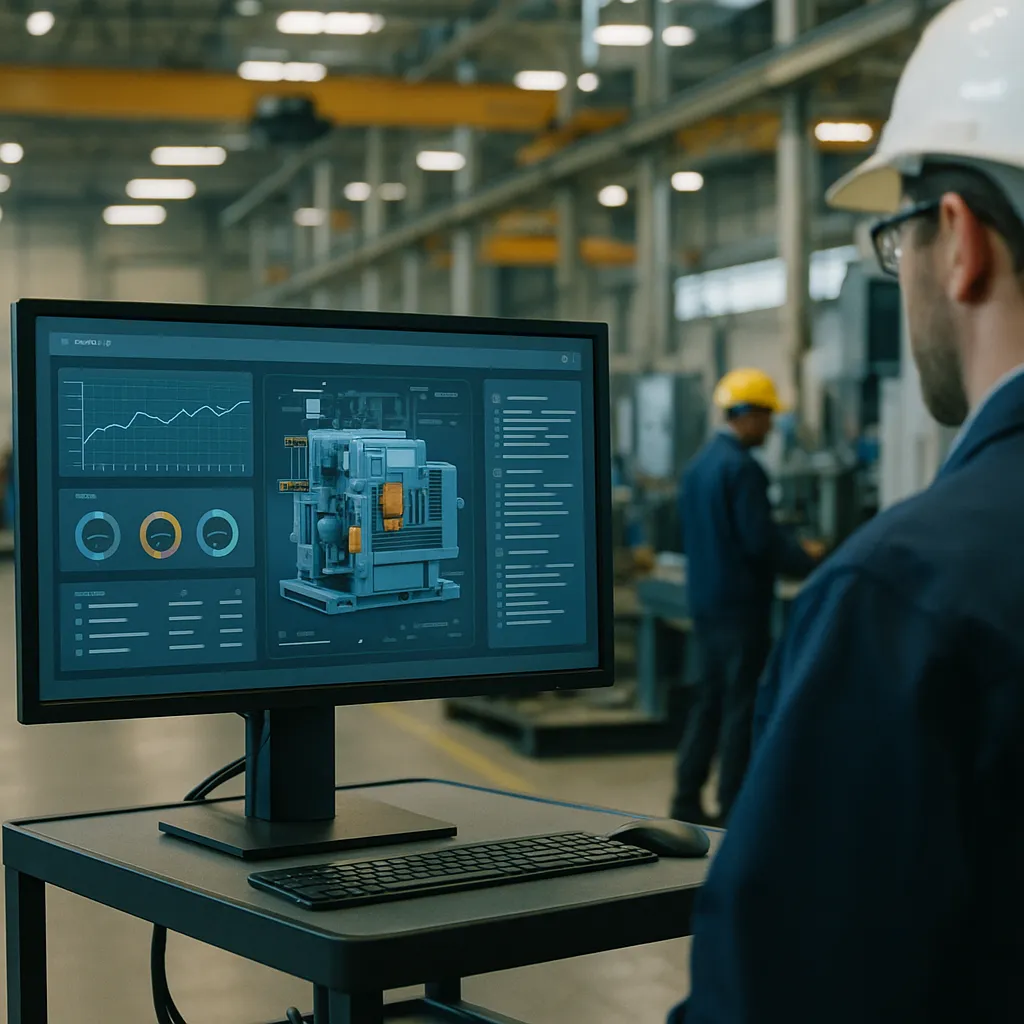
The infrastructure supporting the deployment includes Deutsche Telekom's Industrial AI Cloud, running on NVIDIA GPU hardware. This is not the robot's compute — it's the edge and cloud compute layer managing the simulation training pipeline, model updates, and telemetry.
Get this in your inbox.
Daily AI intelligence. Free. No spam.
Why the Simulation-First Number Matters
Seven months to compress what would have been two years of development is the headline that robotics teams should pay attention to. The standard path to deploying a capable robot in a new environment involves:
- Hardware development and iteration
- Physical environment mapping and testing
- Trial-and-error training runs with real hardware (slow, expensive, damages equipment)
- Validation testing before live deployment
Simulation-first flips step 3: training runs happen in virtual environments that approximate the physics of the real factory. The robot learns to navigate around pallets, avoid workers, and handle materials in simulation — then transfers that learning to hardware. The gap between simulation performance and real-world performance (called the sim-to-real gap) has historically been the limiting factor. This deployment suggests the gap has narrowed enough for the approach to be production-viable.
What Siemens Brings to This
Siemens is not just a showcase partner here — the company is integrating its factory automation software stack with NVIDIA's robotics platform. Siemens runs the industrial automation systems (PLCs, SCADA, digital twin software) in thousands of factories globally. If the integration between Siemens' Xcelerator platform and NVIDIA's Isaac runtime becomes a standard pairing, it could accelerate the deployment path for humanoid robots dramatically — factory operators wouldn't need to build a separate AI stack. They'd get it through their existing Siemens relationship.
What This Means for Manufacturing
For large manufacturers with existing Siemens automation relationships, this demo represents a plausible near-term deployment path. The question is not "does the robot work?" but "what tasks justify the cost, and how do we integrate it into existing safety and workflow protocols?"
For mid-market manufacturers, the timeline is longer. The seven-month compression applies to the development phase; procurement, integration, and worker training timelines are separate. Real-world deployment typically requires:
- Safety certifications for collaborative robots (cobots) working near people
- Factory floor layout adjustments in some cases
- Workforce training on robot supervision and exception handling
For the broader robotics market, the NVIDIA-Siemens pairing signals a consolidation of the platform layer. Rather than every robotics company building its own training stack, NVIDIA Isaac Sim is increasingly becoming the default training environment — similar to how CUDA became the default GPU programming model for AI research.
What to Watch
NVIDIA has been steadily building out its physical AI ecosystem — Isaac Sim, Isaac Lab, GROOT (its humanoid robot foundation model). The Hannover Messe deployment is the most public proof point to date that the stack works in production. Watch for Siemens to announce broader availability of the NVIDIA integration in its Xcelerator platform — and for competitor industrial automation vendors (Rockwell, ABB, Fanuc) to respond with competing robot AI platform announcements. The race to be the default software layer for factory robots is just starting.
Hector Herrera is the founder of Hex AI Systems and editor of NexChron.
Did this help you understand AI better?
Your feedback helps us write more useful content.
Get tomorrow's AI briefing
Join readers who start their day with NexChron. Free, daily, no spam.