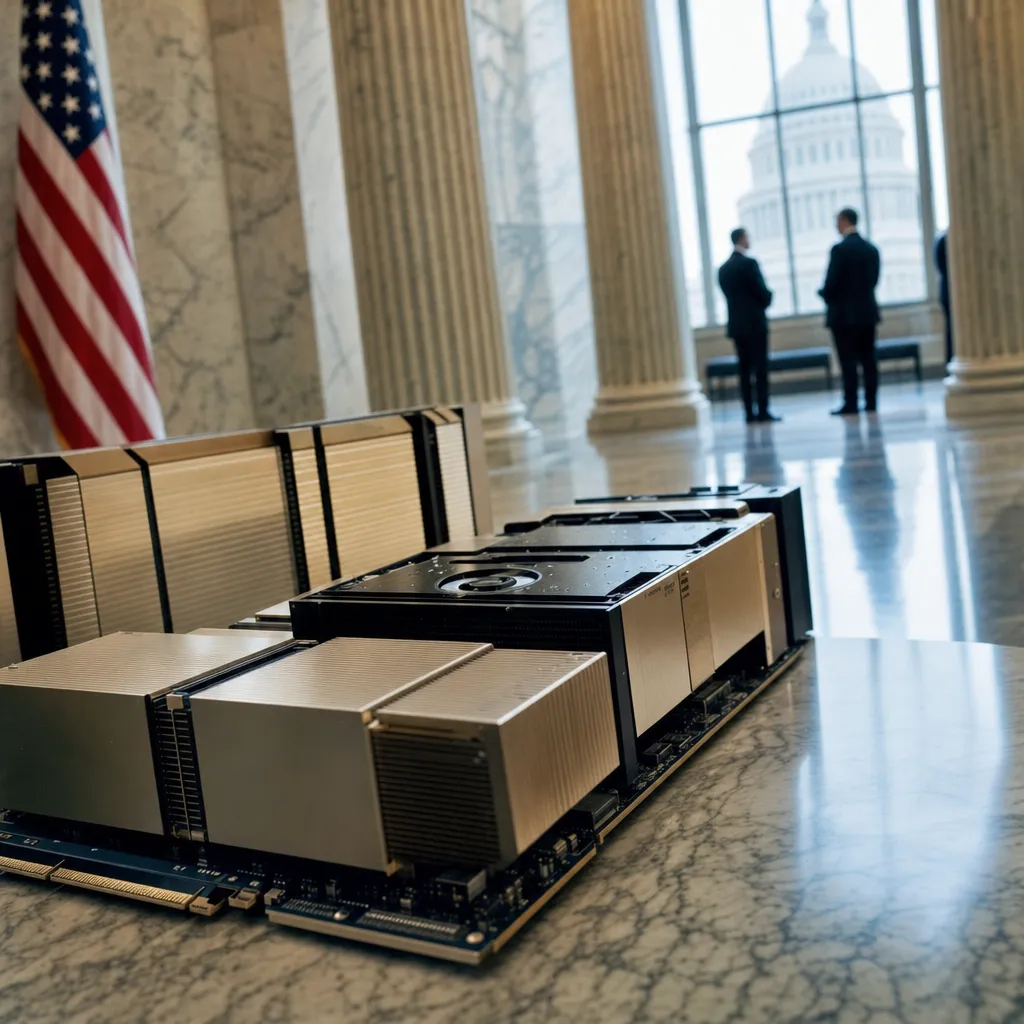
The U.S. is moving to require export licenses before Blackwell-class AI chips can be reexported from Singapore, Brazil, Indonesia, Malaysia, and Thailand — closing indirect supply routes to restricted destinations.
The United States is drafting rules that would require export licenses before Blackwell-class and newer AI chips can be reexported from Singapore, Brazil, Indonesia, Malaysia, and Thailand to any third party. The move closes indirect supply routes that allowed advanced AI hardware to bypass existing China-focused restrictions — routes that became a flashpoint after the Nvidia espionage controversy earlier this year drew bipartisan congressional pressure for tighter controls.
Current export controls on AI chips target China and Russia directly but do not impose the same licensing burden on allied and partner countries. That gap created a documented path: a buyer in a restricted country could acquire Blackwell hardware through an intermediary in Singapore or Malaysia. This draft rule would require every reexport from those five countries to clear a U.S. government license — adding a checkpoint the Commerce Department can deny.
What the Rule Covers
Chips in scope: Blackwell-class (Nvidia B100, B200, GB200) and above — the current frontier of AI training and inference hardware. Earlier generations like the A100 and H100 are not explicitly covered by the new reexport requirement.
Countries affected as reexport points: Singapore, Brazil, Indonesia, Malaysia, and Thailand. These were chosen because they represent the highest-volume transshipment corridors identified in Commerce Department investigations.
What changes operationally: Companies in those five countries that purchase Blackwell-class chips will now be required to obtain a U.S. export license before selling, transferring, or reexporting those chips to any third country. That is an additional compliance layer on top of whatever restrictions already apply to the final destination.
Get this in your inbox.
Daily AI intelligence. Free. No spam.
Why These Five Countries
Singapore is the dominant chip transshipment hub for Southeast Asia and handles a large share of regional data center procurement. Malaysia hosts several major chip assembly and test facilities. Indonesia and Thailand have both seen rapid growth in AI infrastructure investment, some of it connected to procurement networks that U.S. officials have flagged. Brazil is the largest economy in South America and a known alternative routing point for restricted hardware.
None of these countries are adversaries. The rule is not a ban on selling to them — it is a licensing requirement for what happens after they buy, targeting the downstream reexport, not the initial sale.
Impact on the Industry
For Nvidia and AMD: This adds friction to channel sales in some of their fastest-growing markets. Distributors and system integrators in those five countries will need compliance infrastructure they may not currently have. Expect pushback from industry associations on implementation timelines.
For cloud providers and data center operators in Southeast Asia: Companies building AI infrastructure in Singapore or Malaysia for regional customers will need to track chip provenance and destination more rigorously. That increases compliance overhead but is unlikely to block legitimate builds.
For U.S. AI competitiveness: The Commerce Department is trying to thread a narrow needle — maintain allied access to frontier AI hardware while preventing leakage to restricted destinations. If the licensing process becomes slow or opaque, it could push buyers in those markets toward non-U.S. chip vendors, including Huawei's Ascend line, which carries no U.S. export restriction.
The broader signal: This draft rule, combined with existing restrictions, means that every advanced AI chip Nvidia or AMD ships now has a documented chain of custody requirement that follows it past the first sale. That is a structural shift in how semiconductor export policy works — historically focused on the exporter, now extending to the full distribution chain.
What to Watch
Watch for the final rule text from the Commerce Department's Bureau of Industry and Security (BIS) and whether the license review process will have defined timelines. An expedited review path for verified legitimate buyers would blunt industry objections; a slow or opaque process would force the market to adapt. Also watch Nvidia's next earnings call — management will almost certainly be asked how this affects their APAC data center pipeline.
Did this help you understand AI better?
Your feedback helps us write more useful content.
Get tomorrow's AI briefing
Join readers who start their day with NexChron. Free, daily, no spam.