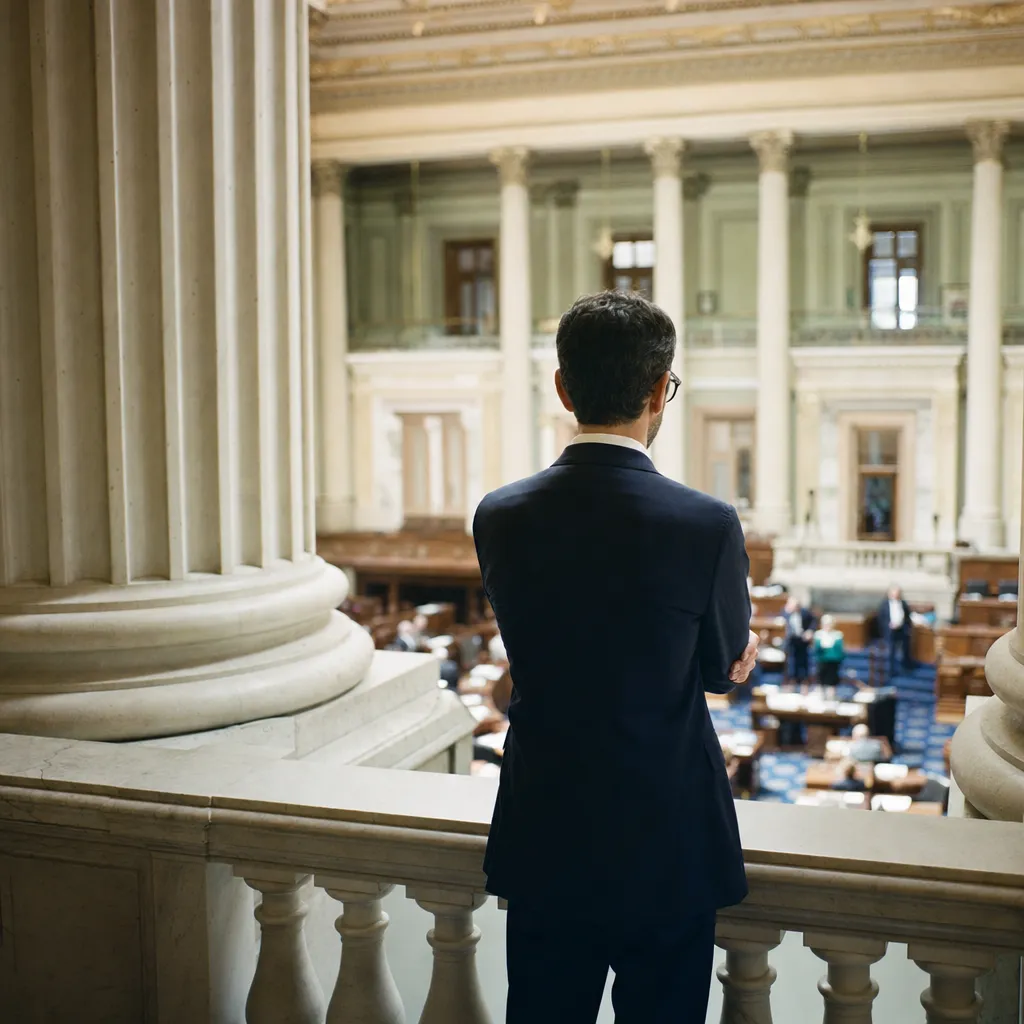
Scott Wiener, author of California's SB 1047 AI safety bill, won Nancy Pelosi's congressional seat in the November midterms and is making federal AI legislation his first priority in the new Congress.
Scott Wiener — the California state senator who authored SB 1047, the most ambitious AI safety bill attempted at the state level in U.S. history — won Nancy Pelosi's former San Francisco congressional seat in the November 2026 midterms. Federal AI legislation is his stated top priority when the new Congress convenes in January. With Democrats retaking both chambers, the composition of Congress heading into 2027 is now the most AI-regulation-favorable in U.S. history.
MIT Technology Review reported on Wiener's victory and policy plans on November 9.
Who Is Scott Wiener
Wiener has been San Francisco's most prominent state legislator on technology policy for nearly a decade. He authored SB 1047, which would have required frontier AI developers to conduct safety testing, implement kill switches, and accept civil liability for harms caused by their most powerful models. Governor Gavin Newsom vetoed it in September 2024 after an aggressive lobbying campaign from OpenAI, Google, and Meta — who argued it would stifle innovation and drive AI development out of California.
The veto did not end Wiener's efforts. He continued working on AI policy, introduced follow-on legislation, and built relationships with the AI safety research community that few elected officials in either chamber of Congress can match.
Now he's moving to Washington.
The Congressional Math
Democrats flipped the House and held the Senate in the November 2026 midterms — a result shaped substantially by voter concerns about AI-driven job displacement, deepfakes in political advertising, and AI-enabled fraud. That electoral mandate is now the wind at Wiener's back.
Get this in your inbox.
Daily AI intelligence. Free. No spam.
The outgoing Congress passed no major AI legislation. The closest it came was the AI Act's incorporation into the NDAA, which addressed AI in defense applications but left consumer and commercial AI governance largely untouched.
The new Congress enters January 2027 with:
- A House majority that ran on AI accountability as a campaign issue
- A Senate that has held more AI hearings than any prior session
- A newly seated member who has already written landmark AI legislation at the state level
- An AI industry that knows federal preemption of state rules is preferable to 50 separate state frameworks — giving them an incentive to negotiate
That last point matters. The tech industry's successful lobby against SB 1047 created a problem: California is now one of several states pursuing its own AI rules, and the EU AI Act covers any company selling to European customers. Federal legislation that preempts the patchwork — even if it includes meaningful safety requirements — may now be in the industry's interest.
What Federal Legislation Might Look Like
Wiener has not yet released a draft bill, but his prior work and public statements provide a roadmap. Expect proposals that include:
- Mandatory safety evaluations for models above a compute threshold before deployment
- Incident reporting requirements for significant AI failures or misuse
- Civil liability provisions that give harmed individuals a path to sue developers
- A federal AI safety body with technical evaluation capacity — analogous to the NTSB for transportation
Whether any of that survives the legislative process intact is a different question. The tech industry's lobbying operation remains one of the most sophisticated in Washington. Wiener will need to build coalitions beyond the AI safety community — including labor unions concerned about displacement, healthcare organizations worried about clinical AI liability, and consumer advocates focused on fraud and manipulation.
Why San Francisco's District Matters
Pelosi's former district covers the heart of San Francisco — including the Tenderloin, the Castro, and the neighborhoods closest to Silicon Valley's cultural center of gravity. Winning there as an AI regulation advocate, in the backyard of the companies he is proposing to regulate, is a signal the industry cannot dismiss as a fluke.
Wiener won a district where many of his constituents work at the companies he would regulate. That constituency isn't just tolerating AI oversight — a meaningful portion of it is actively demanding it.
What to Watch
The first 100 days of the new Congress will be the tell. If Wiener introduces federal AI legislation by March 2027, the debate becomes real. If he's absorbed into committee assignments and other priorities, the window may narrow. Watch also for whether he aligns with or diverges from the EU AI Act's framework — transatlantic regulatory alignment would be the most significant AI governance development in a decade.
The AI industry spent two years defeating SB 1047. The fight is now on a larger stage.
Did this help you understand AI better?
Your feedback helps us write more useful content.
Get tomorrow's AI briefing
Join readers who start their day with NexChron. Free, daily, no spam.