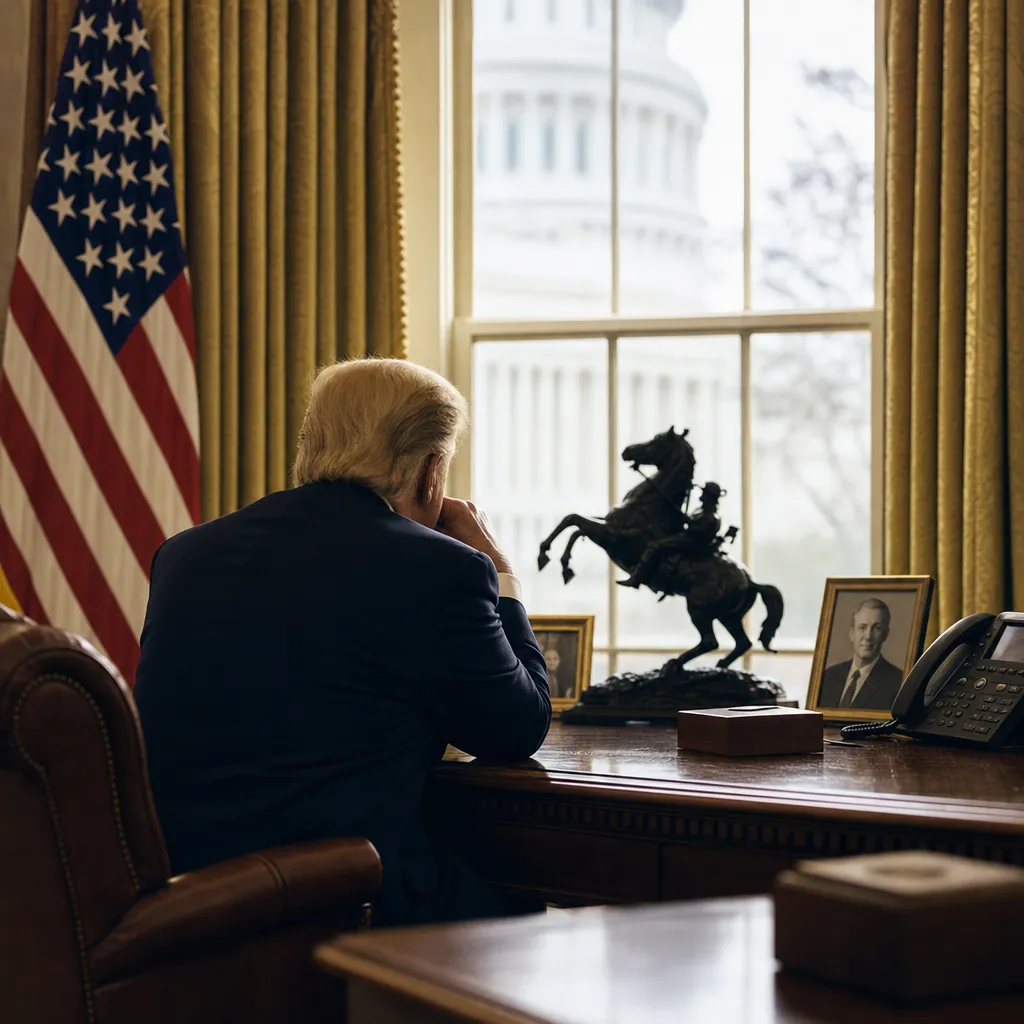
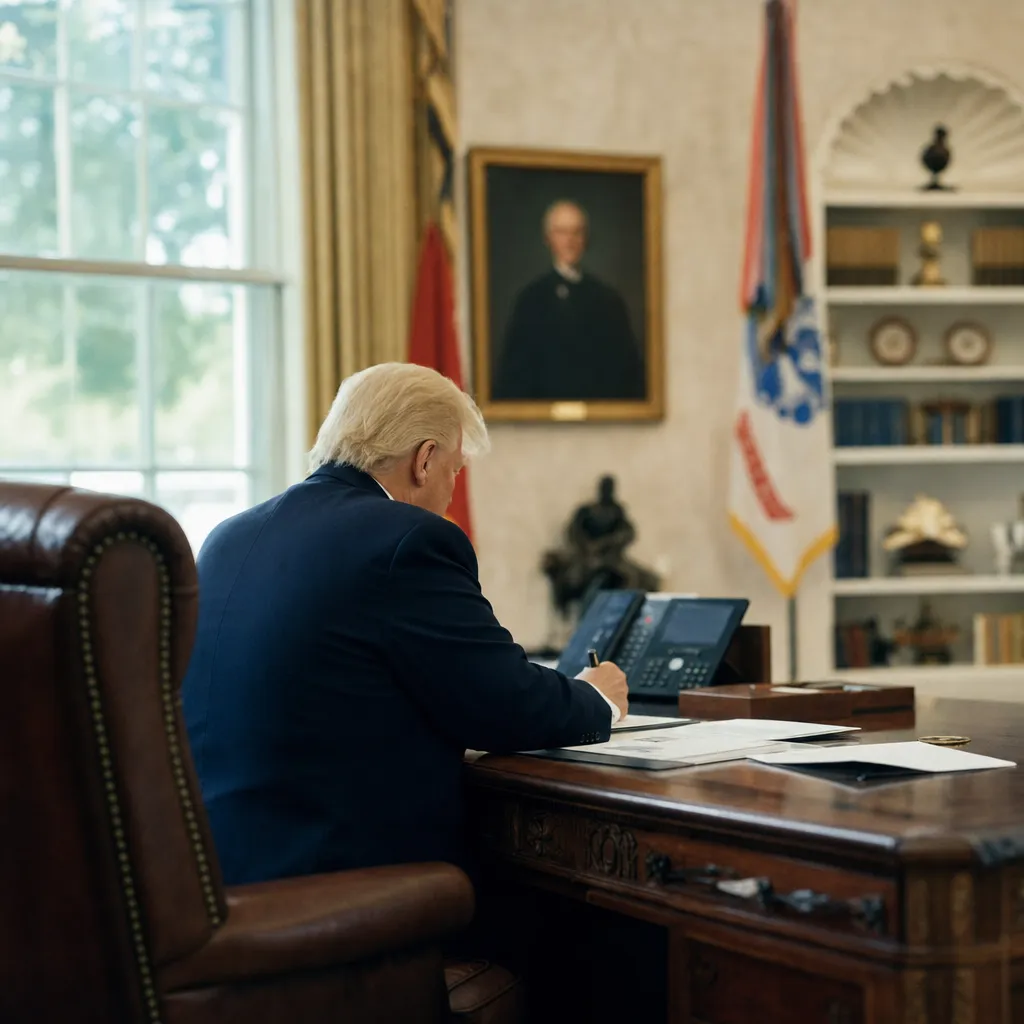
President Trump told CBS's '60 Minutes' that AI risks are manageable and he 'doesn't mind guardrails,' marking the clearest White House signal yet that federal AI oversight may be on the table.
President Trump told CBS News he is open to federal AI guardrails, marking the first explicit White House signal that some form of federal oversight could move forward. The statement, made during a Sunday broadcast of 60 Minutes, departs from the administration's earlier posture of letting industry self-regulate and could reshape the congressional debate over AI policy heading into 2027.
What happened: Trump said AI risks are "manageable" and that he "doesn't mind guardrails," expressing willingness to collaborate with Democrats on safety rules. His single condition: any rules must not place the United States in "a deep second position" behind China. The interview aired November 9, 2026.
Background
Since returning to office, the Trump administration has largely opposed federal AI regulation, rescinding Biden-era executive orders and leaning on voluntary industry commitments. The position put the White House at odds with a bipartisan bloc of lawmakers who have argued that voluntary pledges from AI companies are insufficient given the pace of model development. Trump's comments on 60 Minutes are the clearest on-record shift from that posture.
What He Said
According to CBS News and Reuters, Trump made three notable points:
Get this in your inbox.
Daily AI intelligence. Free. No spam.
- Risks are manageable. He did not dismiss AI safety concerns outright, calling them real but containable with the right approach.
- Open to guardrails. The phrase "I don't mind guardrails" is a meaningful departure from the administration's default position that regulation stifles innovation.
- China is the frame. Trump anchored his entire reasoning in great-power competition, signaling that any rules would be calibrated around U.S. competitiveness, not precautionary risk reduction.
He did not name specific legislation, propose a framework, or set a timeline.
Why It Matters
The statement does several things at once. It gives political cover to Republican lawmakers who have been reluctant to back AI safety bills for fear of breaking with the White House. It opens a potential lane for bipartisan legislation — a handful of such bills, including frameworks around critical infrastructure and biosecurity applications of AI, have been stalled in committee for months. And it signals that the administration is tracking public unease about AI risks, which has grown through 2026 as high-profile incidents involving AI-generated fraud, deepfakes in elections, and biosecurity warnings have accumulated.
For businesses building or deploying AI systems: the possibility of federal rules — however vague — is now closer to reality. Companies that have been banking on a purely voluntary regime should begin scenario-planning for a framework that includes at minimum some mandatory disclosure or red-teaming requirements for high-risk applications.
What to Watch
Watch for follow-on signals from the White House Office of Science and Technology Policy (OSTP) and from the Senate Commerce and House Energy and Commerce committees, which are the most likely venues for any bipartisan AI bill. Trump's framing around China suggests any legislation that emerges will likely include provisions tied to national security rather than consumer protection — a narrower scope than what tech critics have pushed for, but a real policy development nonetheless.
Hector Herrera covers AI policy and infrastructure for NexChron. Sources: Yahoo News / Reuters.
Did this help you understand AI better?
Your feedback helps us write more useful content.
Get tomorrow's AI briefing
Join readers who start their day with NexChron. Free, daily, no spam.