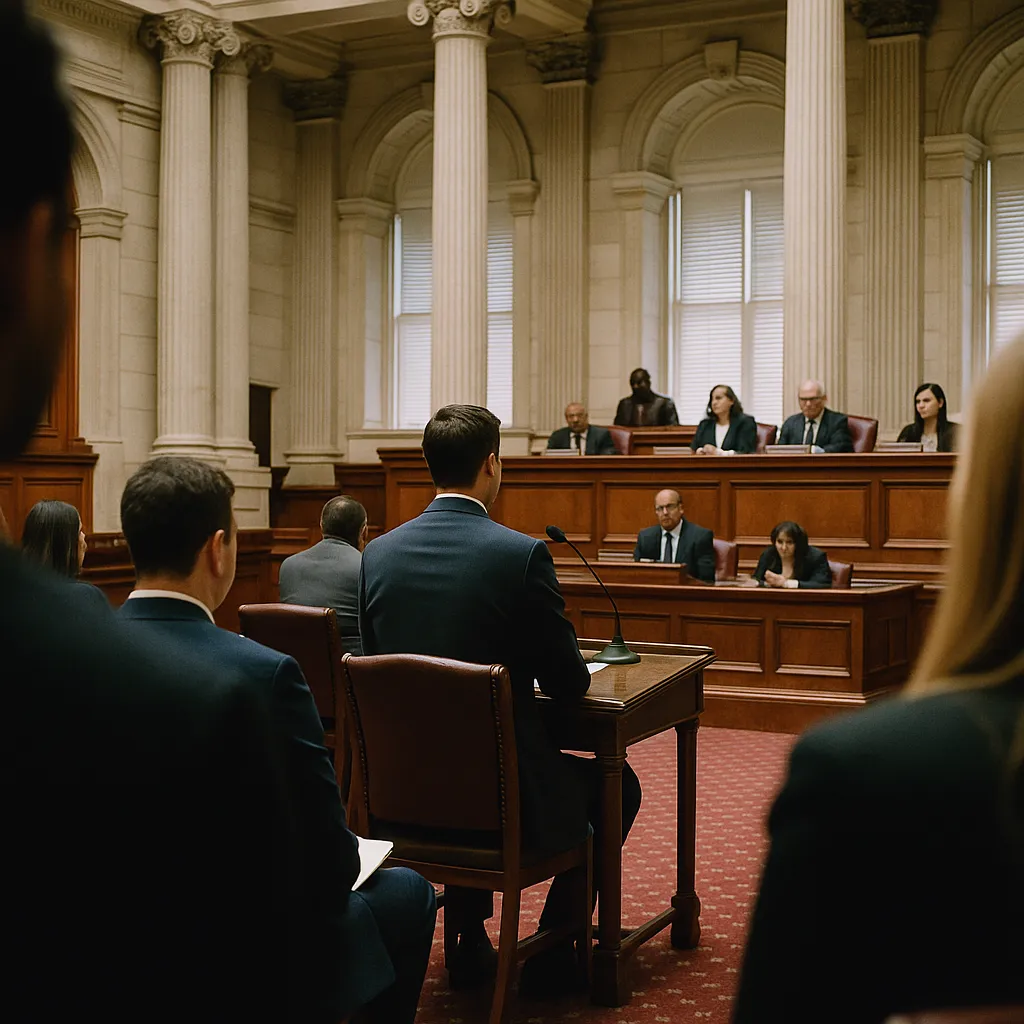
All four major AI lab executives testified under oath before New York City's full 51-member City Council today, a rare public hearing that signals cities may move ahead of federal regulators on AI oversight.
The executives of OpenAI, Google, Meta, and Anthropic testified under oath before New York City's full 51-member City Council today, in a rare Committee of the Whole hearing focused on AI safety risks and proposed city legislation. It is the most significant municipal action on AI in the United States to date. SpaceX's AI division, the only major lab invited that refused to appear voluntarily, was issued a subpoena requiring future testimony.
A Committee of the Whole — all 51 council members convening jointly — is reserved for matters the Council treats as institutional priorities. The last time New York City used the format for a technology issue was the 2021 hearing on algorithmic hiring bias that preceded Local Law 144, which became one of the country's first AI employment regulations.
What Lawmakers Asked
According to CNBC, council members questioned executives on three areas:
Existential and safety risks. Lawmakers pressed each company on catastrophic risk scenarios — what they are, how the companies are managing them, and what triggers would prompt them to slow or halt deployment.
A proposed private right of action bill. The most consequential legislation under discussion would allow New York City residents to sue AI companies directly in city courts for harms caused by their systems. This is a significant expansion of civil liability. Under current law, most AI harm claims must be routed through existing tort frameworks, which were not designed for AI failures.
Get this in your inbox.
Daily AI intelligence. Free. No spam.
Whistleblower protections. Council members raised concerns about whether employees at AI labs can safely report internal safety issues without retaliation. Several recent departures from major AI labs have been attributed to safety culture disputes, raising questions about whether formal protections are needed.
The SpaceX Subpoena
SpaceX's AI operation declined a voluntary appearance. The Council responded with a subpoena — a formal legal demand for testimony. The move signals that the Council treats AI safety oversight as a mandatory engagement, not an industry relations courtesy. SpaceX will be required to appear at a subsequent hearing.
Why New York City Is Moving
New York City has both the jurisdiction and the motivation to act. The city is home to major AI deployments across finance, healthcare, media, real estate, and legal services — sectors where AI system failures carry direct harm to residents.
The city also has a track record of acting before federal regulators. Local Law 144, passed in 2021 and effective since 2023, required employers using automated employment decision tools to conduct bias audits — years before federal agencies issued comparable guidance. The same dynamic is playing out now: Congress has not passed comprehensive AI legislation, leaving cities to fill the gap.
For companies operating in New York, the private right of action proposal is the most material risk from today's hearing. If enacted, it would create a plaintiff's bar incentive structure around AI harms — meaning law firms would actively seek out cases. That changes the liability calculus for every AI deployment in the city.
What to Watch
The private right of action bill will face substantial lobbying pressure. Watch whether the Council moves it to a committee vote before year-end 2026, and whether the hearing prompts similar legislation in Los Angeles, Chicago, or other large cities. If New York passes the bill, it will likely define the legal standard that other cities copy — the same way Local Law 144 became a template for AI hiring regulations nationally.
Did this help you understand AI better?
Your feedback helps us write more useful content.
Get tomorrow's AI briefing
Join readers who start their day with NexChron. Free, daily, no spam.