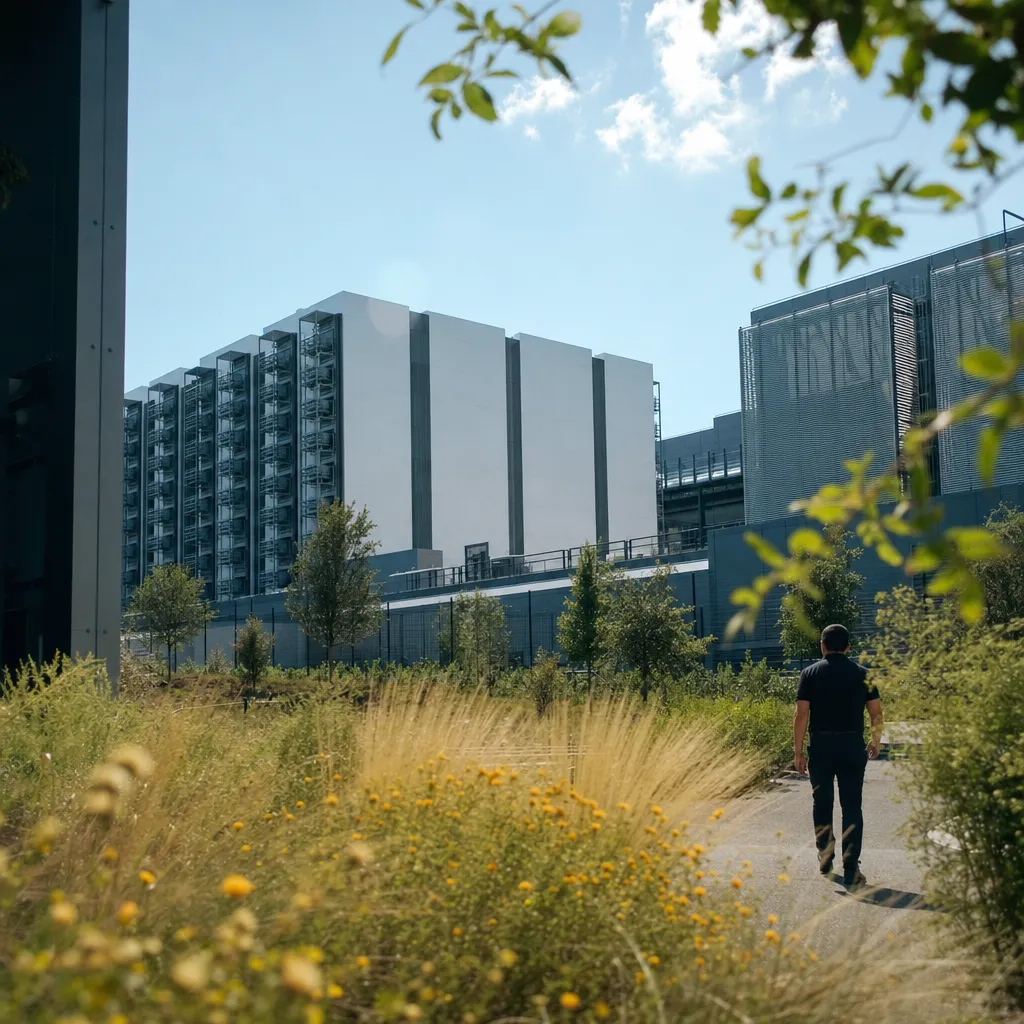
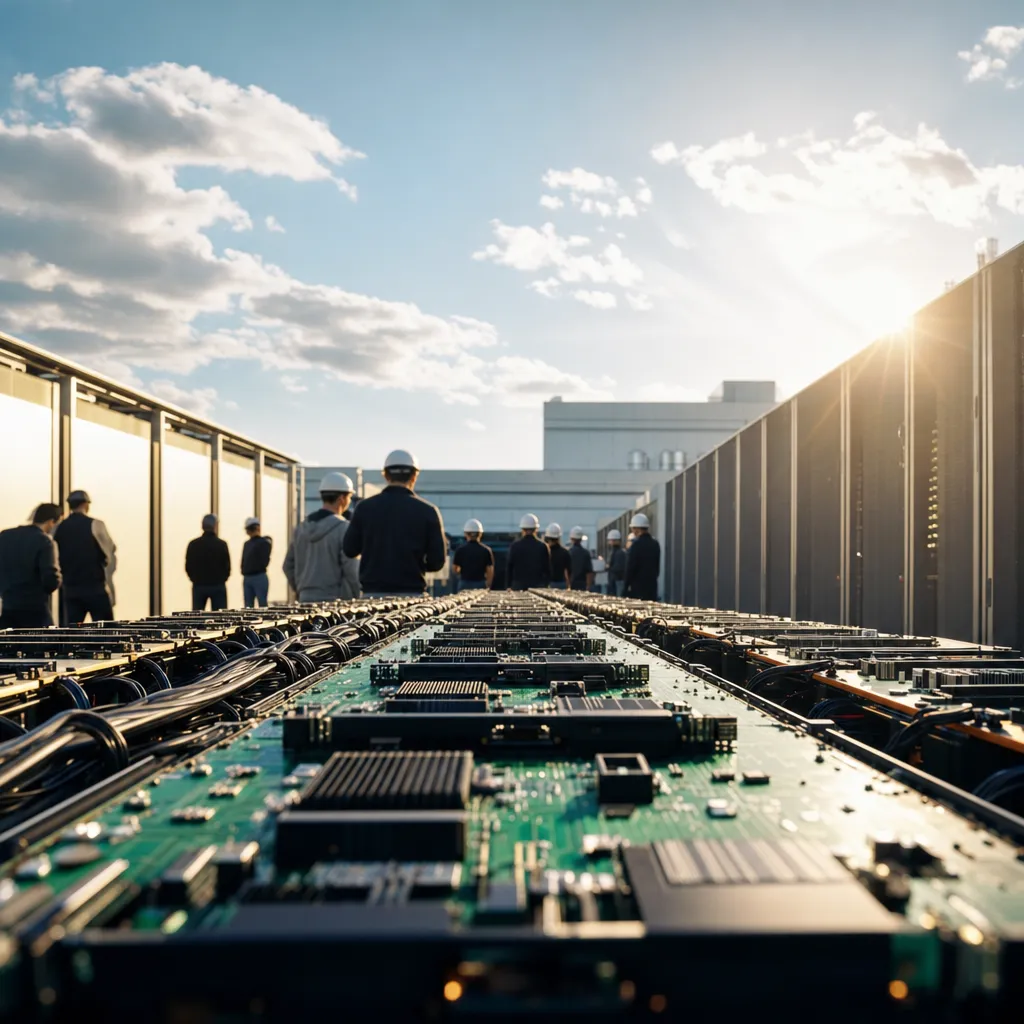
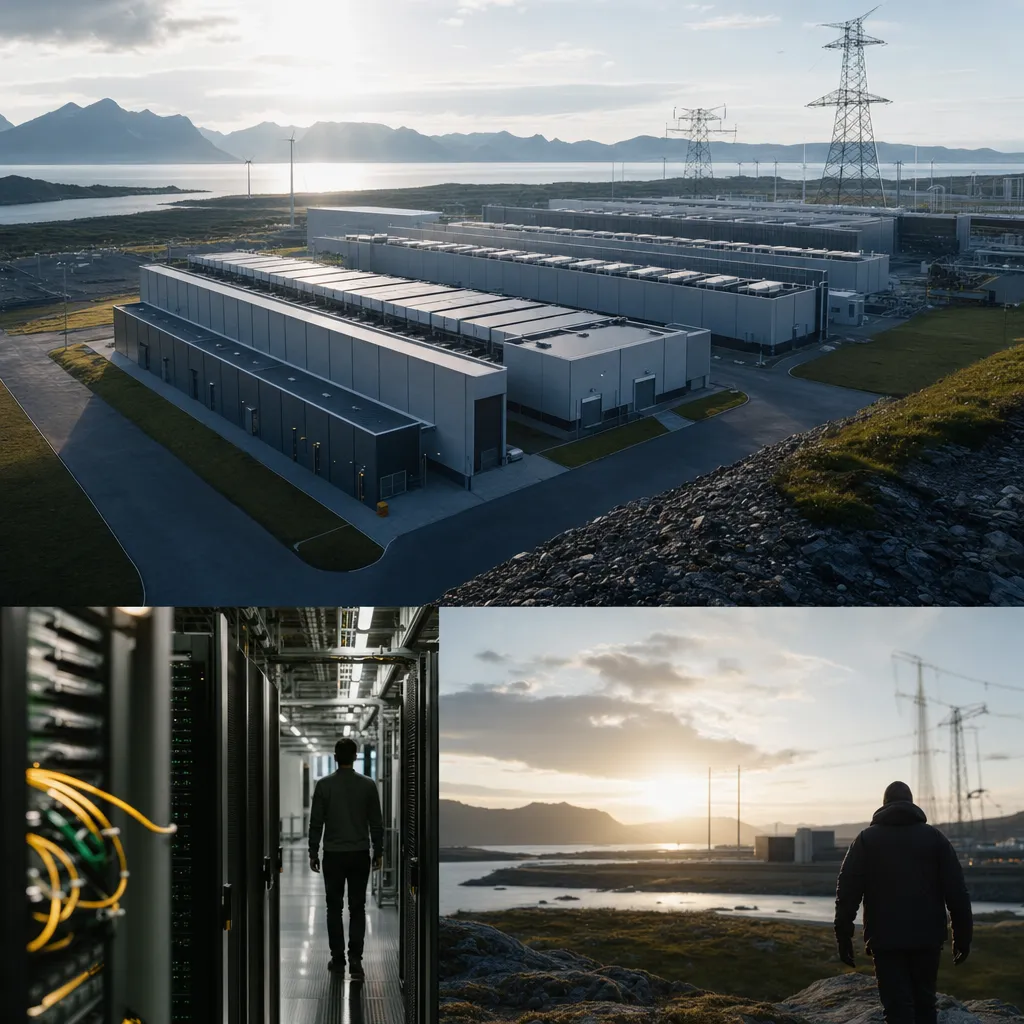
OpenAI published new data center community policies on November 5, one day after Democrats swept to congressional control — positioning itself ahead of incoming legislation targeting AI infrastructure's grid and water impacts.
OpenAI Issues New Data Center Community Policies Days After Democratic Election Wins
OpenAI published new data center community policies on November 5, 2026 — one day after Democrats swept to congressional control — positioning itself ahead of incoming legislation expected to regulate AI infrastructure's impact on local power grids and water supplies for the first time.
The timing is deliberate. A joint OpenAI-Oracle development project in Saline, Michigan had drawn vocal community opposition over strain on the regional electrical grid, turning the facility into a national flashpoint. Several incoming Democratic representatives made AI data center energy consumption a campaign issue. By publishing voluntary community policies before Congress convenes in January, OpenAI establishes a self-governance posture and shapes the baseline from which legislation will eventually depart.
What the Policies Cover
According to ABC News reporting, OpenAI's new framework addresses four areas of community concern for data center siting:
- Grid impact: Commitments to coordinate with local utility providers on grid capacity planning before construction begins
- Water usage: Public transparency requirements on water consumption for cooling systems
- Community engagement: Public meetings before siting decisions are finalized, giving communities a voice before construction is a fait accompli
- Local employment: Targets for hiring local workers during both construction and ongoing operations phases
The policies are voluntary. No enforcement mechanism is included, and there are no financial penalties for non-compliance. They apply to OpenAI's own projects and implicitly extend to development partners — most notably Oracle, which co-builds facilities with the company.
The Scale of AI's Grid Demand
The policy debate is grounded in real infrastructure pressure. AI training and inference workloads require substantially more power per square foot than traditional cloud computing. A single large-scale AI data center can draw between 100 and 500 megawatts of power — equivalent to the electricity demand of tens of thousands of homes. The IEA projected in mid-2026 that US data center power demand could more than double by 2030, with AI workloads accounting for the majority of that growth.
Water consumption compounds the grid pressure. Most large-scale data centers rely on water-based cooling systems. A major facility can consume millions of gallons of water daily — a point of conflict in drought-prone western states, and an increasingly contested resource even in Midwest communities with historically stable water supplies.
How Michigan Became the National Flashpoint
The Saline, Michigan project crystallized what had been diffuse community anxiety into a specific political fight. Local residents raised concerns about peak summer grid demand, water draw from cooling towers, and the carrying capacity of regional infrastructure for a facility of this scale. Michigan utility Consumers Energy engaged with developers, but public hearings were contentious. National coverage elevated Saline into the defining example of the data center siting conflict — and that coverage reached incoming Democratic congressional offices, where staff cited the Michigan situation in early policy documents.
Get this in your inbox.
Daily AI intelligence. Free. No spam.
Similar conflicts have surfaced in Virginia, Texas, and Iowa — the three states where data center development is most concentrated. Each incident builds political momentum for federal intervention.
What Democrats Have Pledged
Under the outgoing Republican-led Congress, AI infrastructure operated under light-touch federal governance: accelerated permitting, bonus depreciation for data center construction, and minimal community benefit requirements. Incoming Democratic committee chairs have signaled a different direction.
Priorities flagged by Democratic policy advisors and a tech policy coalition aligned with incoming leadership include:
- Rolling back bonus depreciation for new data center construction, eliminating the accelerated tax treatment that drove the recent build surge
- A federal community benefit agreement framework for facilities sited in residential or grid-constrained areas
- Mandatory pre-construction grid impact studies as a precondition for large interconnection requests from AI data center developers
- Water use disclosure mandates modeled on requirements already applied to some manufacturing and agricultural operations
That coalition published 10 priority proposals for the new Congress, with AI infrastructure governance listed among the top three.
What This Means for Developers, Utilities, and Communities
For AI developers planning data center expansion, the regulatory environment is tightening. Projects designed under the assumption of minimal oversight will face longer permitting timelines, new preconstruction requirements, and potentially higher per-facility costs if bonus depreciation is eliminated.
For utilities, mandatory grid impact studies are a double-edged development. They slow interconnection queues but create leverage to negotiate long-term power purchase agreements that justify grid upgrades — converting a regulatory burden into an investable business case. The states where AI infrastructure is concentrating — Virginia, Texas, Iowa — are also states where utility investment cases are actively being argued.
For communities near planned facilities, incoming legislation creates more negotiating surface. Whether that translates into enforceable community benefit agreements or remains aspirational language in final legislation will determine whether the policy shift produces real local outcomes.
For OpenAI, publishing voluntary policies now follows the playbook used in the data privacy era: establish voluntary standards early, shape the industry baseline, and influence what legislation eventually codifies. The risk is that Congress views voluntary policies as an insufficient response to the scale of community concern and moves directly to binding rules — with requirements that exceed what OpenAI has committed to.
As of this writing, no other major AI developer had published comparable community policies. That gap will draw scrutiny.
What to Watch
Whether incoming Democratic committee chairs treat OpenAI's voluntary policies as a legislative template — or view them as insufficient and push for binding rules with enforcement mechanisms and financial penalties. The first committee hearings on AI infrastructure governance are expected in Q1 2027.
By Hector Herrera
Did this help you understand AI better?
Your feedback helps us write more useful content.
Get tomorrow's AI briefing
Join readers who start their day with NexChron. Free, daily, no spam.