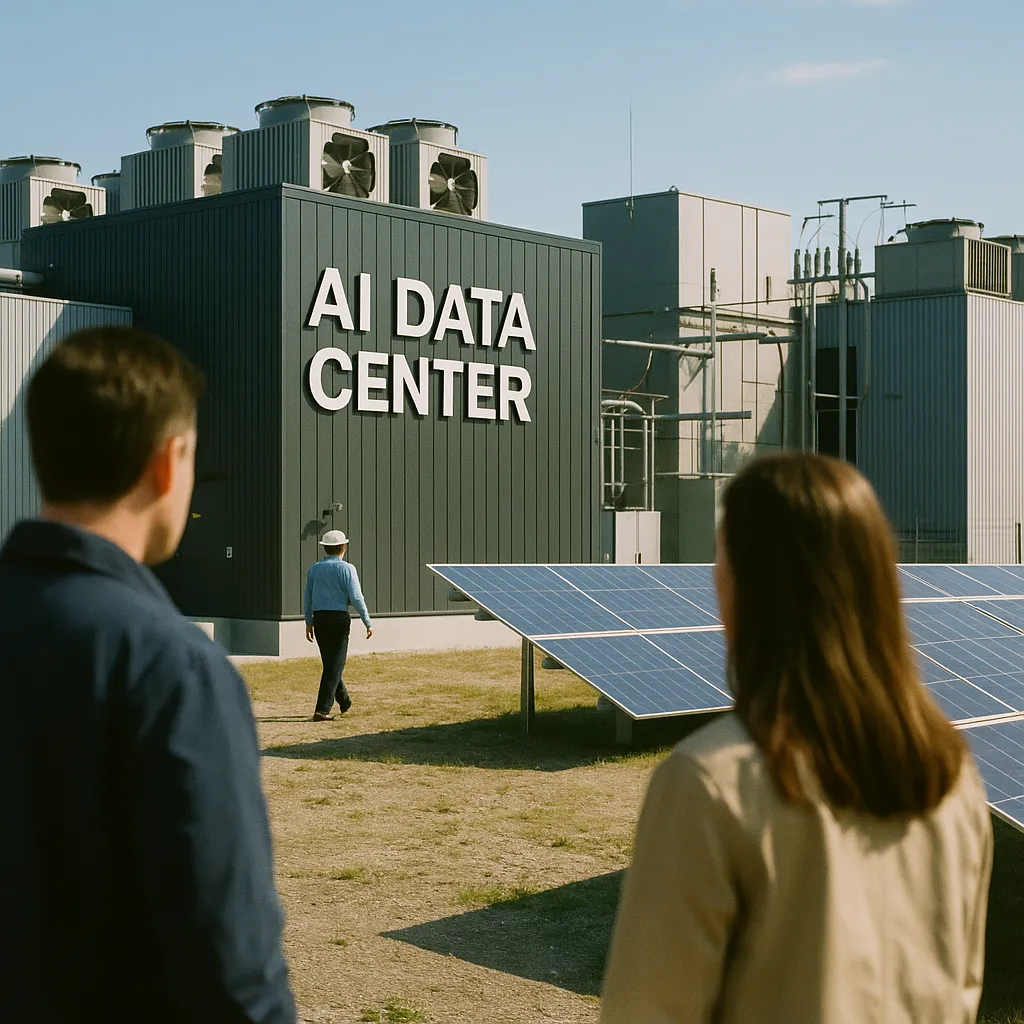
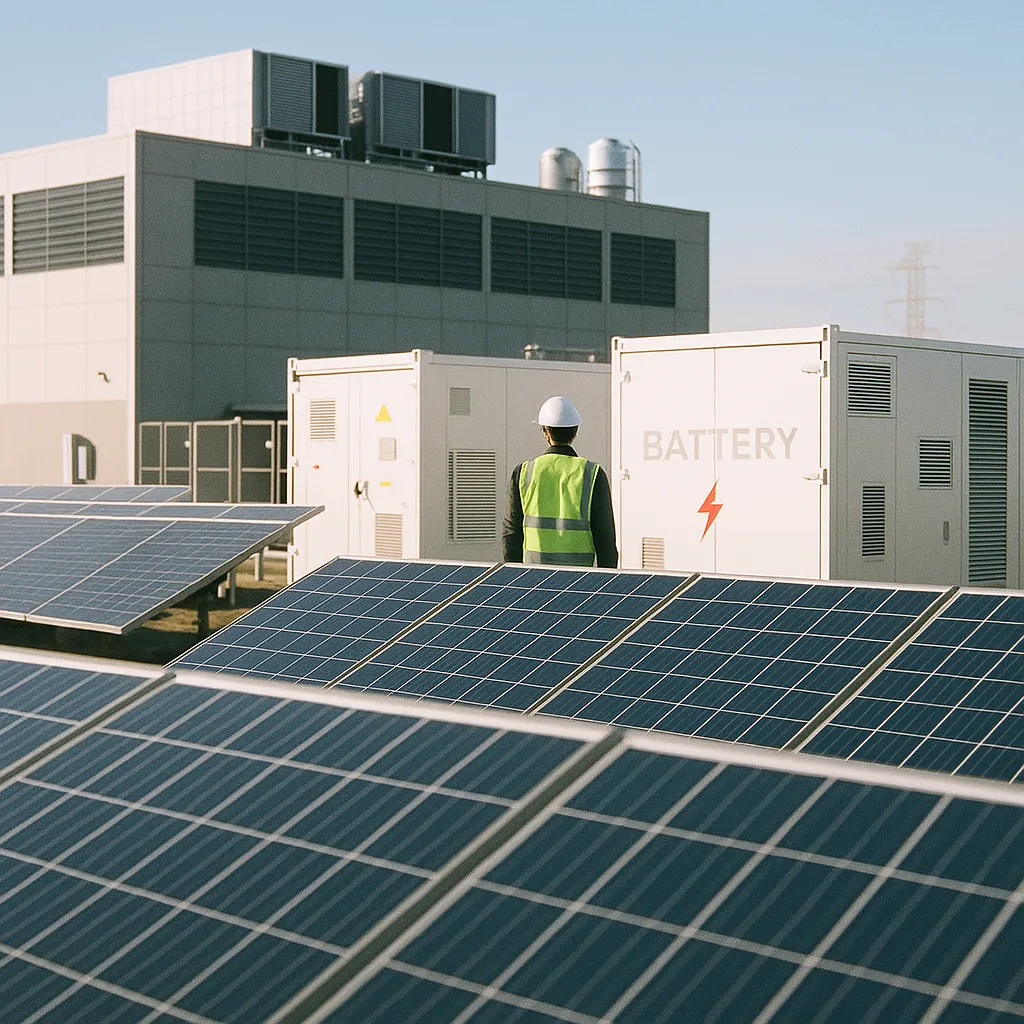
Federal regulators are expected to rule by June 2026 on who pays for AI data center grid infrastructure—a decision that will determine whether developers or ratepayers absorb billions in transmission costs.
FERC Poised to Rule on Whether AI Data Centers or Ratepayers Fund Grid Expansion
By Hector Herrera | June 17, 2026 | Energy
The Federal Energy Regulatory Commission is expected to issue a ruling by the end of June 2026 that will determine, for the first time at the federal level, whether AI data center developers must pay for the transmission infrastructure their facilities require—or whether those costs continue to be absorbed by millions of ordinary electricity customers. The decision will set a nationwide precedent for how the US power grid finances the AI era's infrastructure demands.
The immediate trigger is Docket No. RM26-4-000, a FERC proceeding examining cost-allocation rules for large electricity customers connecting to the grid. What makes it significant is the arithmetic: PJM Interconnection, the regional grid operator covering 13 states and Washington D.C., held its latest capacity auction and attributed 40% of its $16.4 billion in total costs to data center demand. That $6.5 billion share of grid infrastructure costs flows directly onto the bills of residential and small-business customers who didn't choose to live next door to a hyperscale campus.
Why This Ruling Matters Now
Federal regulators have long operated on a cost-socialization model for grid infrastructure—major transmission investments are spread across all ratepayers rather than charged directly to the entity that triggered the upgrade. That model made sense when load growth was gradual and broadly distributed. It no longer fits when a single AI data center complex can draw 500 megawatts or more—roughly the output of a mid-sized natural gas plant—and require dedicated transmission infrastructure to deliver it.
The scale is staggering. A hyperscale AI campus can demand more electricity than a medium-sized American city. When companies like Microsoft, Google, Amazon, and Meta announce multi-billion-dollar AI infrastructure buildouts, the downstream effect lands on grid operators that must plan, permit, and fund the supporting transmission network—a process that typically takes 5 to 10 years. AI compute demand is scaling quarterly. The mismatch between grid construction timelines and AI deployment speed is already filling interconnection queues with projects that may wait years for a connection approval.
FERC's RM26-4-000 docket is asking the foundational question beneath that mismatch: under a cost-causation framework—where costs follow their source—should data center operators bear the capital cost of the infrastructure they specifically require?
Get this in your inbox.
Daily AI intelligence. Free. No spam.
What Each Side Is Arguing
Data center developers and their cloud-provider clients have filed comments with FERC arguing that existing interconnection frameworks are adequate. Their position: imposing new direct cost-allocation rules would increase capital costs for AI infrastructure projects, slow construction timelines, and burden an industry that serves the broader public interest in AI development.
Utility companies and consumer advocates are pushing back with equal force. Their core argument is straightforward: if a data center requires a new 230-kilovolt substation and fifty miles of transmission line that wouldn't otherwise exist, the entity that triggered that need should pay for it—not the family whose power bill arrives monthly. Several state utility commissions have filed formal comments before FERC supporting a cost-causation standard.
The ruling will directly affect:
- Data center siting economics. If developers must internalize transmission costs, the financial calculus for location decisions shifts. States with existing transmission capacity become more attractive; greenfield sites in rural areas become more expensive.
- Residential electricity bills. Customers in PJM's territory—including Pennsylvania, Ohio, Illinois, and New Jersey—are currently absorbing a portion of the $6.5 billion data center share of grid costs. A favorable ruling for consumer advocates would redirect those charges.
- Interstate competition for AI investment. States aggressively courting hyperscaler campuses may face pressure to shield developers from new cost burdens, potentially through utility rate structures or direct incentives—creating a subsidy race at the state level.
- Other grid operators. FERC's decision will influence parallel proceedings at MISO (Midcontinent) and CAISO (California), where similar cost-allocation disputes are developing as data center demand grows in those regions.
The Interconnection Queue Problem
One signal that the status quo isn't working: the length of interconnection queues. Grid operators process requests from entities wanting to connect new generation or large loads to the transmission network. In 2023, the US had over 2,000 gigawatts of projects—mostly solar, wind, and storage, but increasingly data centers—waiting in interconnection queues. Processing those requests takes years, not months.
FERC has already taken steps to accelerate interconnection timelines through separate rulemaking. The RM26-4-000 proceeding sits alongside those efforts as the complementary question: once you streamline the process, who funds the physical infrastructure the process approves?
What to Watch
FERC has signaled an end-of-June 2026 decision on RM26-4-000. Whatever the commission rules, expect immediate legal challenges. If FERC shifts costs toward data center developers, industry groups will file for review in federal appeals court. If FERC maintains socialized cost allocation, consumer advocates and state utility commissions are likely to challenge the decision.
The ruling will also land at a politically charged moment. The Trump administration has emphasized AI infrastructure buildout as a national competitiveness priority, and FERC commissioners are politically appointed—the composition of the current commission will influence which direction the cost-allocation scales tip. State utility regulators in Virginia (which hosts more US data center capacity than any other state), Georgia, and Texas are watching closely. Their own rate proceedings will need to align with whatever framework FERC establishes.
The end-of-June timeline is tight. The grid investment that follows won't be.
— Hector Herrera
Did this help you understand AI better?
Your feedback helps us write more useful content.
Get tomorrow's AI briefing
Join readers who start their day with NexChron. Free, daily, no spam.