Anthropic committed $3.4 billion to Texas supplier OnePWR Solutions for 1.7 gigawatts of gas-fired generation — the largest known single power-equipment deal by any AI company.
Anthropic has committed $3.4 billion to buy 1.7 gigawatts of gas-fired power generation capacity — the largest known single power-equipment purchase ever made by an AI company. The deal reveals how AI labs are bypassing overtaxed electric grids by building their own private energy infrastructure from scratch.
The September agreement, reported Saturday by the Financial Times and confirmed by Bloomberg, ties Anthropic to Texas-based OnePWR Solutions. The contract covers not just the generators themselves but engineering, construction, and installation — a turnkey arrangement that lets Anthropic stand up generation capacity without depending on utility timelines.
The Numbers Behind the Deal
$3.4 billion is a significant commitment for a company that completed a $2.5 billion Series E funding round less than a year ago. The deal covers:
- 1.7 gigawatts of gas-fired generation capacity — enough to power roughly 1.3 million average American homes
- Engineering, construction, and installation services, not just equipment supply
- Deployment tied to Anthropic's data center expansion roadmap
For context, 1.7 GW exceeds the total installed capacity of several small U.S. states. Applied to AI training and inference, it supports the kind of frontier model runs that consume hundreds of megawatts in a single cluster.
Why AI Companies Are Buying Their Own Generators
The U.S. electric grid cannot keep up with AI data center demand. Interconnection queues — the waiting lists utilities use to approve new power connections — now run five to ten years in many regions. That timeline is incompatible with the competitive pressure to train and deploy frontier models.
Get this in your inbox.
Daily AI intelligence. Free. No spam.
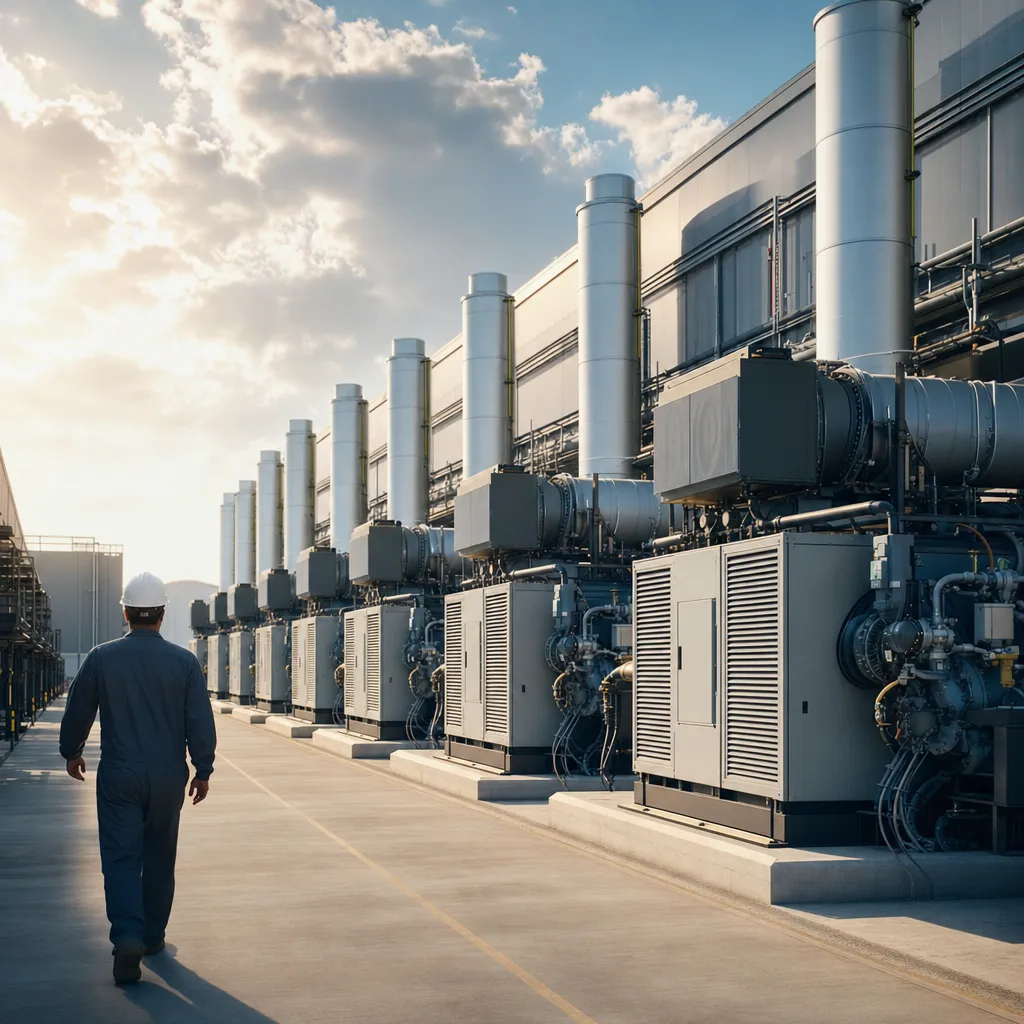
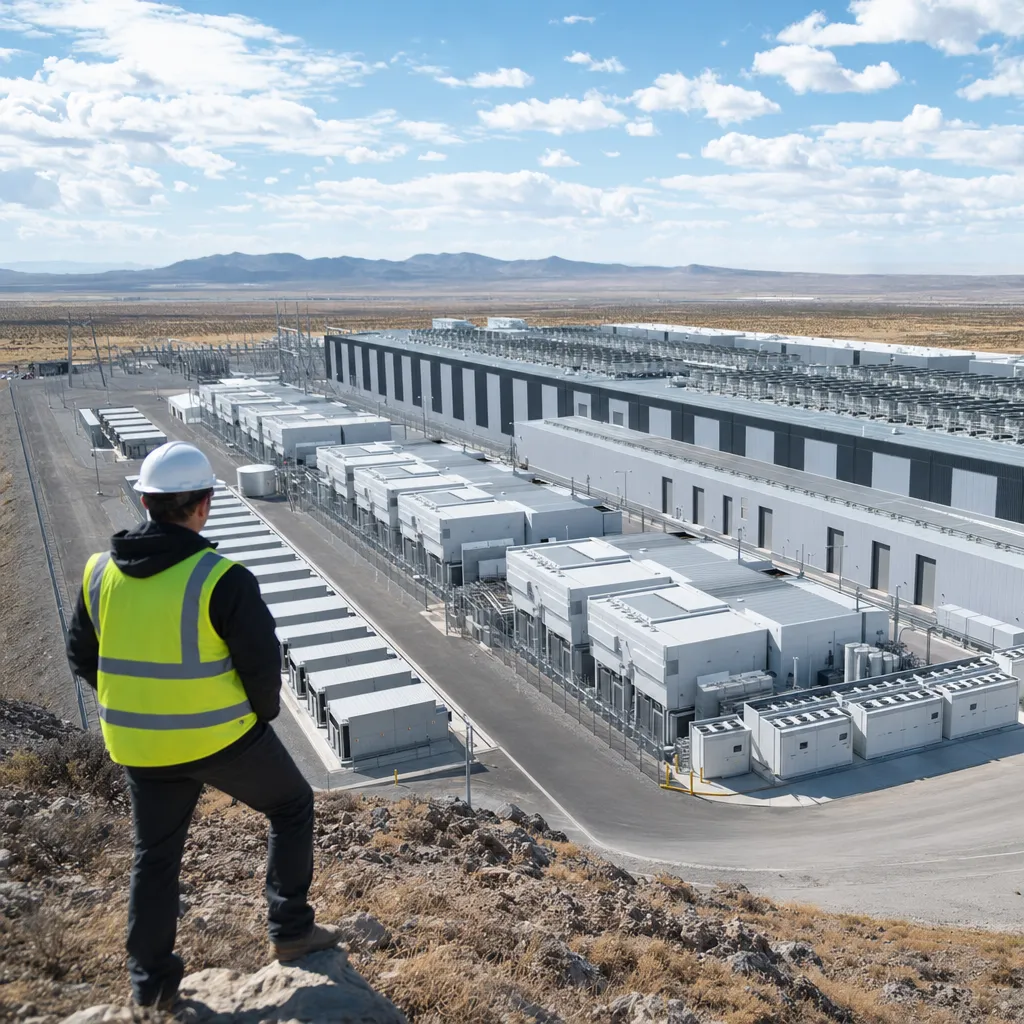
The workaround: AI companies build behind-the-meter generation, meaning power plants located on or directly adjacent to their data center campuses. These installations bypass the public grid entirely for most operations. Anthropic is not the first to try this — Microsoft has explored similar approaches, and Amazon Web Services has pursued direct power agreements — but $3.4 billion is a new high-water mark for a single transaction.
Gas generators were chosen over alternatives like diesel (too expensive at scale), nuclear (long lead time), or renewables alone (intermittent without storage) for one practical reason: they can be ordered, delivered, and started within roughly 18 to 24 months versus a decade-plus for new grid interconnection.
What This Means for the AI Energy Race
For Anthropic: The deal locks in power for a substantial portion of its compute expansion without depending on utilities. It also creates a fixed cost structure — $3.4 billion spread over the contract — that management can model against expected revenue from Claude API and enterprise contracts.
For the energy sector: A single AI lab committing $3.4 billion to one Texas supplier is a signal that bespoke power infrastructure is becoming standard for frontier AI, not a workaround. OnePWR Solutions, previously a mid-tier industrial equipment supplier, is now a critical vendor to one of the five most valuable AI companies in the world.
For climate commitments: Anthropic has stated carbon-neutrality goals. Gas-fired generation produces roughly 0.4 kg of CO₂ per kilowatt-hour — cleaner than coal but still a significant emissions footprint at 1.7 GW scale. The company will need a credible offset or transition-to-renewables plan to reconcile this deal with those commitments.
For competitors: OpenAI, Google DeepMind, and Meta all face the same grid bottleneck. If Anthropic's model — private generation, direct contracts, bypass the queue — proves faster than grid interconnection, expect similar announcements from other labs within 12 months.
What to Watch
The first installations are expected to come online in late 2027. Watch for Anthropic's response to questions about emissions accounting and whether this triggers similar announcements from OpenAI or Google, both of which have announced major data center expansions with no clear power sourcing plan at comparable scale.
Did this help you understand AI better?
Your feedback helps us write more useful content.
Get tomorrow's AI briefing
Join readers who start their day with NexChron. Free, daily, no spam.