A Student Voice survey finds college students are adopting AI tools while worrying about dependence, academic integrity, and career disruption — and broadly frustrated by institutions that still haven't published coherent AI use policies.
College Students Are Using AI — and They're Frustrated Their Schools Won't Tell Them the Rules
By Hector Herrera | June 14, 2026 | NexChron.com
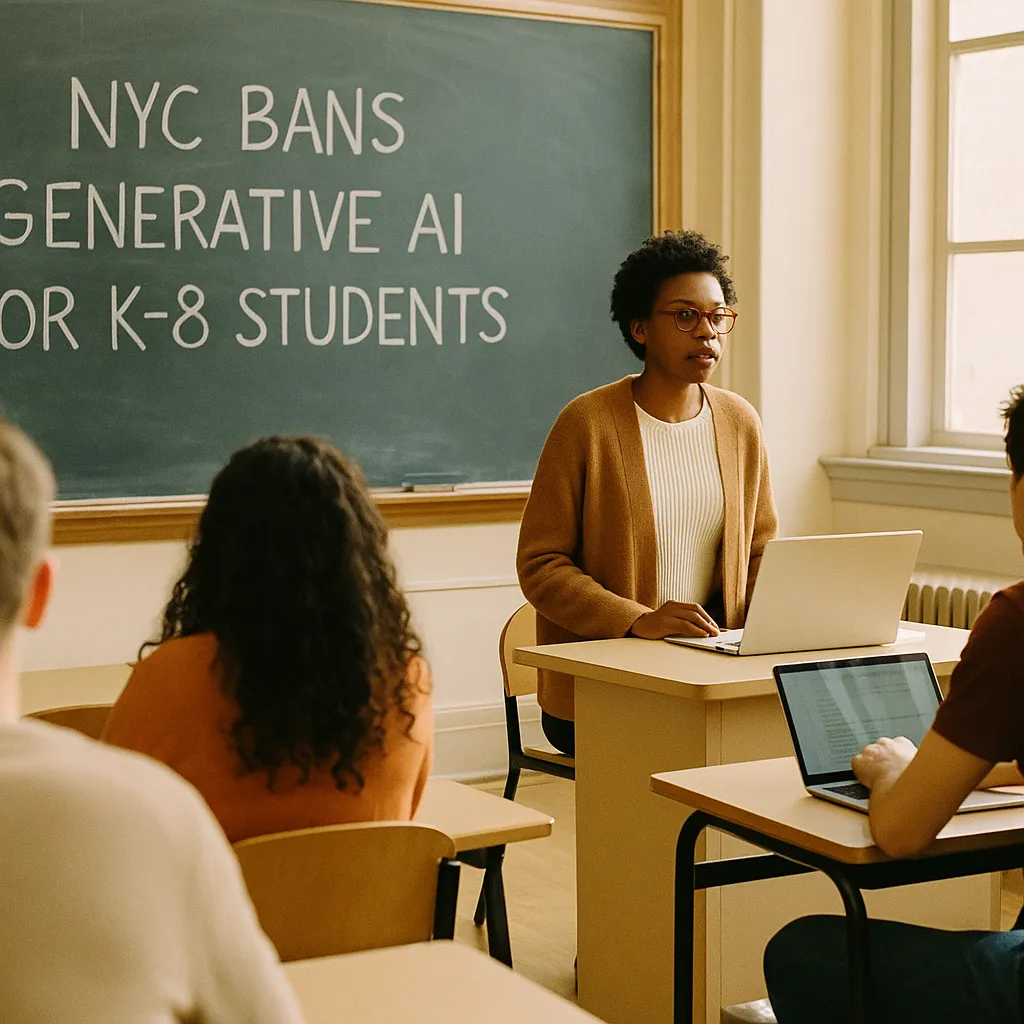
American college students are adopting AI tools at significant rates — and large numbers of them are simultaneously worried about what those tools are doing to their learning, their career prospects, and their integrity. A Student Voice survey published by Inside Higher Ed finds that students are not asking their schools to ban AI or to mandate it. They are asking for clear guidance, and they are mostly not getting it.
The timing has cultural weight. Commencement season 2026 brought a wave of AI-skeptical speeches — faculty and speakers urging graduates to think critically about the tools reshaping their fields. Students cheered those speeches and went home to use Claude or ChatGPT to finish their assignments. The contradiction is not hypocrisy; it reflects a genuine policy vacuum that universities have failed to fill.
What Students Actually Think
The Student Voice survey is worth reading carefully because it breaks down attitudes in ways that complicate the dominant narrative — that young people are enthusiastic AI adopters without reservations.
The picture that emerges is more complicated:
- A significant portion of students have tried or regularly use AI tools for coursework
- But a substantial cohort worries about dependence — specifically, that using AI for writing and research is degrading skills they were supposed to be developing
- Many express concern about career disruption — not abstractly, but concretely about their specific field of study
- Students in creative fields (writing, design, music, visual art) show the highest rates of ambivalence — they see AI as simultaneously a tool they need to know and a threat to the work they trained to do
- Academic integrity concerns are reported by students themselves — not just as an external rule to follow, but as a genuine internal conflict about what counts as their own work
The single most consistent complaint across the survey: their institutions have not told them what the rules are. Professors have different policies. Some departments have blanket bans. Others encourage AI use. Students in the same program get contradictory guidance depending on which class they're sitting in.
The Policy Vacuum Is the Institution's Failure
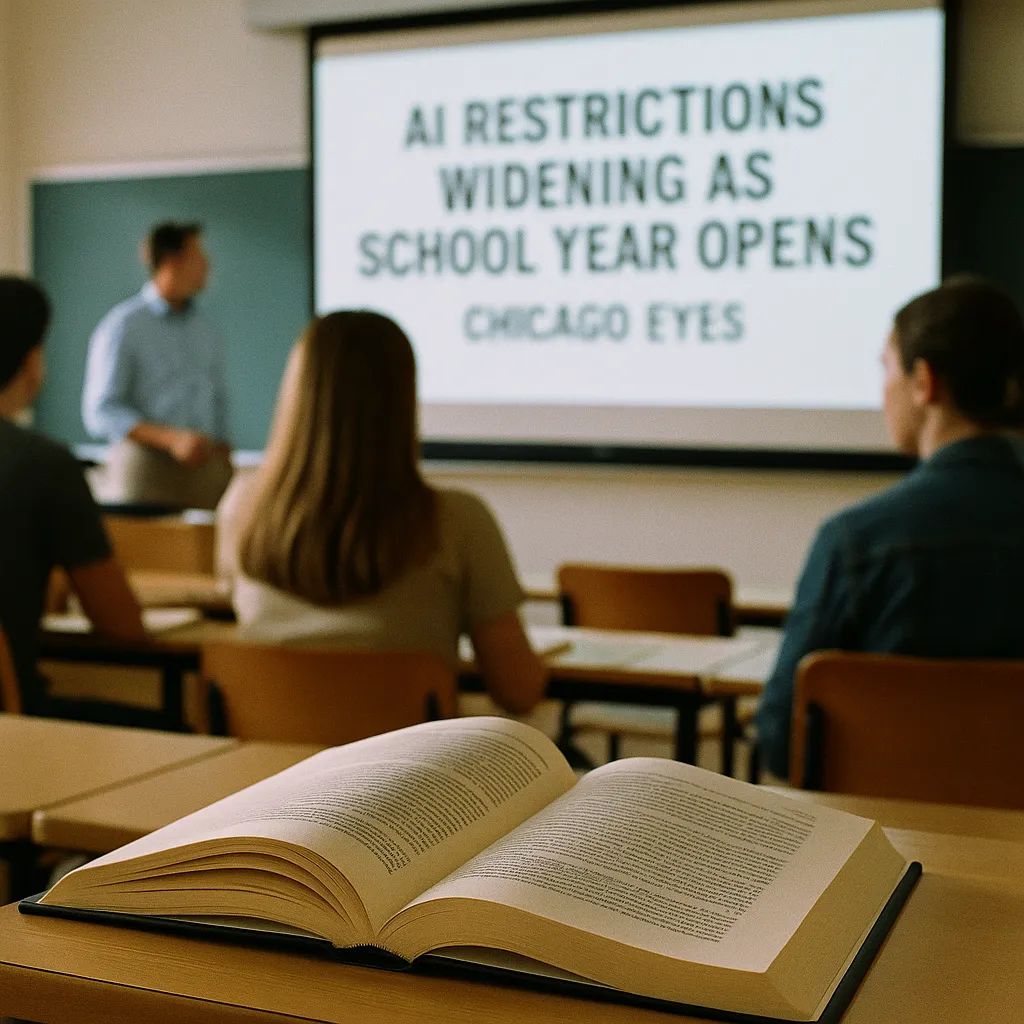
Universities have had three years since ChatGPT's public launch to develop AI use policies. A meaningful number have still not done it — or have issued guidelines so vague as to be functionally useless.
The most common institutional response has been to add a line to syllabi that says something like "AI use must be disclosed to your professor" — which shifts the burden to individual faculty members and produces exactly the inconsistency students are complaining about.
Get this in your inbox.
Daily AI intelligence. Free. No spam.
This is an institutional governance failure, not a student culture problem. Students who want to use AI responsibly cannot do so when the institution has not defined what responsible use looks like. Students who want to avoid AI to protect their own skill development cannot get credit for that choice when there is no framework that values it. Both groups are left navigating individually what should be a shared institutional standard.
The universities that have published clear, coherent AI policies — some community colleges and several mid-sized four-year institutions — report far less student confusion and faculty conflict. The policy does not need to be either permissive or restrictive; it needs to exist and be applied consistently.
The Commencement Speech Contradiction
This year's graduation season produced an unusual number of AI-skeptical commencement addresses. Writers, artists, scientists, and at least one prominent tech executive urged graduates to resist the temptation to outsource their thinking to AI — to do the hard cognitive work themselves.
Students responded positively to those speeches. The applause was real. But several students interviewed by Inside Higher Ed noted the irony: they had used AI to prepare for the same ceremony. Others noted that their career advisors had simultaneously told them that AI fluency was a requirement for the jobs they were applying for.
The commencement speech narrative and the career preparation narrative are in direct tension, and universities have not resolved it. Students are getting told two things simultaneously: AI is a threat to authentic human work, and AI fluency is a required professional skill. Both may be true. But institutions have an obligation to help students navigate that tension rather than leaving them to triangulate it on their own.
What Students Say They Want
The Inside Higher Ed piece is useful because it doesn't just report the skepticism — it reports what students say would actually help them:
- Consistent policy across the institution, not per-professor variation
- Explicit guidance on what counts as AI use — is using Grammarly AI use? What about using AI for research suggestions versus AI for drafting prose?
- Curriculum that teaches AI critically — not just "here are the tools," but "here is how to evaluate AI outputs, here is where models fail, here is what you still need to be able to do without them"
- Transparency about how AI is being used in their field — students want to know what AI is actually doing in the industry they're entering, not just hear abstract concern or abstract enthusiasm
These are reasonable asks. They are not requests for bans. They are requests for institutional seriousness — the kind that has been largely absent.
The Long-Term Stakes
The universities that navigate this well will graduate students who can use AI as a professional tool while retaining the underlying skills that make professional judgment possible. The universities that don't — either by banning AI so broadly that students learn to evade rather than engage, or by saying nothing and letting confusion reign — will graduate cohorts with patchy AI literacy and unclear professional preparation.
The window for shaping AI norms on campus is narrowing. Every semester without clear policy is a semester where students and faculty are inventing their own rules, inconsistently, in the absence of institutional guidance. Some of those informal norms will be functional. Many will not be.
What to Watch
Watch which accrediting bodies and university systems move first on formal AI use standards that apply at the institutional level rather than leaving it to individual faculty. The California State University system and several Big Ten institutions have working groups underway. Their policies, when published, are likely to become models that smaller institutions adopt — for better or worse.
Sources: Inside Higher Ed
Did this help you understand AI better?
Your feedback helps us write more useful content.
Get tomorrow's AI briefing
Join readers who start their day with NexChron. Free, daily, no spam.