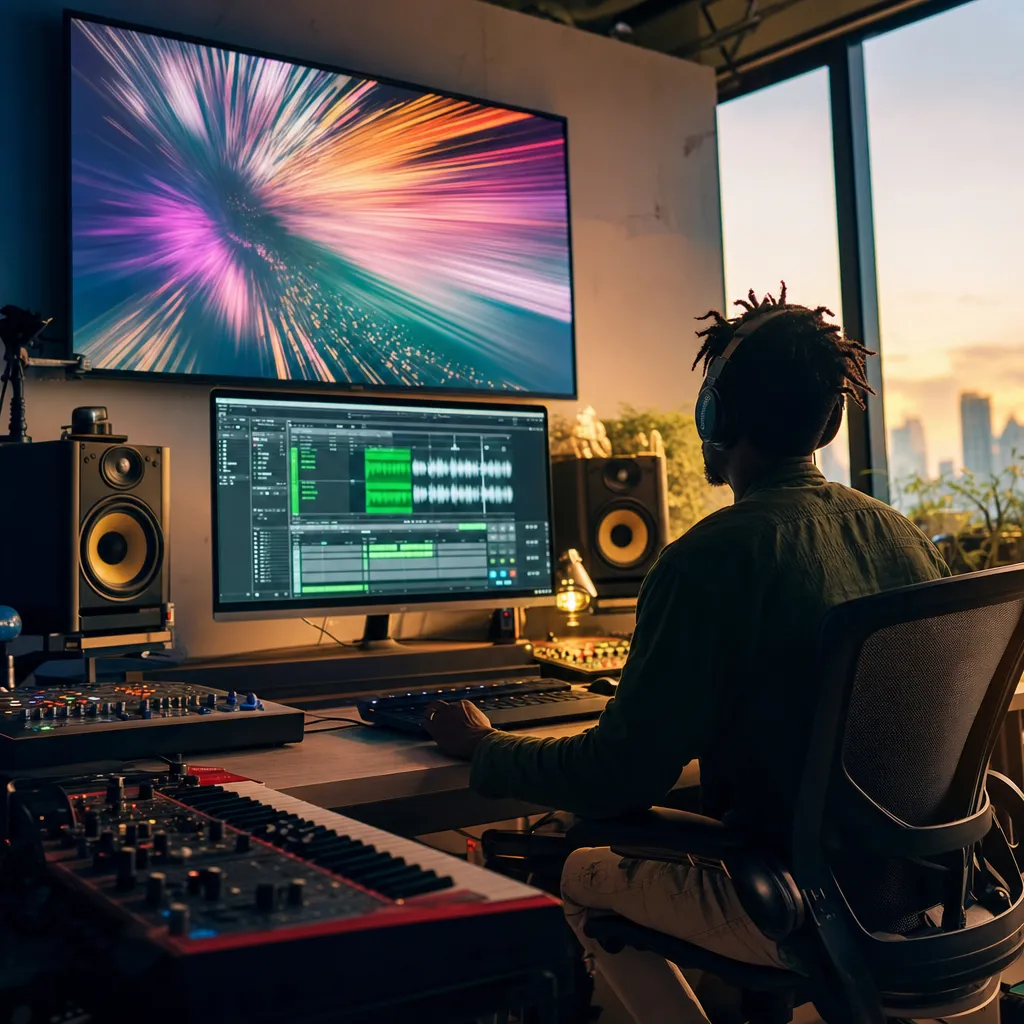
The inaugural AI Music Awards honored artists who created songs with AI — with winners defending AI-assisted music as a skilled craft — even as UMG and Sony sue the platforms that made those songs possible.
The first U.S. AI Music Awards ceremony took place this week, honoring artists who created songs using artificial intelligence while active lawsuits from Universal Music Group, Sony, and Eminem's publisher attempt to shut down the platforms that made those songs possible. The ceremony crystallized an industry split that has been building since AI music generators went mainstream: some artists see AI as a new creative instrument; the major labels see an existential copyright threat.
The inaugural event, reported by The Star, honored winners across categories for songs created at least partially with AI tools. Award recipients pushed back on dismissals of AI-assisted music as a lesser art form, arguing that effective AI music creation requires real artistic judgment: selecting and refining prompts, iterating through hundreds of generated variations, mixing AI-generated stems with live instrumentation, and making aesthetic decisions at every step. Several winners cited 20-40 hours of work per finished track.
The State of AI Music in 2026
AI-generated and AI-assisted music now accounts for 40% of tracks uploaded to major streaming platforms, according to industry data cited at the event. That figure covers everything from fully synthetic tracks generated with no human musical input to songs where AI contributed a single element — a generated chord progression, a synthesized vocal layer, an AI-mixed master.
The 40% share does not reflect 40% of listening. AI-generated tracks are vastly overrepresented in upload volume relative to streams, in part because the marginal cost of generating a track is near zero, which floods platforms with low-quality content. But the top of the AI-assisted music market is producing work that listeners cannot reliably distinguish from traditionally produced music — a threshold the industry reached faster than most music executives predicted.
The leading AI music platforms include:
- Suno — text-to-song generation, currently defending against UMG and Sony litigation
- Udio — similar capabilities, also named in label lawsuits
- Stability Audio and open-weight alternatives used by producers for specific stem generation
The Legal Backdrop
The AI Music Awards ceremony took place against an active legal assault on the platforms that enable AI music creation. Universal Music Group and Sony Music have filed suit against Suno and Udio, alleging that training these models on copyrighted recordings without license constitutes infringement. Eminem's publisher has filed parallel claims.
Get this in your inbox.
Daily AI intelligence. Free. No spam.
The cases are testing foundational questions about copyright law that courts have not definitively resolved:
- Does training an AI on copyrighted material require a license?
- If a model can produce output that sounds like a specific artist's style, does that constitute infringement even without copying specific audio?
- Who owns the copyright in an AI-generated track — the platform, the prompter, or no one?
Suno has argued in court filings that its training methodology constitutes fair use — the same defense Google successfully used for book scanning in the Authors Guild cases. The music industry argues that the economic harm to rights holders from AI music is direct and massive, distinguishing the cases from the Google Books precedent.
What the Awards Represent
The AI Music Awards are partly a cultural statement and partly a commercial signal. By creating a formal recognition structure for AI-assisted music, the organizers are:
- Legitimizing the genre — peer recognition has historically been how new musical forms gain cultural standing
- Building a creator community around AI music practice, with its own aesthetic standards and competitive incentives
- Pressuring platforms to invest in artist-facing tools, knowing that competitive awards categories will drive quality improvement
- Making a legal argument — if AI-assisted music is a recognized creative practice that requires skill and produces economically valuable work, that context matters in fair use analysis
Award winners at the ceremony were notably not anonymous bedroom producers — they included working musicians who have released on independent labels, sync composers who place music in film and TV, and producers who have collaborated with signed artists.
What This Means for the Industry
For artists: The ceremony establishes that AI-assisted music is a career path, not a hobby niche. For independent artists who cannot afford full session musician rates, AI tools are increasingly a production equalizer. The question is whether major label distribution and sync licensing gatekeepers will accept AI-assisted content — most currently don't have formal policies.
For the major labels: Their legal strategy faces a timing problem. Litigation takes years; AI music adoption is accelerating on a monthly timescale. Even a legal victory that shuts down Suno and Udio would not reverse 40% AI upload share — it would shift demand to open-weight models and offshore platforms outside U.S. jurisdiction.
For streaming platforms: Spotify, Apple Music, and YouTube Music have added AI-disclosure metadata fields but have not moved to filter or demote AI content. The more pressing concern for platforms is using AI detection to prevent fraud — fake streams generated for catalog manipulation — rather than gatekeeping artistic AI use.
What to Watch
The Suno/Udio lawsuits are the most consequential pending decisions in the AI music space. A ruling on fair use — expected no earlier than 2027 — will either green-light or significantly complicate the AI music platform business model. In the meantime, the AI Music Awards ceremony will grow: the first year had a few hundred submissions; organizers project exponential growth in year two as awareness spreads.
Did this help you understand AI better?
Your feedback helps us write more useful content.
Get tomorrow's AI briefing
Join readers who start their day with NexChron. Free, daily, no spam.