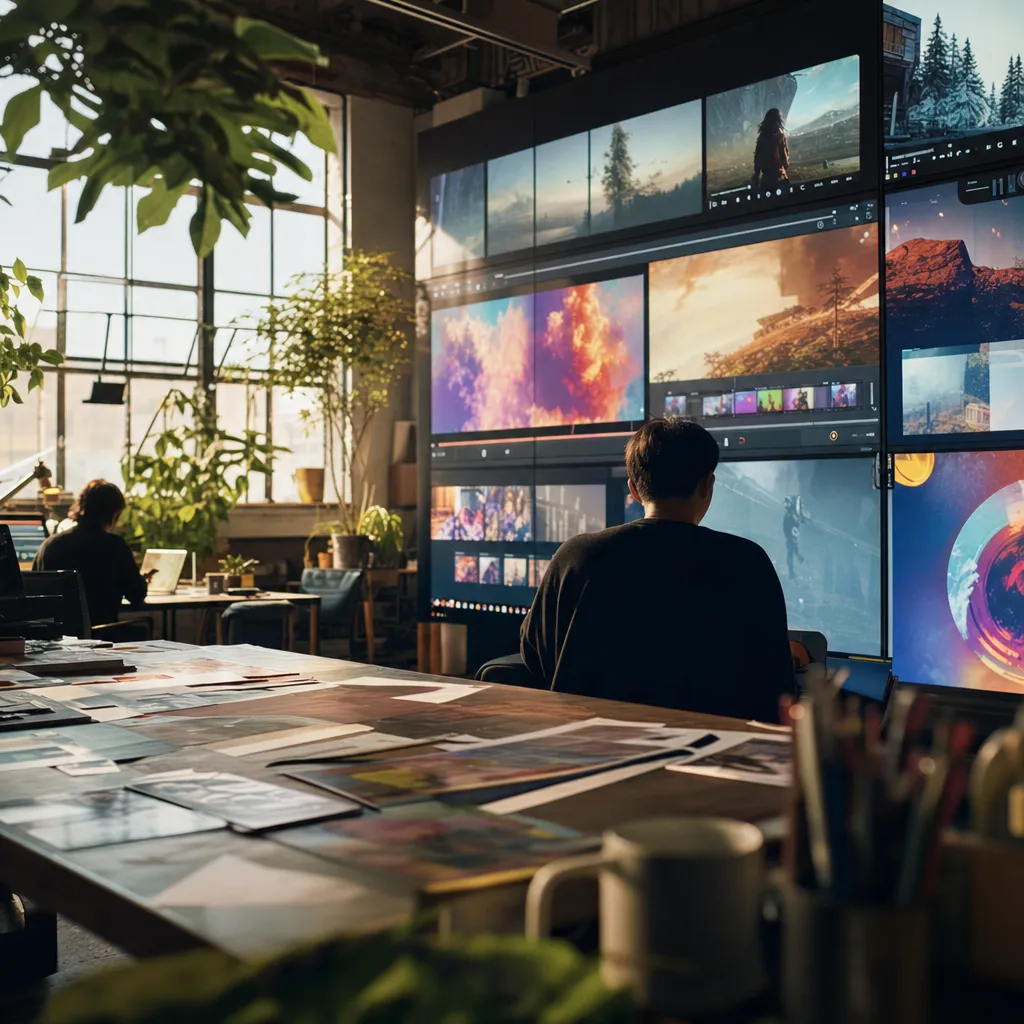
Adobe shipped AI video generation, music synthesis, audio cleanup, and agentic editing workflows directly into Premiere Pro at MAX 2026, eliminating the round-trip to third-party AI tools that has kept AI on the margins of professional video production.
Adobe shipped AI video generation, music synthesis, audio cleanup, and agentic editing workflows directly into Premiere Pro at MAX 2026, eliminating the round-trip to third-party AI tools that has kept AI on the margins of professional video production. The integration positions Adobe as the production layer for AI-assisted media work — not a competitor to AI video platforms, but the platform that absorbs them.
For editors and studios that live inside Premiere Pro, this is the shift that moves AI from "interesting side tool" to "it's in your timeline now."
What Adobe Announced at MAX 2026
Digital Production's coverage of MAX confirms four AI capabilities now native to Premiere Pro's interface:
- AI video generation — generate new footage from text prompts, extend existing clips, or fill edit gaps, powered by Adobe Firefly Video inside the Premiere timeline
- AI music synthesis — create original background scores matched to scene length, pacing, and mood without licensing tracks or working with composers on deadline-driven projects
- AI audio cleanup — isolate dialogue, remove background noise, and enhance vocal clarity in a single automated pass, eliminating a full editing stage for broadcast and podcast teams
- Color Mode — an AI-driven color grading system that analyzes a reference clip and applies consistent grading across an entire edit, reducing what previously took colorists hours to minutes
Adobe also previewed agentic production workflows — a feature that lets editors issue multi-step instructions to Premiere as if directing an assistant. Tell it to cut a 30-second highlight reel from an hour of footage, match it to a generated score, and apply a specific color grade, and the agent sequences, times, and renders without manual intervention at each step.
The agentic workflow is a preview, not a generally available feature. But its demonstration confirmed Adobe is building toward editing software that can complete multi-step production tasks autonomously.
Why Native Integration Changes the Workflow
AI video tools — Runway ML, Sora, Kling, Pika — have operated outside the production workflow. Editors had to export footage to those platforms, generate or enhance it, then re-import the results into their timeline. That round-trip added hours to deadlines and introduced asset management complexity that professional productions couldn't absorb at scale.
By embedding these capabilities inside Premiere, Adobe eliminates the round-trip. The timeline stays intact. Versioning stays in the native project. Collaboration with other Adobe Creative Cloud tools — After Effects, Audition, Photoshop — remains unbroken.
Get this in your inbox.
Daily AI intelligence. Free. No spam.
For advertising agencies handling hundreds of campaign variants on tight turnarounds, that workflow continuity is worth more than any single AI capability. The agencies that have piloted AI tools in production already know the friction point wasn't the AI itself — it was moving assets in and out of their established systems.
Who This Affects Most
Advertising and brand agencies are the near-term beneficiaries. AI-generated B-roll and synthetic background music eliminate two of the most expensive and time-consuming production steps on campaign turnarounds. A team that needed a week to source, license, and integrate supplemental footage can now generate it on-demand.
Broadcast and news organizations benefit from AI audio cleanup, which removes manual processing from live broadcast re-edits. For 24-hour news operations running multiple re-cut versions of the same story, automated dialogue isolation and noise removal reduce post-production headcount requirements.
Independent creators and small studios gain the most structural change. These tools were previously locked behind enterprise AI subscriptions or required dedicated specialists to operate. Inside Premiere Pro, they're accessible with an existing Creative Cloud subscription.
The Competitive Context
Runway ML raised over $300 million in 2025 to build AI-first video production software from the ground up. Sora and Kling established consumer and prosumer benchmarks for AI video quality. Each represented a potential escape route from the Adobe ecosystem.
Adobe's answer: don't compete on the outside, absorb the competition into the platform you already own. The company ran the same play with generative image fill in Photoshop, which arrested the migration toward standalone generative image tools among professional designers.
Whether the strategy works for video depends on how well Adobe's Firefly Video model performs relative to dedicated AI video platforms. Early assessments suggest it lags behind Runway and Sora on complex motion generation, but the tradeoff — staying inside Premiere's established, integrated workflow — is likely acceptable for most professional production contexts where deadline consistency matters more than cutting-edge output quality.
What to Watch
Adobe faces two near-term tests.
First, content provenance. California's AI law and emerging EU requirements mandate that AI-generated content be trackable and disclosable. How Adobe implements Content Authenticity Initiative (CAI) tags on Firefly-generated footage in production workflows will determine whether these tools are legally viable in regulated production contexts, including news, advertising in the EU, and government contracts.
Second, the agentic feature's production release timeline. The holiday advertising season — in full force from mid-November — is the first real deadline pressure test for AI-accelerated production. Studios deploying these tools to produce campaign variants at scale will reveal where the current capabilities break down under production conditions.
If agentic editing ships as a stable release before Q1 2027, Adobe's claim to be the production layer for AI-assisted media becomes structurally defensible. If the preview lingers, standalone AI video platforms have more runway to establish alternative workflow habits among the next generation of editors.
Did this help you understand AI better?
Your feedback helps us write more useful content.
Get tomorrow's AI briefing
Join readers who start their day with NexChron. Free, daily, no spam.