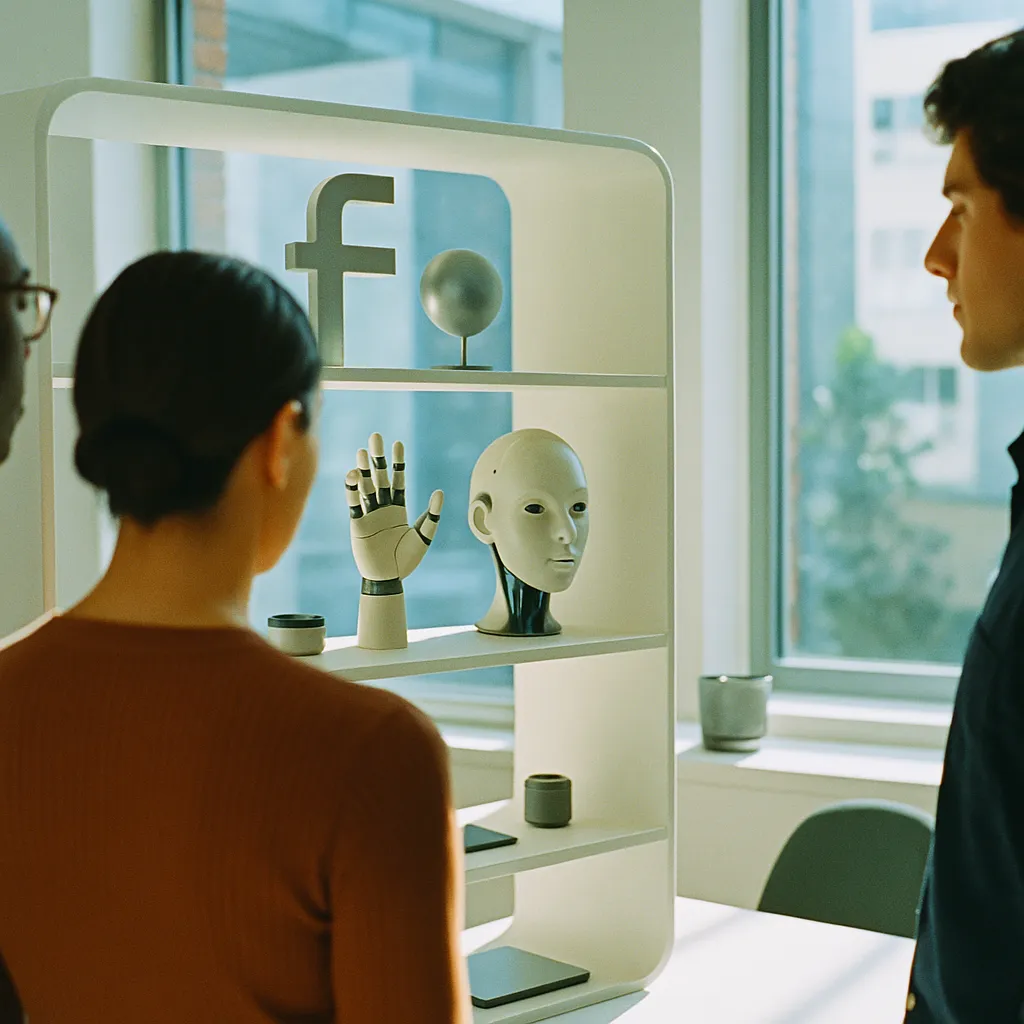
Apple Music announced that 'Made With AI' labels will become mandatory for all distributors and labels — the first major streaming platform to require AI disclosure as a condition of upload.
Apple Music to Make AI Transparency Labels Mandatory for All Uploaded Content
By Hector Herrera | September 18, 2026 | Creative
Apple Music announced on August 20 that its AI Transparency Tags — which label tracks, artwork, and music videos created with a "material portion" of AI-generated content — will shift from optional to mandatory for all labels and distributors. According to AppleInsider, visible "Made With AI" labels will appear in the consumer-facing app later in 2026, making Apple Music the first major streaming platform to require AI disclosure as a condition of upload.
The policy change is small in its mechanics — a checkbox becomes a requirement — but significant in its implications. Apple Music distributes to hundreds of millions of listeners. When the largest streaming platform by per-listener revenue mandates disclosure, every distributor, label, and independent artist in its ecosystem has to adapt. And every platform watching from the sidelines has to decide whether to follow.
What the Policy Requires
Apple's mandatory disclosure covers content where AI was used to generate a "material portion" of the final product. The definition of "material" is left to Apple's implementation, but the categories are broad:
- Audio. Tracks where AI generated the melody, instrumentation, vocals, or significant production elements.
- Compositions. Lyrics and musical compositions generated or substantially assisted by AI tools.
- Cover art. Album artwork, singles artwork, and playlist imagery created with AI image generators.
- Music videos. Video content where AI-generated footage, characters, or visual effects constitute a material portion of the final product.
The responsibility for accurate tagging sits with distributors — the companies through which most independent artists and labels upload to Apple Music — not with Apple itself. Distributors including DistroKid, TuneCore, CD Baby, and Amuse will need to add disclosure fields to their submission workflows and enforce accurate completion before submitting content to Apple.
Apple has not published specific enforcement or penalty guidelines for inaccurate disclosure, but the implicit consequence is rejection or removal from the platform.
Why This Is a First
No major streaming platform has previously required AI disclosure. Spotify has discussed AI labeling but has not implemented mandatory tagging. YouTube has required disclosure for synthetic or altered realistic content in some categories, but not broadly across music uploads. SoundCloud and TIDAL have voluntary systems.
Get this in your inbox.
Daily AI intelligence. Free. No spam.
Apple's move to mandatory disclosure draws a clear line: if you upload to Apple Music and your content includes material AI generation, you must say so. If you do not, you are misrepresenting your content to the platform.
The legal context matters here. The music industry is currently navigating multiple active lawsuits from artists and publishers over AI training data, AI-generated sound-alikes, and platforms that host AI-generated content without disclosure. By implementing mandatory AI labels, Apple creates a documented record of what it and its distributors knew about the AI provenance of uploaded content — a record that could matter in litigation.
The Implications for Distributors and Artists
The policy change lands differently depending on where you sit in the music ecosystem.
For major labels, this is manageable. Universal Music Group, Sony Music, and Warner Music Group have internal workflows for categorizing content and can add an AI disclosure field to their metadata processes. The bigger issue is the decision about which content they categorize as AI-generated, given that AI tools are now embedded in production pipelines at varying depths.
For independent artists and small distributors, the challenge is definitional. If an artist used an AI plugin to generate a drum loop, is that a "material portion"? If cover art was designed by a human using AI upscaling, does that require disclosure? Apple's policy will require clearer definitions before the consumer-facing labels roll out.
For AI music tools and platforms, mandatory disclosure changes the product conversation. Tools like Udio, Suno, and Boomy — which generate full tracks with minimal human input — produce content that clearly falls under the disclosure requirement. Their users uploading to Apple Music will now have to tag that content as AI-generated, which may affect streaming numbers if listeners respond negatively to the label.
What Listeners See
Apple has said "Made With AI" labels will be visible in the consumer-facing app later in 2026. The specific UI — where the label appears, how prominently it is displayed, whether it affects algorithm recommendations — has not been detailed. The consumer-facing implementation will determine how much practical impact the policy has.
If "Made With AI" appears as a small metadata tag similar to "Explicit" or "Clean," most listeners will ignore it. If it is prominently displayed on the play screen or filters into playlist curation logic, it could meaningfully affect stream counts for AI-generated content. Apple has not signaled which direction it intends to go.
What to Watch
The consumer-facing label rollout, expected later in 2026, is the moment when this policy has real market impact. The question is whether listeners care about AI provenance enough to change their behavior — and whether Apple's algorithm will treat AI-labeled content differently in editorial playlists, algorithmic radio, and search ranking.
Watch for how major distributors update their submission workflows in the next 60 to 90 days. If DistroKid and TuneCore add prominent AI disclosure fields to their upload process, it signals that the policy is being taken seriously at the infrastructure level. Watch also for whether Spotify, YouTube Music, or Amazon Music follow with comparable mandatory disclosure requirements — or whether they hold back, hoping to capture AI music content that Apple's policy discourages.
Did this help you understand AI better?
Your feedback helps us write more useful content.
Get tomorrow's AI briefing
Join readers who start their day with NexChron. Free, daily, no spam.